Address
304 North Cardinal St.
Dorchester Center, MA 02124
Work Hours
Monday to Friday: 7AM - 7PM
Weekend: 10AM - 5PM
Address
304 North Cardinal St.
Dorchester Center, MA 02124
Work Hours
Monday to Friday: 7AM - 7PM
Weekend: 10AM - 5PM


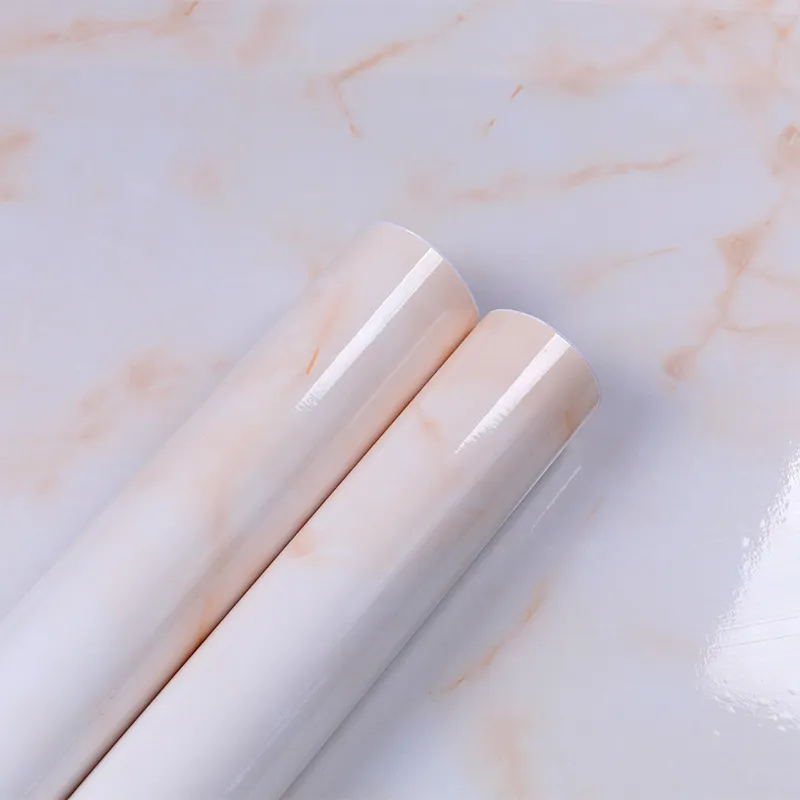
PVC film shrinking is one of the most common installation and storage headaches for builders, fabricators, and décor installers. Understanding why PVC film contracts after production or after installation can save time and money—especially when working with decorative films on cabinets, floors, or kitchen areas. Below we explain the main causes, practical fixes, and prevention tips that help maintain film stability and appearance.
Shrinkage refers to the dimensional change where the film becomes smaller in one or both directions after installation or exposure. It can appear as wrinkling, lifting at edges, gaps between panels, or overall tightness that deforms patterns. Shrinkage is typically small in percentage but visible and disruptive for finished surfaces.
High temperatures—from direct sunlight, heat guns used incorrectly, or hot transport conditions—cause molecular relaxation and contraction. Cast PVC films are less sensitive than calendered films, but all can react if exposed to excessive heat.
Storing rolls under uneven tension, stacking heavy pallets, or tight winding can set internal stresses. When these stresses release during application, the film relaxes and shrinks.
Low-quality formulations or incompatible plasticizers may migrate or evaporate, changing flexibility and causing dimensional change over time. UV and chemical exposure accelerate this process.
Sudden changes in humidity can cause swelling and then shrinkage as moisture equilibrates between film and substrate, especially in climates with strong seasonal variation.
If adhesive bond is weak or the substrate expands/contracts differently than the film (wood, MDF, or certain plastics), differential movement can force the film to pull or shrink away.
– Reheat and re-stretch cautiously using a controlled heat source; start at low temperature and increase gradually. Avoid overheating which can worsen deformation.
– Use appropriate edge sealing or caulking to hide small gaps and prevent further lifting.
– Replace badly shrunk panels—minor shrinkage can be concealed, but severe dimensional change usually requires new film.
– Switch to films with improved dimensional stability (cast PVC, better plasticizers).
– Use primers and high-performance adhesives formulated for the substrate to improve bonding.
– Allow films to acclimatize to jobsite temperature and humidity before application (24–48 hours recommended).
Store rolls horizontally on flat racks; keep temperature between 15–25°C (59–77°F) and stable humidity. Avoid prolonged exposure to sunlight and protect edges with cushioning during transport.
Apply at recommended ambient conditions. Maintain moderate tension—do not over-stretch. Use a roller and felt squeegee to ensure uniform adhesion and remove trapped air. When heating is necessary, use low, even heat and always test on a scrap piece.
Choose the right type for the job: cast PVC for high stability, calendered for cost-effectiveness but accept some dimensional change. For high-temperature or exterior exposures choose UV-stabilized grades and ask for low-migration plasticizers.
| Cause | Symptom | Quick Fix |
|---|---|---|
| Excess heat | Wrinkles, tight edges | Controlled reheat, replace if severe |
| Storage tension | Edge lift after unrolling | Relax rolls, reapply with proper tension |
| Poor adhesive | Partial delamination | Use primer & compatible adhesive |
Before full-scale installation, always test a sample under the jobsite conditions for 48–72 hours. Check for dimensional change, adhesion, and color stability. Specify tolerance limits with suppliers and request batch certificates for plasticizer type and UV stability.
If shrinkage appears consistently across multiple rolls or production batches, contact your supplier to review formulation, calendering process, and storage recommendations. For major projects requiring consistent stability, specify cast PVC and request production test data.
For reliable PVC film supply and production capabilities, consider manufacturers with full in-house control of calendering, printing, and packaging—such as Pulivk: https://pvcfilmtec.com/