Address
304 North Cardinal St.
Dorchester Center, MA 02124
Work Hours
Monday to Friday: 7AM - 7PM
Weekend: 10AM - 5PM
Address
304 North Cardinal St.
Dorchester Center, MA 02124
Work Hours
Monday to Friday: 7AM - 7PM
Weekend: 10AM - 5PM


 ByPulivk
Biaxially Oriented Polypropylene (BOPP) film is widely used in packaging, labeling, and lamination — but one frequent question from specifiers and buyers is: is BOPP film transparent? This guide explains transparency levels, what affects clarity, and how to choose the right BOPP grade for your application.
BOPP is a polypropylene film stretched in two directions during production to improve strength, gloss, and barrier properties. It can be manufactured in clear, translucent, or opaque finishes, making it a versatile material for food packaging, labels, decorative films, and protective overlays.
Transparency refers to how much light passes through a film. Clarity refers to how sharply objects appear through that film. A BOPP film can be highly transparent but have slight haze; conversely, it can be clear in color but diffuse details if haze is high.
| BOPP Grade | Typical Transparency | Typical Uses |
|---|---|---|
| High-clarity (Cast-like) BOPP | >90% light transmission; very low haze | Premium packaging, window films, labels |
| Standard glossy BOPP | 70–90% transmission; low–moderate haze | Snack wrappers, laminates, printing substrates |
| Matte / frosted BOPP | 30–70% transmission; high haze | Decorative surfaces, anti-glare covers |
| Opaque / pearlescent BOPP | <30% transmission; minimal see-through | Privacy packaging, decorative panels |
Several production and formulation factors affect transparency:
Manufacturers may provide numbers such as light transmission (%) and haze (%). For example, a film with 92% transmission and 3% haze is very clear; one with 75% transmission and 30% haze will look cloudy. Ask for lab-tested values (ASTM D1003 or equivalent) when clarity matters.
Match the film’s transparency and surface finish to the application:
Improving clarity may slightly reduce some mechanical properties or add cost. Conversely, matte and opaque BOPP are often chosen for aesthetic or privacy reasons even though they sacrifice transparency. Work with suppliers to balance transparency, strength, printability, and price.
– Required transparency (transmission %) and haze (%).
– Surface finish: glossy, matte, frosted, or pearlescent.
– Thickness range (microns) and roll dimensions.
– Printing or coating needs (coated/uncoated).
– Regulatory needs (food contact approvals if applicable).
In practical terms, BOPP can be made extremely clear with >90% transmission and very low haze, creating a near-invisible effect on many substrates. Complete invisibility depends on substrate color, texture, and adhesives used for labels or laminates.
Yes. Printing inks, heavy varnish, or metallized layers reduce transparency where applied. Clear areas between print zones remain unchanged.
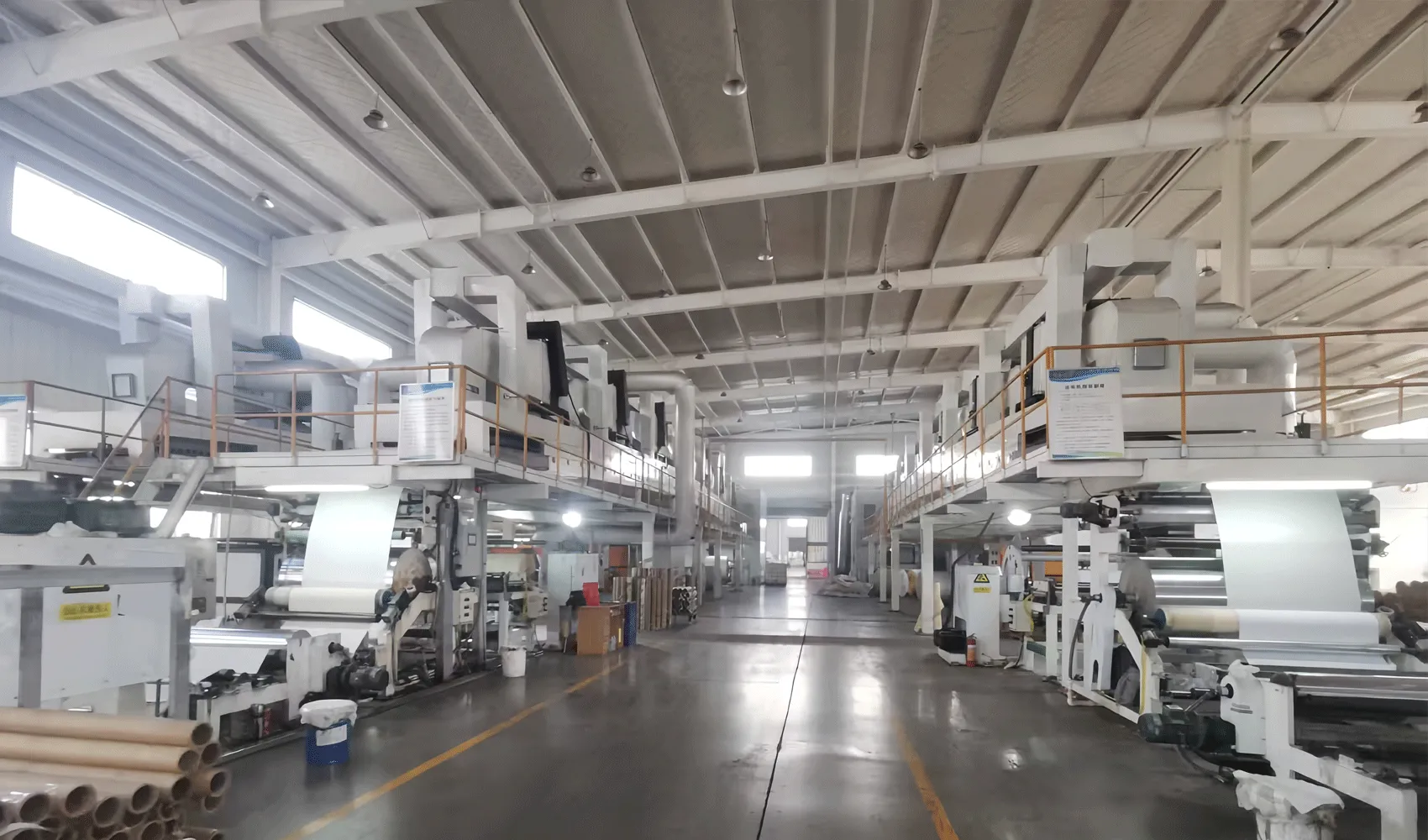
Pulivk operates modern calendering and printing lines capable of producing transparent, frosted, embossed, and specialty BOPP and PVC films. When clarity is essential, request test samples and lab data to confirm transmission and haze before bulk purchase.
Request physical samples under real-world lighting, ask for measured transmission and haze values, and confirm coatings or prints won’t compromise the visual result. For custom orders, confirm lead times and split-packaging options if you need smaller rolls or private labeling.