Address
304 North Cardinal St.
Dorchester Center, MA 02124
Work Hours
Monday to Friday: 7AM - 7PM
Weekend: 10AM - 5PM
Address
304 North Cardinal St.
Dorchester Center, MA 02124
Work Hours
Monday to Friday: 7AM - 7PM
Weekend: 10AM - 5PM


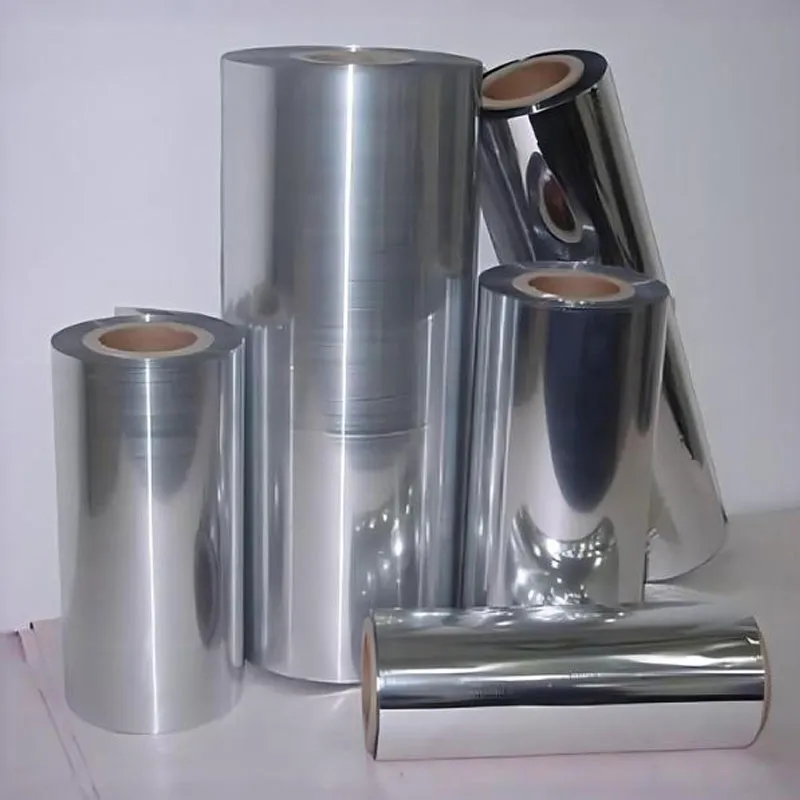
Flow marks on PVC film — those irregular streaks, ripples, or “watermarks” that appear after calendering, printing, or extrusion — are a common quality issue that affects appearance, printability, and downstream lamination. Understanding the root causes and using targeted solutions will help you reduce rejects, minimize rework, and improve overall production efficiency.
Temperature and cooling imbalance: Uneven melt temperature across the die or inconsistent cooling across calender rolls causes portions of the film to flow differently and set with visible marks.
Die or calender roll surface defects: Small scratches, dirt, or wear on die lips, rolls, or calendar belts create localized flow disturbances that show up as lines or streaks.
Material contamination or poor filtration: Foreign particles, gels, or degraded polymer fragments disturb melt flow and cause streaking.
Inadequate melt homogeneity and additives: Poor mixing of plasticizer, stabilizers, or pigments results in local viscosity differences and visible flow patterns.
Line speed, tension, and nip pressure issues: Sudden speed changes, uneven tension across width, or improper nip pressure can stretch or compress film locally and reveal flow marks.
Residual stress and orientation: Incorrect cooling profiles or excessive draw ratios create stresses that manifest as flow marks or opacities when viewed at different angles.
Inspect the defect pattern: long continuous streaks usually point to roll or die defects; periodic repeating marks often indicate nip marks or roller damage; random speckled streaks point to contamination.
Run a short test: change one parameter at a time (temperature, speed, tension) and note improvements. Examine scrap from upstream processes (compounders, mixers) for gels or unmelted batches.
| Cause | Telltale Sign | Immediate Fix |
|---|---|---|
| Uneven melt temperature | Wavy bands across width | Stabilize heaters, recalibrate thermocouples |
| Roll/die surface defect | Continuous linear streaks | Clean/polish or replace roll; inspect die lip |
| Contamination | Localized specks & streaks | Check screw, screen pack, and filtration |
| Poor mixing/additives | Mottled appearance or color streaks | Adjust compounding, use masterbatch, improve dispersion |
Stabilize temperature profiles: Ensure uniform barrel/die temps and accurate PID control. Regularly calibrate sensors and heaters.
Improve melt filtration and degassing: Use appropriate screen packs, clean screws and filters regularly, and consider vacuum degassing to remove volatile inclusions.
Maintain roll and die surfaces: Adopt scheduled cleaning, polishing, and preventive inspections for calender rolls, belts, and die lips. Replace worn parts on time.
Optimize mechanical settings: Smooth out nip pressure, balance lateral tension, and avoid abrupt line-speed changes. Small incremental speed adjustments help identify safe operating windows.
Compound quality control: Ensure uniform plasticizer and additive distribution in compounding stage; tighten masterbatch dosing accuracy and mixing times.
1) Incoming material check: verify raw PVC, plasticizer, stabilizer, and pigment batches and run melt-flow checks.
2) Daily equipment checklist: clean rolls, inspect die lips, check heater zones and thermocouples for drift.
3) Process control logs: record temperatures, speeds, tensions, and nip pressures to spot trends early.
4) Sampling & microscopy: periodic surface and cross-section checks for gels, inclusions, or orientation lines.
5) Operator training: teach teams to recognize the early visual signs of flow marks and act quickly to test one parameter at a time.
If marks affect print registration, lamination bonding, or visible aesthetics beyond agreed tolerances, set those rolls aside for rework or reject them according to your QC standard. Minor, uniform texture may be acceptable for non-visible applications but always document customer requirements.
For consistent, low-defect PVC films from calendering to finished roll, consider working with a supplier who controls the full chain. Pulivk offers full in-house production with calendering, printing, and split-packaging capabilities to help stabilize quality and lead times.