Address
304 North Cardinal St.
Dorchester Center, MA 02124
Work Hours
Monday to Friday: 7AM - 7PM
Weekend: 10AM - 5PM
Address
304 North Cardinal St.
Dorchester Center, MA 02124
Work Hours
Monday to Friday: 7AM - 7PM
Weekend: 10AM - 5PM



Adding recycled PVC or reclaimed fillers into calendered or cast PVC film is becoming more common as brands and converters push for cost savings and circularity. The key question for specifiers and buyers is whether recycled content necessarily reduces performance or appearance — and if so, by how much and under what controls.
Recycled PVC in film applications can take several forms: regrind from the factory (post-industrial), reclaimed film flakes, or post-consumer recycled (PCR) material. Each source differs in purity, additives, and bulk density. Post-industrial regrind—clean scrap from production—usually has the least impact on quality. PCR and mixed feedstocks may contain contaminants or unknown stabilizer histories that require more processing and testing.
Mechanical and visual effects depend on the recycled percentage, particle size, and compatibility with virgin PVC and additives. Common trends:
– Tensile strength and elongation: small declines begin around 5–15% recycled content for thin films; larger drops can occur at higher loadings unless compatibilized.
– Surface gloss and printability: visible changes often appear with >10% recycled flakes—surface smoothing and consistent gloss require tight particle control and polishing steps.
– Thermal stability and processing window: recycled batches with spent stabilizers may narrow the processing window or demand fresh heat stabilizers to avoid degradation and discolouration.
– Odour and contamination risk: PCR can introduce off-odours or foreign materials that affect aesthetics and regulatory compliance for some end uses (e.g., food contact).
| Recycled content | Mechanical & processing | Appearance & finish | Notes |
|---|---|---|---|
| 0–5% | Minimal change; stable process window | Full gloss & printability maintained | Best for critical finishes |
| 5–15% | Slight tensile drop; adjust stabilizers | Minor surface variation possible | Good balance cost vs performance |
| 15–30% | Noticeable strength and elongation loss | Gloss & print consistency reduced | Requires compatibilizers & QC |
| >30% | Significant property changes; brittle risk | Visible imperfections likely | Generally for non-critical, lower-cost lines |
Consistent quality with recycled content is achievable with a defined strategy: use virgin/recycled blends optimized per product; employ fine milling and screening to control particle size; add targeted stabilizers, impact modifiers, and pigments; and monitor moisture and contaminants. Good calendering and finishing lines plus tight process control reduce visible defects and delamination risk.
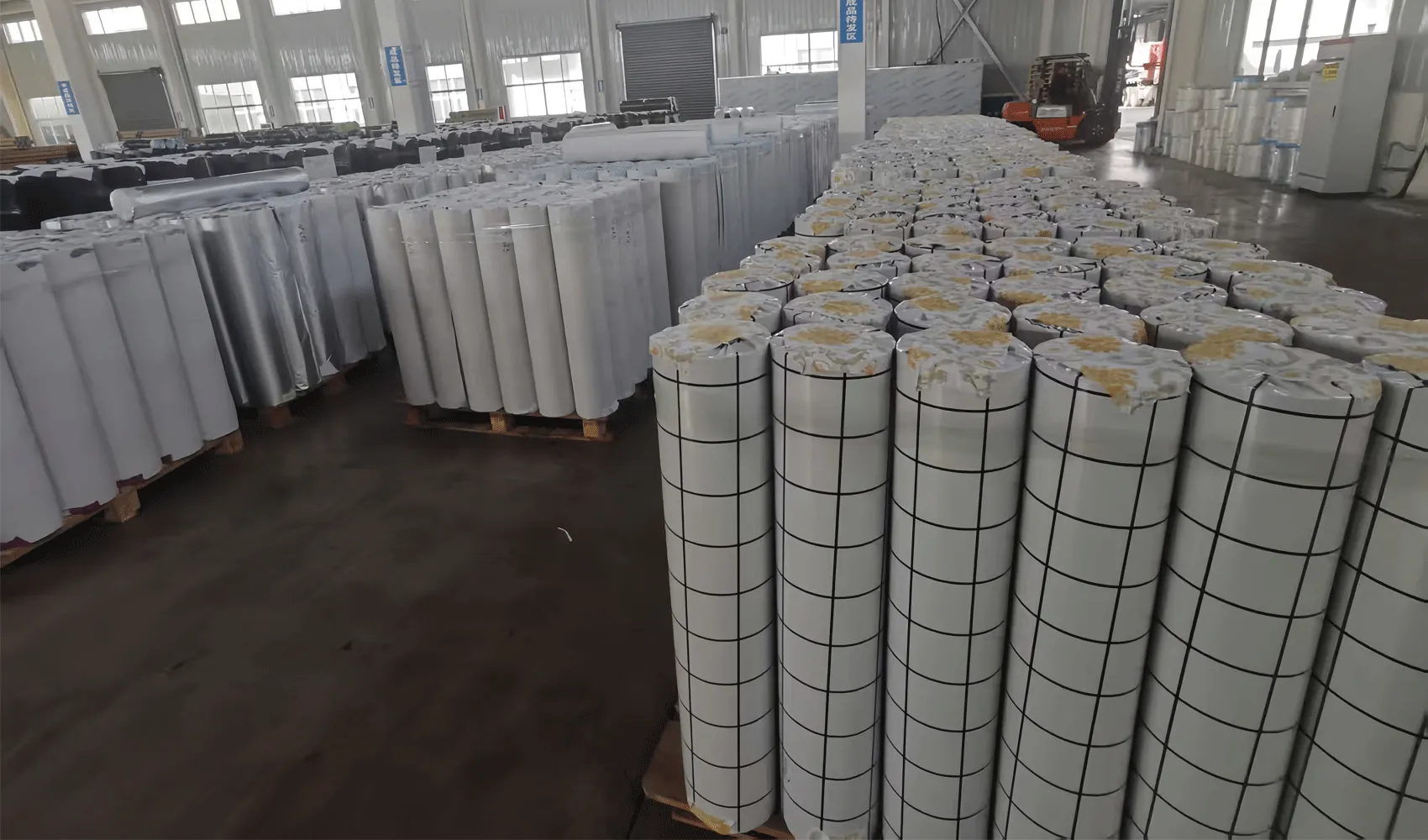
Request batch-level test reports: tensile & elongation, melt flow/processing behavior, volatile content, odour tests, and targeted chemical screening if required. For regulated markets, ensure compliance with local VOC or food-contact requirements. Small pre-production runs and accelerated weathering help validate long-term performance before scaling.
– Start with conservative recycled content (5–10%) for premium décor or printed films.
– Use certified post-industrial regrind when appearance and mechanical strength matter most.
– Expect to adjust formulations and stabilizers; require supplier QC documentation and trial runs.
– For cost-driven or protective films (short service life), higher recycled loadings can be acceptable with clear expectations.
Adding recycled material to PVC film does affect quality, but with controlled feedstocks, proper compounding and process adjustments, many applications can accept modest recycled content without compromising function or look. Define your performance priorities, insist on tested batches, and work with suppliers that run complete in-house production and QC to control variability—this reduces risk and helps realize sustainability and cost goals.
Pulivk operates full in-house PVC film production including calendering, printing and split-packaging to help partners manage quality and lead times.