Address
304 North Cardinal St.
Dorchester Center, MA 02124
Work Hours
Monday to Friday: 7AM - 7PM
Weekend: 10AM - 5PM
Address
304 North Cardinal St.
Dorchester Center, MA 02124
Work Hours
Monday to Friday: 7AM - 7PM
Weekend: 10AM - 5PM



CPP (cast polypropylene) film is a versatile polymer film widely used across packaging, industrial, and decorative applications. Lightweight, clear, and durable, CPP film combines excellent clarity with good heat-sealability and mechanical strength, making it a top choice for converters, brand owners, and designers seeking a cost-effective, high-performance substrate.
CPP film is produced by casting a molten polypropylene sheet onto a chilled roll, which forms a smooth, consistent film. Compared with BOPP, CPP offers superior elasticity, better heat-sealing properties, and improved cold-temperature flexibility. These characteristics make it ideal for a wide range of packaging formats and specialty uses.
Primary packaging: CPP film is widely used for food packaging like snack wrappers, fresh produce bags, and flow-wraps because it maintains barrier properties and seals reliably on automated lines.
Lidding & overwraps: Thin CPP grades are perfect for lidding trays or wrapping multipacks — they provide clarity and conformability while preventing punctures and tears during handling.
Heat-seal & pouch films: CPP’s excellent sealing performance at lower temperatures reduces energy consumption on sealing lines and improves production yields.
Lamination & protective films: Used as laminates or surface protective films for printed substrates, furniture wrap, or flooring protection during construction and transport.
Industrial & specialty uses: from agricultural mulch films to stationery laminates and insulating layers, CPP can be formulated with additives (anti-fog, anti-static, UV stabilizers) to meet specific performance requirements.
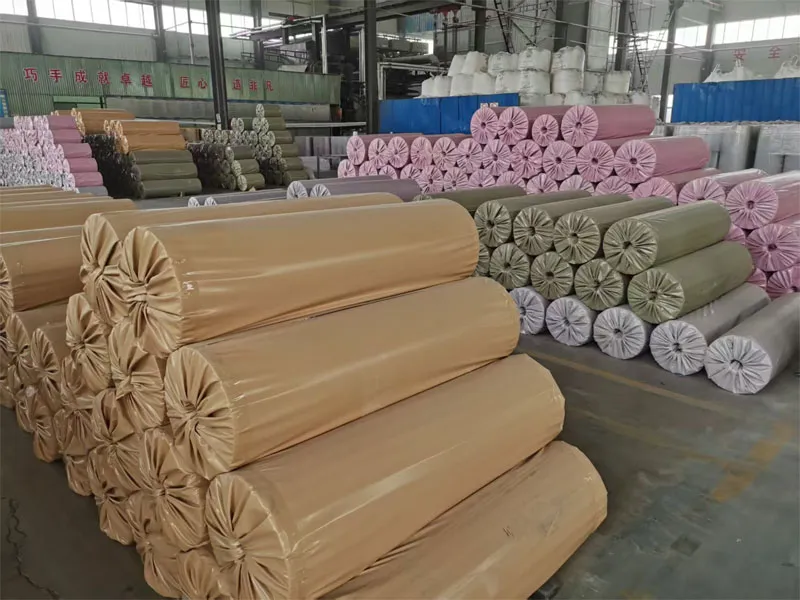
CPP film offers a compelling combination of features for converters and brands:
Excellent sealability: fast, reliable seals at lower temperatures which improves line speed and reduces energy usage.
High clarity and gloss: optics suitable for premium product presentation.
Good mechanical toughness: tear and puncture resistance for better transit performance.
Cold temperature flexibility: maintains performance in refrigerated supply chains.
Cost-effectiveness: attractive price-to-performance ratio for high-volume applications.
| Grade / Thickness | Common Uses | Key Benefit |
|---|---|---|
| 12–20 µm (thin) | Flow-wraps, snack films | High clarity, low gauge |
| 25–40 µm (standard) | Pouches, lidding films | Good seal strength & toughness |
| 50–100 µm (heavy) | Protective films, lamination | Enhanced mechanical protection |
For food contact applications, CPP formulations can meet migration and regulatory requirements when produced under food-grade conditions. Anti-fog co-extrusions or coatings help maintain visual appeal for refrigerated produce, while seal-enhancing layers support MAP (modified atmosphere packaging) applications.
Choosing the right CPP film depends on end-use and processing. Select thinner gauges for economy and clarity; choose multi-layer or coated structures for barrier performance or printability. Work with suppliers to test heat-seal windows and to optimize winding tensions for high-speed filling lines.
Look for partners that can offer flexible OEM options, split-packaging, and consistent QC checkpoints to minimize production disruptions. Pulivk provides full in-house production capabilities and customizable options to support private label and large-volume orders while ensuring consistent quality control.
For end-users, easy-to-seal films reduce reject rates and energy use. Recyclability depends on local streams and film formulation; mono-PP CPP grades are generally easier to recycle than multi-polymer laminates. Consider specifying mono-material structures when circularity and recycling recovery are priorities.
Choose CPP when you need strong, energy-efficient seals, excellent clarity, and good cold-flex performance for food or non-food packaging. It’s also an excellent candidate for surface protection and lamination where mechanical toughness is required.
Want to evaluate CPP for a specific product? Test sample rolls on your sealing and filling equipment to confirm line speeds and seal integrity before scaling to production.