Address
304 North Cardinal St.
Dorchester Center, MA 02124
Work Hours
Monday to Friday: 7AM - 7PM
Weekend: 10AM - 5PM
Address
304 North Cardinal St.
Dorchester Center, MA 02124
Work Hours
Monday to Friday: 7AM - 7PM
Weekend: 10AM - 5PM


Polyvinyl chloride (PVC) film is a popular, cost-effective material for decorative surfaces, packaging, protective layers, and more. Understanding how heat affects PVC film — from softening and discoloration to possible decomposition — is essential for choosing the right product for your project and ensuring long-term performance.
PVC film is a thermoplastic made from vinyl chloride monomer. Its thermal behavior depends on formulation (plasticizers, stabilizers, fillers), production method (calendered, extruded), and thickness. PVC typically softens well below its decomposition temperature, which means it can deform under moderate heat but doesn’t melt sharply like some other plastics.
Glass transition (Tg): when the film goes from rigid to rubbery. Vicat softening point: practical softening under load. Decomposition: breakdown that may release HCl and fumes at high temperatures.
| Temperature (°C) | What Happens | Suitable PVC Types |
|---|---|---|
| -20 to 40 | Normal service; minimal dimensional change. | Standard decorative and protective films. |
| 40 to 70 | Softening of plasticized PVC; adhesives may weaken. | PVC with heat stabilizers; thicker films perform better. |
| 70 to 90 | Noticeable deformation, gloss loss, possible discoloration. | Special high-temperature PVC formulations; limited use. |
| 90 to 140+ | Onset of decomposition, HCl release, burning risk above flash points. | Not recommended — use PET, PP, or metalized films for extreme heat. |
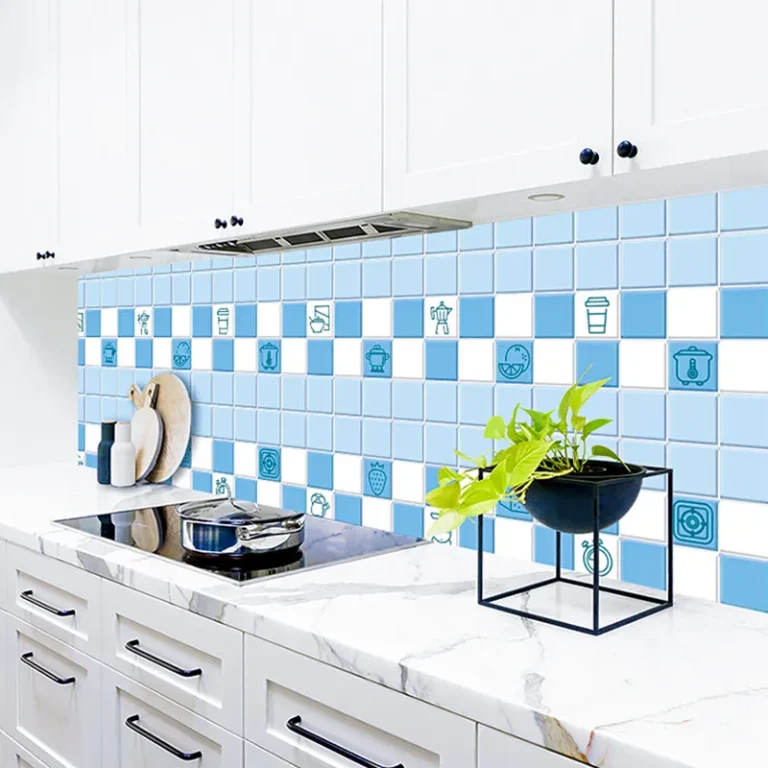
In kitchens and near hot appliances, temperatures can easily exceed 60°C on surfaces; decorative PVC films may soften or peel over time. For automotive interior trim, sunlight can heat dashboard surfaces well above 70°C — choose PVC films with UV and heat stabilizers to avoid warping and discoloration.
Manufacturers and labs use several tests to quantify PVC film performance under heat. Common methods include:
– Differential Scanning Calorimetry (DSC) to find glass transition and melting behaviors.
– Vicat softening point and heat deflection tests to measure softening under load.
– Thermogravimetric Analysis (TGA) to determine thermal decomposition onset.
– Real-world exposure tests (accelerated UV and heat chambers) to check discoloration, adhesion loss, and dimensional stability.
If a film lists a Vicat softening point above 70°C, it will resist moderate heat better than general-purpose PVC. But always pair lab data with field testing — installation conditions and adhesives make a big difference.
Simple selection and installation practices reduce heat-related issues:
– Choose heat-stabilized PVC formulations when the application sees elevated temperatures or direct sunlight.
– Use high-temperature adhesives and primers recommended by the film supplier.
– Avoid applying PVC film to surfaces that routinely exceed the film’s softening range (e.g., direct contact with cooking appliances or high-output lighting).
– Consider alternative films such as PET, PP, or metalized substrates for applications above 90°C.
Keep surfaces clean, dry, and free of wax or silicone. Allow for thermal expansion by avoiding overly tight wraps and by using expansion seams where large temperature swings are expected.
When PVC decomposes at high temperatures, it can release hydrochloric acid (HCl) and other corrosive gases depending on additives and fillers. Avoid exposing PVC films to open flames or temperatures near decomposition points, and ensure adequate ventilation if films are used in enclosed hot environments.
If the service temperature regularly exceeds 80–90°C or if the environment contains strong UV or flame exposure, select higher-temperature polymers (PET, PTFE, metal coatings) or flame-retardant treated materials.
Before buying, confirm:
– Maximum recommended service temperature from the manufacturer.
– Presence of heat and UV stabilizers, and type of plasticizers used.
– Tested adhesion with your intended glue or laminating process.
– Thickness and finish: thicker films and certain finishes resist heat deformation better.
For reliable sourcing and custom specs, consider suppliers who control production end-to-end — for example, Pulivk (Henan Pulivk New Materials Co., Ltd.) offers calendering, printing, and split-packaging lines to ensure consistent quality and faster lead times: https://pvcfilmtec.com/
Q: Can PVC film be used outdoors in hot climates? A: Yes, with the right UV and heat-stabilized formulation; expect gradual fading and softening over many years unless specifically engineered for outdoor use.
Q: Is PVC film safe near ovens or stoves? A: Avoid direct contact with hot cookware or open flames. Use heat-resistant alternatives where temperatures exceed about 70°C regularly.
Q: How do I test my chosen film? A: Request lab data (Vicat, TGA, DSC) and conduct small-field trials in the actual environment before full deployment.
Understanding the film’s tested softening and decomposition temperatures, selecting the appropriate formulation, and installing with heat-aware methods will keep PVC film performing well. For projects requiring both decorative quality and improved heat resilience, look for films explicitly labeled as heat-stabilized or ask manufacturers for high-temperature grades and testing reports.