Address
304 North Cardinal St.
Dorchester Center, MA 02124
Work Hours
Monday to Friday: 7AM - 7PM
Weekend: 10AM - 5PM
Address
304 North Cardinal St.
Dorchester Center, MA 02124
Work Hours
Monday to Friday: 7AM - 7PM
Weekend: 10AM - 5PM


 ByPulivk
Many homeowners, designers, and manufacturers ask: does color PVC film fade? This guide explains why fading happens, how long colors typically last in different settings, and practical steps to preserve appearance. You’ll learn differences between film types, what to look for when buying, and simple maintenance tips to extend color life.
Fading is mainly driven by UV exposure, but several other factors play a role: pigment quality, stabilizers and UV inhibitors, film thickness, surface finish, and environmental stressors such as heat, humidity, and pollutants. Cheap pigments or inadequate UV stabilizers accelerate color loss, while high-quality colorants and protective coatings slow it down.
UV light: Sunlight breaks down pigments and polymer chains over time. Continuous direct sun causes the fastest fading.
Pigment type & color: Some pigments resist fading better—blues and greens often perform differently than reds and yellows. Darker solid colors can show surface chalking or lightening more noticeably.
Film construction: Cast PVC films and multi-layer composite films with UV additives typically outlast basic calendered films in outdoor exposure. However, well-formulated calendered films still offer long life for interior uses.
Realistic longevity depends on exposure. Indoors, away from strong sunlight, most quality color PVC films retain acceptable color for many years. Outdoors or in sunlit windows, life expectancy shortens unless the film is formulated for exterior use with strong UV stabilizers.
| Application | Typical Fade Timeline | Notes |
|---|---|---|
| Indoor, low light | 5–15 years | Best-case for calendered and cast films. |
| Indirect sunlight (north-facing windows) | 3–8 years | Depends on window UV filtering and pigment quality. |
| Direct, full sun (outdoor use) | 1–4 years | Use specially formulated exterior-grade films with UV inhibitors. |
Yes. Bright, highly saturated colors and some reds/yellows are often more prone to visible fading because those pigments can be less lightfast. Conversely, some engineered pigments and masterbatches used in high-quality PVC films improve colorfastness. When choosing a color, consider how visible slight lightening will be on the surface and whether you expect long outdoor exposure.
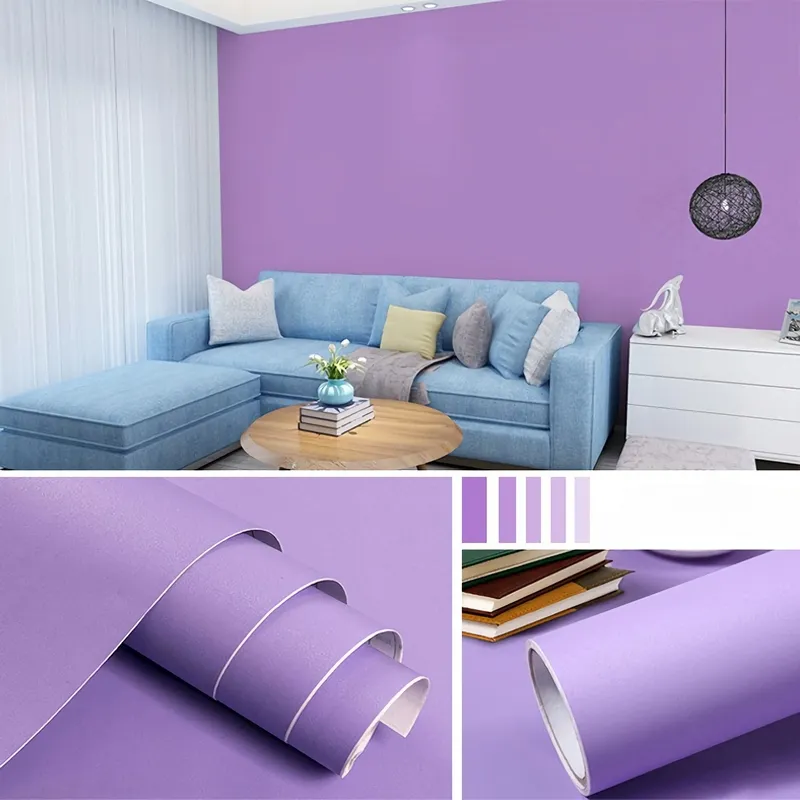
Cast PVC film is produced at lower temperatures and often has better dimensional stability and surface smoothness; it can accept specialized coatings and UV stabilizers more effectively. Calendered PVC film is cost-effective and commonly used for interior decorative films. For harsh outdoor exposure, choose cast or outdoor-rated multi-layer composite films.
Look for products that list UV absorbers, HALS (hindered amine light stabilizers), and high-quality pigments. These ingredients slow polymer degradation and pigment breakdown, helping preserve color.
Proper installation and care can extend the appearance life of PVC film. Follow these best practices:
Minor surface chalking may be reduced with gentle cleaning and conditioning agents, but true color loss from pigment breakdown is irreversible. Replacement or re-covering is the most reliable fix.
Ask suppliers about UV stabilizers, pigment lightfastness, film construction (cast vs calendered), and lab tests like artificial weathering (QUV) results. A reputable manufacturer can provide data and real-world references.
If you’re sourcing large quantities or custom colors, consider working with an experienced producer—Pulivk—who handles full in-house production and can customize formulations, pigments, and packaging to improve color longevity and delivery consistency.
Color PVC film can fade, especially under UV-rich conditions, but the rate varies widely. Selecting high-quality film with UV additives, choosing appropriate film types for the application, and following proper care routines will significantly extend the attractive life of colored PVC surfaces.