Address
304 North Cardinal St.
Dorchester Center, MA 02124
Work Hours
Monday to Friday: 7AM - 7PM
Weekend: 10AM - 5PM
Address
304 North Cardinal St.
Dorchester Center, MA 02124
Work Hours
Monday to Friday: 7AM - 7PM
Weekend: 10AM - 5PM


Sourcing PVC film in bulk is no longer just a price game. For importers, furniture factories, contractors, and brand owners, the best wholesalers are the ones who can deliver stable quality, repeatable color & texture, fast lead times, and export-ready packaging—while keeping the overall landed cost predictable.
This guide explains how to evaluate top PVC film wholesalers for bulk supply, competitive pricing, and fast global shipping, and how to build a long-term supply chain that scales.
A “top” wholesaler is not defined by catalog size alone. In PVC film, it’s defined by how well a supplier controls manufacturing variables (calendering, printing, embossing, coating, slitting, and packing) and how reliably they support bulk procurement. Look for wholesalers that can prove:
✔ Process capability across calendering, printing, and slitting—reducing third-party variability.
✔ Batch consistency (thickness tolerance, gloss, emboss depth, adhesive tack).
✔ Export experience for different climates, transit times, and customs documentation.
✔ OEM/ODM readiness for pattern matching, private label, and packaging specs.
✔ Clear lead times with realistic schedules (samples → approval → mass production → shipment).
“Bulk supply” is not only about output volume. It also includes the supplier’s ability to keep the same film feel and surface performance after you reorder—especially when your products go into kitchens, wardrobes, wall panels, doors, flooring, or high-touch commercial interiors.
Wholesalers with in-house calendering, printing, and slitting/packing can manage key steps without outsourcing. This is critical for avoiding “same pattern, different look” issues caused by external subcontractors.
For example, industrial-scale calendering capability is a strong sign the supplier can support long-term programs—see Calendered Film specifications as a baseline when you request quotations.
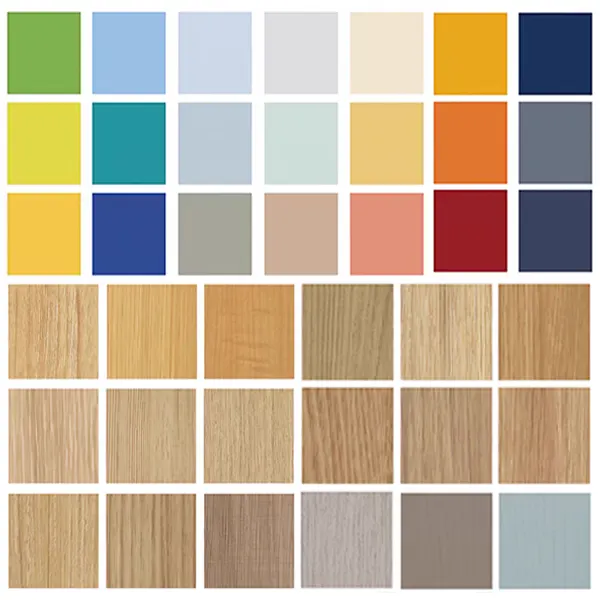
A strong wholesaler should support both decorative and functional PVC films: transparent, matte, glossy, embossed, pearlescent, anti-static, self-adhesive, and multi-layer composites. When evaluating, ask for the “top 10” SKUs they ship most often—high shipment frequency usually equals stable formulations.
Procurement tip: If your business uses multiple surfaces (woodgrain + marble + solid color), try to consolidate to one supplier that can match textures across a collection—e.g., Wood Grain Film and Marble Film under one quality system.
This reduces approval time, simplifies inbound QC, and lowers your risk of shade deviation between factories.
In bulk shipping, film damage usually happens at edges, core collapse, or humidity intrusion. Top wholesalers standardize:
roll tension, core strength, dust-proof wrapping, and clear labels (thickness/width/lot number).
If your film is used on high-visibility surfaces (cabinet doors, wall panels, exhibition boards), insist on individual wrapping (PE film or kraft paper) and clear lot traceability.
PVC film pricing is influenced by resin and additives, ink systems, embossing rollers, coatings, adhesive systems (for self-adhesive), yield loss during printing/slitting, and packaging method. The best wholesalers can be competitive because they control inputs and reduce rework.
Key negotiation point: Ask for a quote breakdown by base film, printing/embossing, coating/adhesive, slitting, and packing. Even if the supplier won’t share exact margins, an itemized structure helps you remove non-essential options and hit your target landed cost.
Fast shipping starts long before the container leaves port. It begins with production planning, standard material inventory, and a packaging workflow designed for export. If you’re buying for projects with fixed deadlines (store openings, hotel renovation phases, apartment turnover schedules), the supplier’s planning discipline matters as much as transit time.
📌 Lead time clarity — sampling time, mass production time, and packing time should be stated separately.
📌 Incoterms & routing — confirm whether you want EXW/FOB/CIF/DDP and which ports are most efficient.
📌 Export documentation — packing list, invoice, CO, MSDS, and compliance declarations if needed.
📌 Damage prevention — moisture protection, corner guards, palletization, and container loading method.
PVC film can be sensitive to heat, long storage, and compression. For long routes or hot seasons, ask the wholesaler how they protect rolls from deformation and adhesive transfer (especially for self-adhesive products). A supplier with mature export routines will recommend practical options rather than simply agreeing to everything.
Bulk buyers often lose time because the spec is unclear. The fastest way to get accurate quotes and stable deliveries is to map film type to application, then lock measurable parameters: thickness, width, roll length, surface (gloss/matte/emboss), and functional requirements (anti-static, waterproof, oil-proof, etc.).
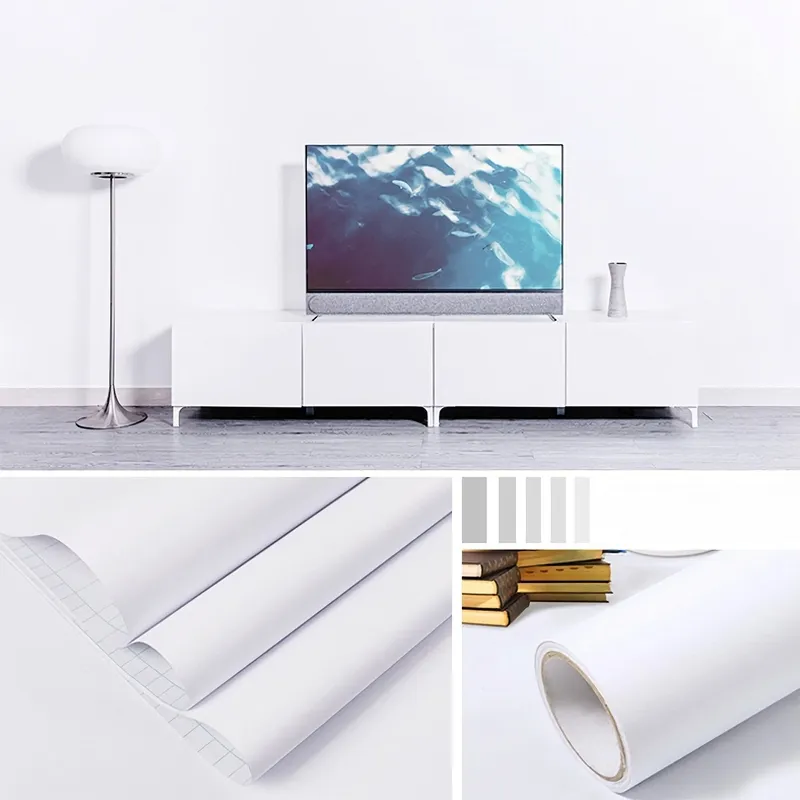
Decorative PVC film is widely used for cabinets, wardrobes, wall cladding, and interior upgrades because it offers consistent patterning and easy cleaning. For premium tactile demand—common in modern retail and residential interiors—textured options can increase perceived value without changing the base board material.
If you need a refined, fabric-like touch for high-traffic spaces, consider 3D Silk Texture Film.
For flooring use-cases, the key metrics shift toward wear resistance, dimensional stability, and surface performance. If your customers are contractors or project-based buyers, ensure the wholesaler can keep the same surface friction and appearance from batch to batch.
A dedicated reference point is Floor Film—use it to align thickness range, surface finish, and packing method.
Skirting and trim demand good wrapping performance, stable color, and abrasion resistance at the edges. In many markets, buyers also care about fast installation and easy wipe-clean surfaces. When sourcing in bulk, confirm the film’s compatibility with your base profile material and adhesive system.
For specification guidance, reference PVC Skirting Film.
Pulivk Film focuses on R&D and manufacturing of PVC films across calendered film and decorative ranges, including wood grain, glossy/matte, cloth grain, stone grain, solid color, waterproof, metallic, embossed, brushed, 3D textures, and self-adhesive options. This wide coverage matters because it allows bulk buyers to standardize purchasing across multiple applications while keeping quality control within one system.
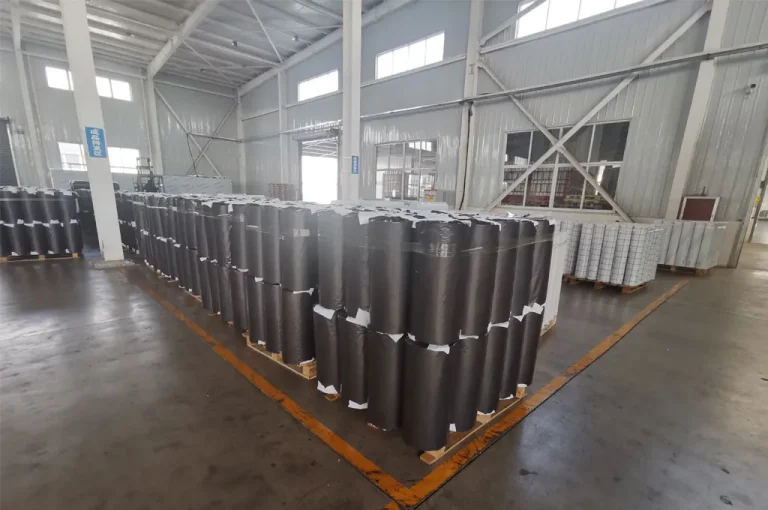
With complete calendering, printing, and slitting/packing lines, Pulivk can manage each stage internally—helping shorten delivery cycles and reduce cost. This production structure is especially valuable for OEM programs where you need repeatable color and texture across reorders.
Pulivk supports flexible OEM/ODM services, including customization of thickness, width, roll size, surface treatment (anti-fog, anti-static, food-grade), color/pattern, and packaging solutions. For bulk orders, each roll can be slit and packed to your requirements, individually wrapped with dust-proof PE film or kraft paper and labeled by specification—improving warehouse management and on-site installation efficiency.
Pulivk uses environmentally friendly, non-toxic inks suitable for indoor decoration and human-contact scenarios, designed to remain durable even in harsher environments. Their QC model covers raw materials to finished rolls, with multiple inspection steps for consistency. They also support compliance expectations such as ISO systems and major chemical restrictions, and can provide third-party reports when required for your market.
⚑ Best-fit buyer profiles: furniture manufacturers, decorative panel factories, flooring distributors, contractors, advertising/exhibition fabricators, medical/cleanroom packaging buyers, and home product brands that need stable bulk supply with repeatable appearance.
Use the checklist below to qualify wholesalers quickly and reduce the risk of costly reorders, delays, or customer complaints.
The first order is where most sourcing mistakes happen: unclear specs, unapproved color, missing packing requirements, or unrealistic delivery expectations. Top wholesalers usually welcome structured onboarding because it reduces their own rework too.
① Start with a controlled trial — 1–3 SKUs, fixed thickness/width, and one packing standard.
② Approve against a signed reference — keep one “golden sample” in your QC room and one at the factory.
③ Lock the repeat-order rules — define acceptable ΔE/color tolerance, gloss range, and emboss depth range.
④ Align on shipping plan early — book space, confirm port, and set carton/pallet markings for faster receiving.
Beyond supplying rolls, strong PVC film wholesalers help you simplify operations and win business by keeping performance stable across different environments.
Woodgrain, cloth grain, cabinet-door film, tabletop film—value comes from repeatable appearance and efficient slitting to match your press line.
Wall films, stone textures, partitions, ceilings—value comes from fast delivery and project-friendly packing to avoid onsite delays.
Anti-static, protective, insulating films—value comes from functional coatings and traceable QC for consistent performance.
Lightbox films and display backgrounds—value comes from print stability, clean surfaces, and rapid replenishment.
Protective and clean packaging films—value comes from compliance documents and controlled material consistency.
1) What is PVC film, and why is it used so widely?
PVC film is a thin sheet made from polyvinyl chloride used for decoration, surface protection, and packaging. It’s popular because it balances cost, durability, and a wide range of textures (wood, marble, metal, soft-touch, transparent).
2) How do I choose the right PVC film wholesaler for bulk supply?
Prioritize wholesalers with full-process production (calendering/printing/slitting), stable QC and traceability, export-ready packaging, and proven repeat-order consistency—not just the lowest price.
3) Can PVC film be customized for my brand or application?
Yes. OEM/ODM customization commonly includes thickness, width, roll size, color/pattern, surface finish (matte/gloss/emboss), and functional options like anti-static or anti-fog, plus packaging and labeling.
4) What affects lead time for global shipping?
Lead time depends on sample approval speed, production scheduling, customization complexity, packing requirements, and the chosen shipping route (sea/air) and port congestion. Clear milestones reduce delays.
5) How can I reduce the risk of color or texture differences across batches?
Approve against a signed “golden sample,” define measurable tolerances (color/gloss/emboss depth), require lot labels, and reorder with locked specifications from the same supplier and production standard.