Address
304 North Cardinal St.
Dorchester Center, MA 02124
Work Hours
Monday to Friday: 7AM - 7PM
Weekend: 10AM - 5PM
Address
304 North Cardinal St.
Dorchester Center, MA 02124
Work Hours
Monday to Friday: 7AM - 7PM
Weekend: 10AM - 5PM


Opaque PVC film is a practical, design-friendly material used across furniture, construction, advertising, electronics, and hygiene-sensitive environments. Unlike transparent PVC, an opaque film is engineered to block light and visual see-through, helping brands and manufacturers create clean, consistent surfaces, hide substrates, protect inner layers, and improve overall aesthetics. This guide explains where opaque PVC film works best, what benefits to expect, how thickness impacts performance, and how to choose the right type for your project—especially when you need repeatable quality at scale.
Quick takeaway
Opaque PVC film is a polyvinyl chloride film formulated with pigments and/or fillers to reduce transparency and increase coverage. It is commonly made via calendering (for consistent thickness and high throughput) or via composite structures (when multiple layers are needed for performance). Depending on the application, opaque PVC film can be supplied as printed or plain, with finishes such as matte, glossy, embossed, or soft-touch.
Manufacturers often choose opaque PVC film to achieve: a stable background for printing, color consistency over different substrates (wood, MDF, metal, plastic), or a clean decorative effect that hides glue lines, joints, or inner components.
In furniture manufacturing, opaque PVC decorative films are used to wrap or laminate cabinet doors, wardrobe panels, tabletops, and trims. Because the film blocks the substrate, it helps ensure the same color looks identical across different boards and batches. Popular looks include wood grain, marble, solid colors, metallic effects, and tactile textures.
If your project needs a consistent decorative layer, consider calendered decorative bases such as
Calendered Film
as a starting point for stable thickness and processing behavior.
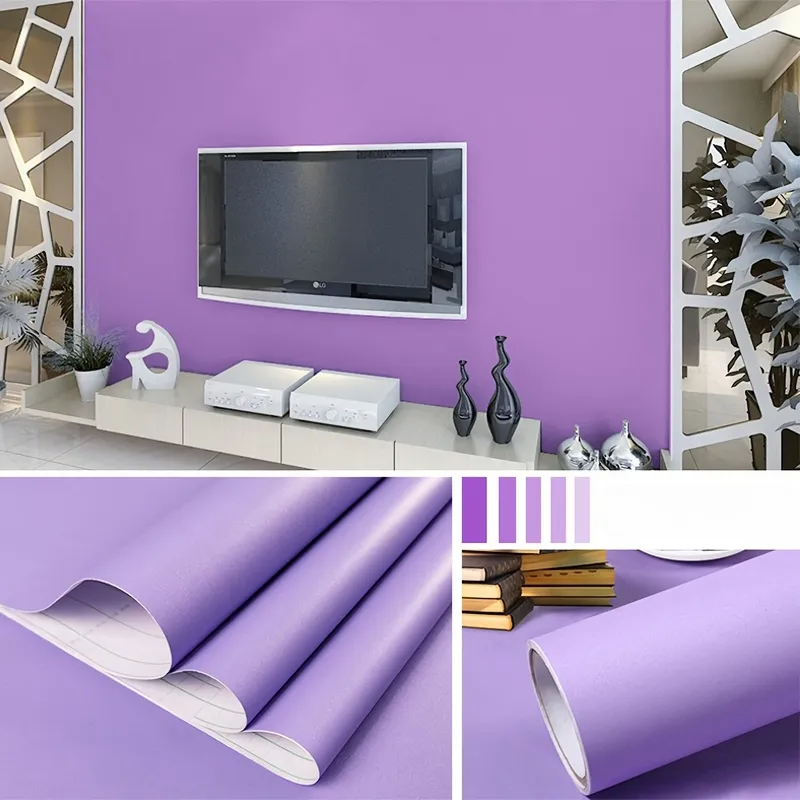
Opaque PVC film is widely used in building interiors because it can create easy-to-clean surfaces and consistent visual coverage. Typical applications include wall decoration, skirting, ceiling panels, and partitions—especially where the base surface is not visually perfect.
For skirting and edge details, dedicated solutions like
PVC skirting film
help achieve uniform color, abrasion resistance, and neat finishing at the base of walls.
In flooring systems, opaque PVC film can serve as a decorative layer, a protective layer, or part of a composite structure depending on the product design. Opacity helps hide subfloor irregularities and supports consistent pattern reproduction.
For flooring-related uses, see
Floor Film
when you need a film optimized for wear, stability, and processing compatibility.
Opaque PVC film is used for backings, decorative wraps, display panels, and promotional surfaces where you want to prevent “show-through” from the substrate or adhesive patterns. It provides a cleaner background and improves perceived quality in retail lighting.
Appliances and electronics often need films for insulation, surface protection, or aesthetic covers. Opaque PVC options may include anti-static treatments, controlled gloss, and stable thickness to support automated lamination or cutting.
In medical and cleanroom settings, films are frequently selected for wipe-clean surfaces, protective layers, and packaging-related uses. When compliance matters, ask your supplier about test reports for REACH, RoHS, and other required standards, plus options like low-odor inks and controlled migration.
Why manufacturers choose opaque PVC film
Opaque PVC film allows manufacturers to achieve premium-looking finishes without using expensive decorative boards. By hiding the base, you can use stable, cost-effective substrates while still delivering a consistent final appearance.
Printing on an opaque, uniform base can improve color predictability. For branding-heavy surfaces, opacity reduces the risk of the substrate tint changing the final printed color. This is especially useful for solid backgrounds and corporate colors.
Thickness is one of the most important specifications because it affects stiffness, wrapping performance, scratch resistance, and long-term durability. Opaque PVC films are commonly produced across a wide thickness range; the “right” number depends on your forming method, substrate, and performance expectations.
Thicker is not automatically better. A thicker film can improve hiding power and durability, but it may reduce ease of wrapping around tight radii and can increase material cost. Meanwhile, very thin films may wrap easily but show substrate imperfections and may be less resistant to abrasion.
⚠ Selection tip
If you are wrapping edges, profiles, or curved furniture parts, prioritize forming performance (appropriate plasticizer level, softness, and elongation) rather than only increasing thickness.
Two films with the same thickness can behave completely differently depending on finish and treatment. Opaque PVC films can be engineered for both appearance and function.
For tactile decorative effects, textured options like
3D Silk Texture Film
can enhance perceived quality while improving everyday usability (e.g., reduced visible scratches).
Start with where and how the film will be used:
Each method demands different softness, shrink behavior, and heat response. If you are unsure, request trial rolls and validate forming with your actual equipment settings.
Match thickness to your real risks: substrate defects, abrasion, and edge-wrapping complexity. For example, a flat wall panel may benefit from a slightly thicker, more robust film, while a tightly radiused profile needs better elongation and forming stability.
For decorative projects, consistent color and pattern repeat are essential. If you use wood or stone patterns, confirm:
High-touch areas—kitchen doors, retail counters, hotel furniture—need stronger resistance to scratches and stains. For kitchens, consider films designed for oil resistance and easy wipe-clean performance.
If the film will be used indoors or near humans, confirm supplier compliance with requirements such as REACH, RoHS, and relevant management systems. Many buyers also request statements about heavy metals and phthalates, plus third-party test reports when needed.
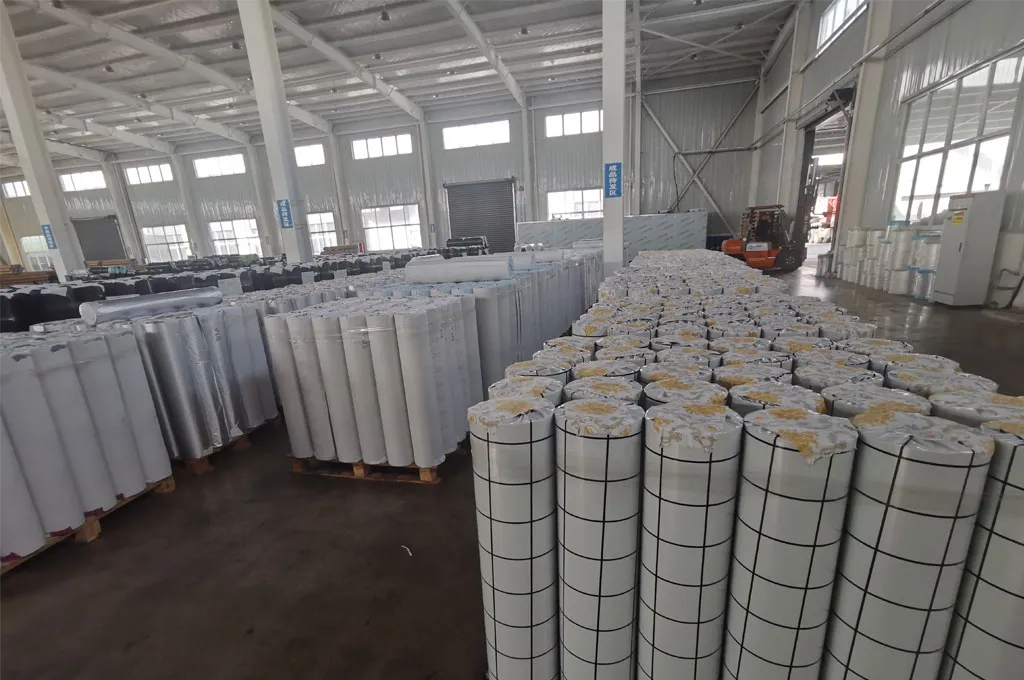
Opaque PVC film is typically delivered in rolls; slitting accuracy and protective packing reduce waste and surface damage. Look for export-ready packing such as individual wrap (dust-proof PE film or kraft paper) and clear labeling to support warehouse scanning and line-side use.
✔ Buyer checklist (copy-friendly)
To get consistent results in production, pay attention to measurable properties—not only appearance. Key factors include:
Suppliers with integrated calendering, printing, and slitting/packing lines can control variables across the full workflow—from raw materials to finished rolls. This typically improves batch-to-batch consistency, shortens lead times, and simplifies customization for OEM/ODM requirements.
Many furniture wraps fall in the 0.12–0.25 mm range, but the best choice depends on your forming method and edge radius. If you wrap complex profiles, confirm elongation and heat response—not just thickness.
It can be, when produced with compliant formulations and inks. Ask for documentation such as REACH, RoHS, and statements regarding heavy metals and phthalates, plus any required third-party reports.
Yes. Many manufacturers support OEM/ODM customization for thickness, width, roll size, color matching, printing, and packaging. Confirm MOQ and lead time based on your specification complexity.
Substrate color and surface texture can influence perceived color, especially with thinner or less opaque films. Increasing opacity, choosing a suitable base layer, and approving a master sample on the real substrate help control this.
Test forming/lamination behavior, adhesion with your glue system, scratch and stain resistance, thickness tolerance, and color consistency under your actual lighting and process conditions.