Address
304 North Cardinal St.
Dorchester Center, MA 02124
Work Hours
Monday to Friday: 7AM - 7PM
Weekend: 10AM - 5PM
Address
304 North Cardinal St.
Dorchester Center, MA 02124
Work Hours
Monday to Friday: 7AM - 7PM
Weekend: 10AM - 5PM



Sourcing laser PVC film at scale is no longer just about finding a low price per roll. Today’s wholesalers must deliver consistent surface effects, stable lead times, export-ready packing, and real customization—while still keeping bulk procurement efficient. If you are buying for furniture lamination, interior décor, advertising, or industrial protection, the right wholesale partner can reduce waste, speed up your production cycle, and improve the final visual impact of your products.
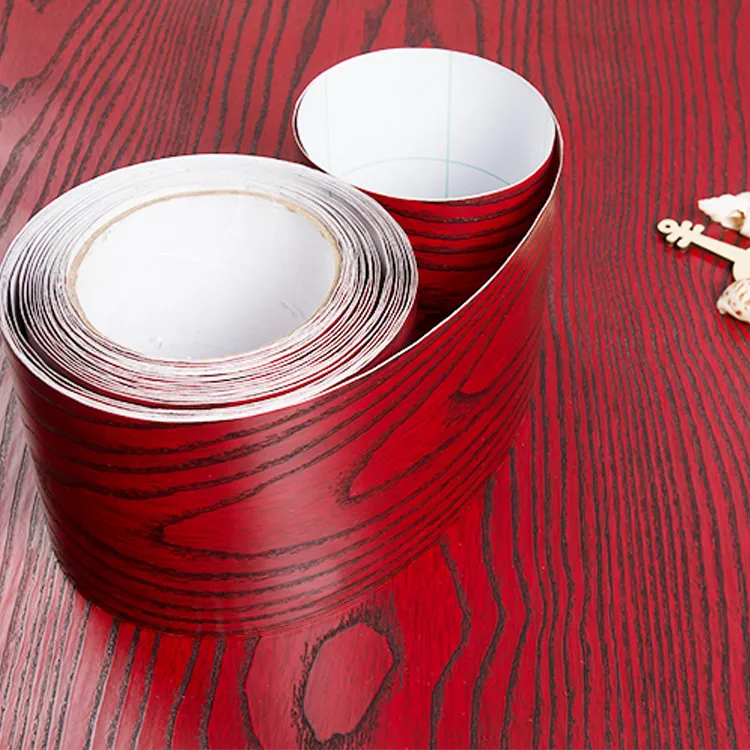
This guide breaks down what to look for in top laser PVC film wholesalers, how to evaluate bulk supply capability, which custom size options matter most, and how fast global shipping actually works in practice—especially when you need reliable quality across repeated orders.
In wholesale procurement, “laser PVC film” typically refers to PVC film that delivers a high-visual, light-reactive, premium decorative effect. Depending on your market and application, this may be used as a highlight layer, a decorative surface, or a functional protective film with elevated aesthetics.
Key wholesale takeaway:
when buyers say “laser,” they often care about visual consistency roll-to-roll, clean surface finishing, and compatibility with lamination/adhesion processes—more than a single “laser” definition.
The most competitive wholesalers are not simply trading stock; they are backed by a production system that can control material, finishing, and packing. A manufacturer like Pulivk Film, for example, operates integrated calendering, printing, and slitting/packing lines, which helps stabilize delivery and reduce variability.
Bulk orders often fail for one reason: the supplier confirms quantity but cannot maintain the same quality and lead time when production is busy. Strong wholesalers use production planning + inventory management to keep your timeline predictable, especially for repeat SKUs.
When calendering, printing, and slitting are handled in one system, the wholesaler can control the critical steps that influence your final product: surface texture, color stability, dimensional tolerance, and packing integrity. This also reduces handovers—often where defects and delays occur.
✔ Practical buyer tip:
ask whether the wholesaler can supply calendered base film and then apply printing/texture/functional treatments in-house.
For reference, see Calendered Film.
Top wholesalers usually offer a broad range of PVC films beyond a single decorative effect. This matters because your customers may need multiple SKUs for one project—cabinet doors, panels, skirting, flooring protection, or wall coverage—while expecting the same color language and quality standards.
Most-requested surface directions (especially in furniture & interior décor):
If your client base is focused on premium decorative panels, pairing laser-like visual effects with tactile textures is a strong upsell. For example, textured options like
3D Silk Texture Film
can be positioned as a “touch + shine” upgrade for showroom-grade interiors.
For residential builders and renovation channels, skirting and trim finishes are common add-ons that help unify a room style. A dedicated SKU such as
PVC Skirting Film
supports consistent design language from wall to floor edges.
“Custom sizes” is one of the most overused phrases in wholesale. What you actually need is fit-to-process customization—dimensions that reduce trimming waste, speed lamination, and match your equipment.
⚠ Avoid a common bulk-order mistake:
approving a “sample roll” that is slit differently from mass production. Ensure the sample is made on the same process path (surface finish, slitting method, packing method) as your bulk order.
Top laser PVC film wholesalers support OEM/ODM not only for appearance but also for functional performance. This is essential when your film is used in kitchens, medical spaces, electronics, or high-traffic areas.
For kitchen and renovation projects where oil resistance and cleaning convenience matter, functional surface films can be a strong differentiator.
Many buyers bundle decorative films with protective kitchen layers such as
Kitchen Anti-oil Film
to increase order value per customer while solving practical household needs.
“Fast shipping” in wholesale should mean two things: fast readiness (production + packing) and fast transit (logistics routing). The best suppliers reduce delays by using export-ready packaging and providing documentation correctly the first time.
Decorative films are sensitive to dust, edge damage, and compression marks. A professional wholesaler will typically wrap each roll with dust-proof PE film or kraft paper, add a spec label, and protect corners for safer handling.
✔ What to request before shipping:
roll list (SKU/specs), packing list, batch identification, and agreed inspection notes—so receiving teams can check faster and reduce disputes.
For most bulk shipments, sea freight offers the best cost-per-square-meter, while air freight is used for urgent replenishment or sample approvals. However, actual delivery speed is often determined by production slot availability and export document readiness, not the ocean/flight duration alone.
Top wholesalers back their offer with measurable quality systems. Look for suppliers who can support compliance claims with documentation and can explain their QC checkpoints from raw materials to finished rolls.
Focus points for consistent bulk supply:
Compliance also matters, especially for indoor décor and human-contact scenarios. Many professional manufacturers provide documentation aligned with common systems such as ISO management standards and chemical compliance frameworks (e.g., REACH/RoHS), and can offer third-party test reports when needed.
Different industries evaluate wholesale suppliers differently. Knowing your downstream user’s priorities helps you choose the right film construction and packaging—while avoiding returns.
Focus: consistent appearance, easy lamination, low defect rate, repeatable color/pattern. Decorative collections often include wood grain and glossy options; matching multiple SKUs for one furniture series is a frequent requirement.
Focus: large-area consistency, install convenience, wear resistance, and easy cleaning. Buyers often bundle wall décor with flooring-related films; if your customer base includes floor channels, consider dedicated solutions such as
Floor Film
to cover more project categories with one supplier.
Focus: anti-static capability, protective performance, dimensional stability, clean surface finishing. Here, functional coatings and strict QC are more important than visual variety.
Focus: printability, color accuracy, fast delivery, and packaging that prevents edge damage. High-impact surfaces can increase attention in retail or event contexts—especially where lighting is designed to highlight textures.
Focus: safe inks/materials, cleanliness, repeatable performance. Buyers often request documentation support and controlled packing methods.
If you are comparing multiple wholesalers, use a consistent process. The goal is to reduce uncertainty before you place a large order—especially when the film will be used on customer-facing surfaces.
Procurement checklist (wholesale qualification):
Cutting unit cost is not only about negotiating price. In PVC film procurement, the highest hidden costs often come from trimming waste, rework, and rejects caused by inconsistent surface finishing.
Send film type, thickness, width, roll length, surface finish (gloss/matte/emboss), color/pattern reference, target application, order quantity, and destination port/address for shipping estimation.
Yes. Professional suppliers can slit to custom widths, adjust roll length/core, and pack each roll with dust-proof wrapping plus labels and carton marks aligned with your receiving workflow.
Approve a production-equivalent sample (same process path and slitting), define defect tolerance, and request batch identification/traceability so any issue can be isolated quickly.
Many manufacturers support trial quantities depending on product type and customization. The most efficient approach is to test 1–3 priority SKUs first, then expand once your process parameters are confirmed.
Pattern/finish complexity, required coatings, color matching approvals, slitting/packing requirements, and production scheduling. Clear specs and fast sample approval are the simplest ways to shorten the timeline.