Address
304 North Cardinal St.
Dorchester Center, MA 02124
Work Hours
Monday to Friday: 7AM - 7PM
Weekend: 10AM - 5PM
Address
304 North Cardinal St.
Dorchester Center, MA 02124
Work Hours
Monday to Friday: 7AM - 7PM
Weekend: 10AM - 5PM


In the intricate world of HVAC (Heating, Ventilation, and Air Conditioning) systems, every component plays a crucial role in ensuring efficiency, air quality, and energy conservation. One such vital, yet often overlooked, component is air duct film. This specialized material is integral to the fabrication, sealing, and insulation of ductwork, the network of tubes that distributes conditioned air throughout buildings. Understanding the types, applications, and proper installation of air duct film is essential for HVAC professionals, contractors, and even savvy homeowners looking to optimize their systems.

Air duct film, often a type of flexible plastic or laminated material, is primarily used in the construction of flexible ducts and for sealing joints and seams in sheet metal ductwork. Its core function is to create an airtight and insulated barrier. This prevents conditioned air from leaking into unconditioned spaces like attics or wall cavities, which is a major source of energy loss. Furthermore, it acts as a vapor barrier, inhibiting moisture condensation within the duct, which can lead to mold growth and reduced indoor air quality. For rigid duct boards, specialized facing films provide a smooth, durable surface.
Key Takeaway: The primary purpose of air duct film is to ensure an airtight seal, provide thermal insulation, and act as a moisture barrier within HVAC duct systems, directly impacting energy efficiency and indoor air health.
The choice of material depends on the duct type, local building codes, and specific performance requirements like fire resistance or vapor permeability.
This is one of the most common materials, especially for vapor barriers in duct insulation. It’s a flexible, durable, and cost-effective plastic. Laminated PE films are frequently used as the outer jacket on flexible ducts, providing protection and an air barrier. They are typically reinforced with scrim or other materials for added strength.
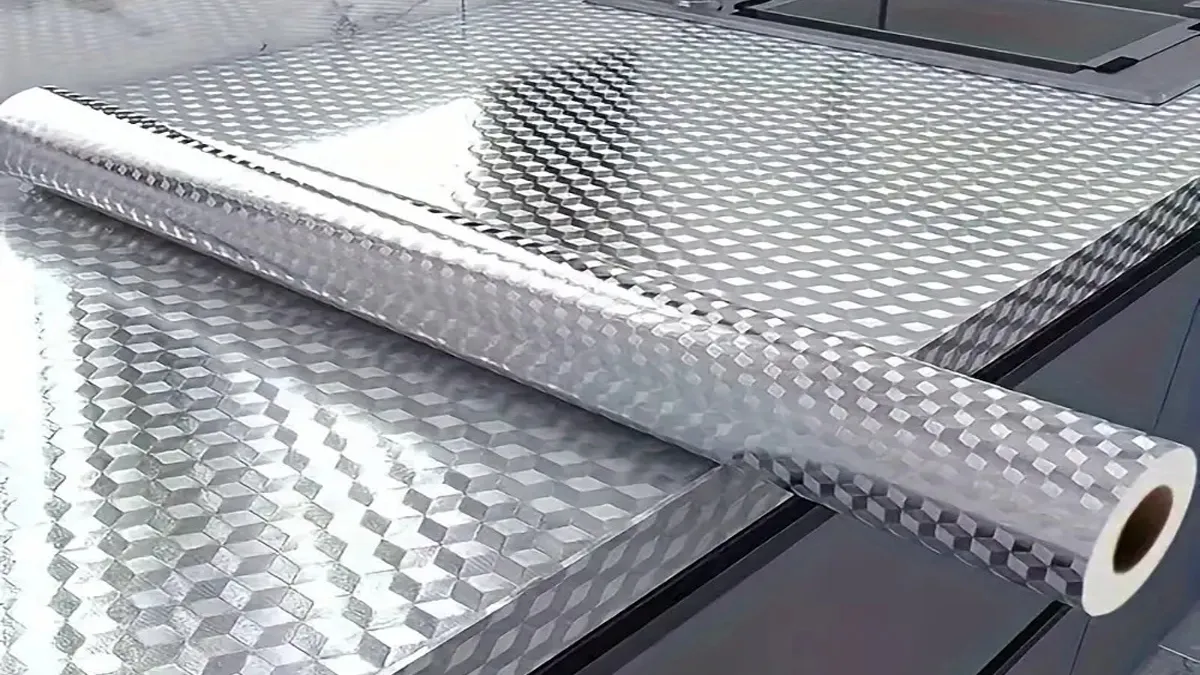
These films consist of a layer of aluminum foil bonded to a backing material like kraft paper or plastic. The foil surface offers an excellent radiant heat barrier and is highly effective as a vapor retarder. Foil-faced films are commonly used on fiberglass duct board and as the outer layer on some flexible duct insulations. The reflective surface helps maintain air temperature within the duct.
Vinyl films, such as specialized calendered PVC films, are valued for their durability, flexibility, and resistance to moisture, chemicals, and abrasion. They can be used in certain duct applications requiring a tough, cleanable surface. PVC films can also be manufactured with specific textures or finishes for aesthetic or functional purposes in exposed ductwork scenarios.
Building codes strictly regulate the materials used in air distribution systems. Many air duct films must be UL 181 listed for use with flexible air ducts and closures. These films are tested and certified to resist flame spread and smoke development, a critical safety feature. Always verify that the film product meets local code requirements for fire safety.
Air duct film is not a one-size-fits-all product; its application defines its form and material.
The core of a flexible duct is a helical wire coil covered by a layer of air duct film, which forms the actual air passage. This inner liner is then surrounded by insulation and finally an outer jacket, which is also a type of protective film (often PE or foil laminate). The quality of these film layers determines the duct’s durability, air-tightness, and thermal performance.
Perhaps the most critical DIY and professional use is sealing. Tape alone is often insufficient. Specialized duct sealing mastics are applied over joints and seams, and a reinforcing film or fiberglass mesh tape is embedded into the mastic. This creates a permanent, flexible seal that won’t dry out and crack like tape. Films used here must be compatible with the mastic and designed for long-term adhesion.
Fiberglass duct boards are lined with a rigid facing film, usually aluminum foil or a coated foil. This facing provides a smooth interior surface for efficient airflow, protects the fiberglass from erosion, and serves as the primary vapor barrier. The quality of this lamination is crucial to prevent delamination, which can compromise air quality.
Beyond core HVAC, the principles of sealing and protection translate to other areas. For instance, protective films are used on kitchen surfaces, while durable flooring films protect subfloors, analogous to how duct film protects insulation.
Proper installation is paramount. Incorrectly installed duct film can lead to leaks, condensation, and energy waste.
Gather Tools: Utility knife, straight edge, measuring tape, notched trowel (for mastic), brush, rollers, and appropriate personal protective equipment (PPE) like gloves, safety glasses, and a dust mask, especially when working with fiberglass.
Surface Preparation: All duct surfaces must be clean, dry, and free of dust, oil, or old tape residue. Wipe metal ducts with a damp cloth. For optimal adhesion, ensure the work area is well-ventilated and above the temperature recommended by the film or mastic manufacturer.
Step 1: Apply Duct Mastic. Using a brush or trowel, apply a generous, even layer of UL 181 approved duct mastic over the joint or seam. For larger gaps, use a fiberglass mesh tape first, pressing it into the gap, then cover it with mastic.
Step 2: Embed Reinforcing Film. While the mastic is still wet, press the designated reinforcing film tape firmly into it. Use a roller or your fingers (with gloves) to ensure full contact and remove air bubbles, ensuring the film is fully embedded.
Step 3: Seal the Edges. Apply a second thin coat of mastic over the edges of the film tape, feathering it out to create a smooth, continuous seal. The film should not be visible at the edges; it should be fully encapsulated in mastic.
Step 4: Curing. Allow the mastic to cure fully as per the manufacturer’s instructions (usually 24-48 hours) before pressurizing the system.
Avoid “Duct Tape”: Standard cloth or vinyl duct tape is not suitable for permanent duct sealing. It dries out, loses adhesion, and fails quickly. Use only mastic and UL-listed tapes/films.
Don’t Stretch Film Tight: On flexible ducts, ensure the inner liner film has a slight slack to allow for bending without tearing or restricting airflow.
Never Leave Insulation Exposed: All insulation on ducts must be completely covered by its designated outer film jacket to prevent degradation and fiber release.
Once installed, a visual inspection should confirm all seams are sealed and film surfaces are intact. For professional-grade assurance, a duct blaster test or blower door test can quantify the system’s overall air tightness, verifying the effectiveness of all sealing work, including the film applications.
No. Regular plastic sheeting is not designed for HVAC applications. It lacks the necessary fire-resistance ratings (UL 181), may off-gas unpleasant or harmful vapors when heated, and is not durable enough to withstand air pressure, vibration, and temperature fluctuations within a duct system. Always use films specifically manufactured and certified for ductwork.
Duct systems should be visually inspected every 3-5 years as part of routine HVAC maintenance. Signs that seals or film may need attention include visible tears or peeling, dust streaks near joints (indicating leaks), uneven heating/cooling, or a sudden increase in energy bills. A professional duct sealing job with proper mastic and film can last 10 years or more.
Yes, though some films serve both functions. An air barrier is designed to stop the movement of air (and the energy it carries). A vapor barrier (or more accurately, vapor retarder) is designed to restrict the diffusion of moisture vapor. In duct systems, the outer jacket on insulated ducts often acts as both, while the inner liner is primarily an air barrier. The climate zone influences the required vapor permeability rating.
Small punctures or tears in the inner liner of a flexible duct can sometimes be sealed from the inside using a UL 181 approved aerosol sealant designed for this purpose. However, large rips, collapsed sections, or degraded film typically require that section of the duct to be replaced, as repairs may not restore proper airflow or sealing integrity.
For detailed information on various specialized films, from decorative surfaces to protective layers, you can explore resources like the knowledge base of manufacturers who produce a wide range of polymer films for industrial and construction use.