Address
304 North Cardinal St.
Dorchester Center, MA 02124
Work Hours
Monday to Friday: 7AM - 7PM
Weekend: 10AM - 5PM
Address
304 North Cardinal St.
Dorchester Center, MA 02124
Work Hours
Monday to Friday: 7AM - 7PM
Weekend: 10AM - 5PM


 ByPulivk
Understanding PVC film color fastness is essential for manufacturers, specifiers, and buyers who need decorative or protective films to retain appearance over time. This guide explains the main tests, acceptable quality levels, and practical QC steps to ensure consistent color stability for indoor and outdoor PVC films.
Color fastness determines how well a PVC film maintains its color when exposed to light, rubbing, cleaning, heat, and chemicals. Poor fastness leads to fading, staining, or color transfer that damages product aesthetics and reduces perceived quality. For applications such as furniture wrap, flooring protection, automotive decals, and kitchen films, stable color performance is a top buyer requirement.
Manufacturers commonly use internationally recognized methods to measure color stability. Below are the test types that matter most when specifying PVC film products.
Simulated sunlight exposures (xenon arc or UV weatherometers) reveal how pigments and inks degrade. Results are often reported as ΔE (color difference) or via comparative scales. For commercial-grade decorative film, a target of ΔE ≤ 3 in accelerated tests indicates acceptable performance for many interiors; higher thresholds apply for outdoor-facing products.
Crocking tests (dry and wet) check color transfer under friction. A typical acceptance criterion for decorative films is a wet/dry rating of ≥ 3–4 on standard scales; premium films aim for ≥4 to minimize staining in handling and use.
Exposure to household cleaners, oils, and solvents tests whether color bleeds or the surface is altered. Films intended for kitchens and bathrooms must resist common cleaning agents without noticeable color change or finish degradation.
Simulated thermal cycles and oven-aging identify yellowing or pigment migration caused by heat. Acceptance is often based on ΔE thresholds and visible inspection for yellowing or gloss loss.
When films are laminated or applied over substrates, the interaction can affect color (ghosting, bleed-through). Adhesive migration tests and post-lamination light/heat checks are crucial for ensured stability.
| Test Type | Example Method | Typical Acceptance |
|---|---|---|
| Lightfastness (UV/Weathering) | Xenon arc / QUV accelerated weathering (ISO/ASTM-based) | ΔE ≤ 3 (interior); higher targets for exterior applications |
| Rubbing / Crocking | Crockmeter (AATCC/ISO equivalent) | Wet/Dry ≥ 3–4 |
| Chemical / Cleaning Resistance | Spot tests, solvent rub tests | No visible bleed, ΔE minimal |
| Thermal Aging | Oven cycles, heat chamber | No yellowing; ΔE within spec |
| Adhesion / Lamination Stability | Peel tests + post-laminate exposure | No migration, no color shift |

To keep production reliable, set a clear sampling plan: take random samples from each production shift for lightfastness and rubbing tests, and perform batch-level chemical exposure checks on finished rolls. A typical acceptance workflow includes:
Color masterbatches and inks must be pre-qualified—run pigment stability checks and batch-to-batch ΔE comparisons before production.
During calendering and coating, monitor surface appearance and run quick rub tests. Record process parameters for traceability.
Each finished batch should have a QC report with measured ΔE, crocking values, and weathering simulation results. Reject criteria must be defined clearly (e.g., ΔE exceeds spec or wet crocking <3).
Improve color stability by selecting UV-stable pigments, using light stabilizers and UV absorbers in the PVC formulation, optimizing ink curing, and ensuring proper top-coats. Lamination adhesives should be tested for compatibility to avoid migration or staining.
When placing orders, specify the required test types and numeric targets (ΔE limit, crocking ratings, exposure hours for weathering). Ask suppliers for a QC report per shipment and sample certificates for pigment lots.
Packing, labeling, and traceability are as important as test results. Clear roll labels with batch numbers, production date, and test references enable rapid follow-up if an issue appears in the field.
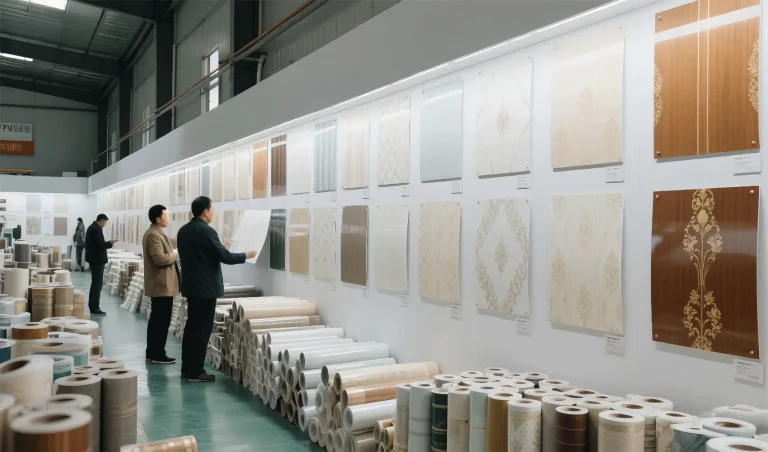
Pulivk offers full in-house production capabilities—including calendering, printing, and split-packaging—with multiple QC checkpoints to help ensure color fastness and consistent delivery.