Address
304 North Cardinal St.
Dorchester Center, MA 02124
Work Hours
Monday to Friday: 7AM - 7PM
Weekend: 10AM - 5PM
Address
304 North Cardinal St.
Dorchester Center, MA 02124
Work Hours
Monday to Friday: 7AM - 7PM
Weekend: 10AM - 5PM


In the world of modern food preservation and presentation, PVC food film stands as an indispensable material. This versatile plastic film, made from Polyvinyl Chloride, offers clarity, stretchability, and a reliable barrier against moisture, air, and contaminants. From wrapping leftovers at home to ensuring the freshness of products in supermarket displays, PVC food film plays a crucial role in our daily lives and across the food industry. This guide delves into the various types of PVC food film, their extensive uses, and the custom solutions available to meet specific needs.
Not all PVC food films are created equal. Different formulations and manufacturing processes yield films with distinct properties suited for specific applications. The primary types include:
This is the most common household variety. It is thin, highly stretchable, and possesses excellent cling properties, allowing it to adhere to itself and to containers without the need for adhesives. It’s perfect for covering bowls, wrapping sandwiches, and sealing food items for short-term refrigeration.
Designed for commercial use, this type offers enhanced protection. It features superior oxygen and moisture barrier properties, which are critical for extending the shelf life of perishable goods like meats, cheeses, and prepared salads in retail settings. Its strength is also higher to withstand handling and transportation.
A specialized variant engineered to withstand the heat of microwave ovens without melting or releasing harmful substances. It allows steam to escape, preventing splatter, making it ideal for reheating covered dishes safely. Look for specific labeling that certifies this capability.
Beyond these, films can be differentiated by thickness (gauge), clarity (from crystal clear to tinted), and whether they are manufactured via calendering processes for consistency or other methods. The choice depends entirely on the intended use.
The utility of PVC food film spans from the domestic kitchen to large-scale industrial operations.
In homes worldwide, it is the go-to solution for food storage. Its primary functions are:
Here, PVC film is a workhorse material critical for hygiene, presentation, and logistics.
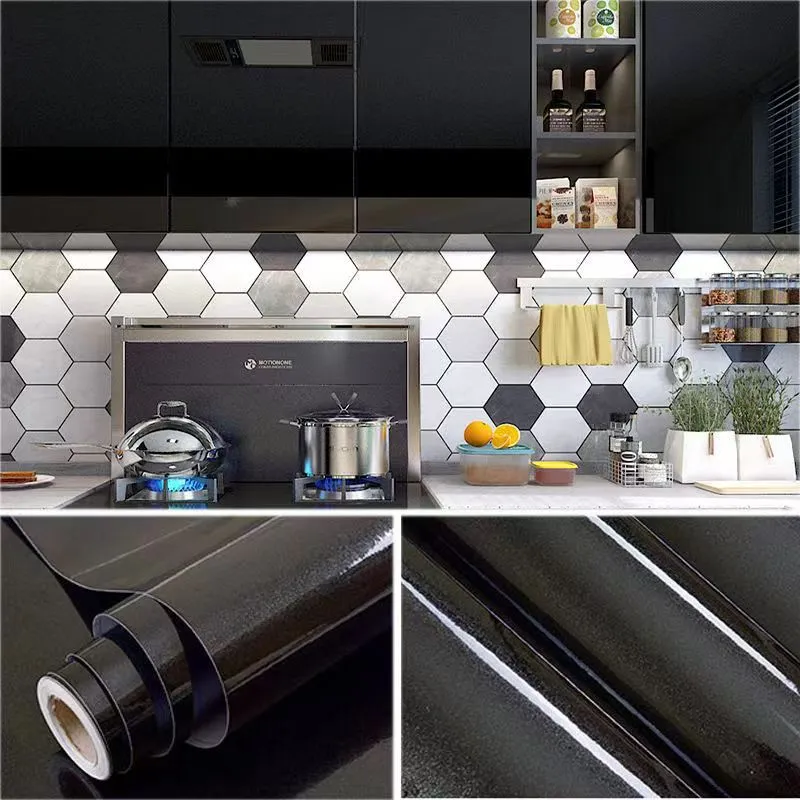
Beyond direct food contact, PVC films serve related industrial purposes. For instance, in furniture manufacturing near kitchen areas, materials like kitchen anti-oil films are used for cabinetry, while vinyl kitchen flooring provides durable, easy-to-clean surfaces. These applications highlight the material’s versatility in creating hygienic environments.
Off-the-shelf rolls are sufficient for many, but specific challenges often demand tailored solutions. This is where custom PVC food film comes into play. Manufacturers like Pulivk Film offer extensive OEM/ODM services to create films that meet exact requirements.
Virtually every aspect of the film can be adjusted:
Custom width, roll length, and core size to fit specific dispensing machines or manual handling needs. Thickness can be precisely controlled for more cling or more strength.
Adjusting the cling level (tackiness), puncture resistance, and stretchability. For example, a bakery might need a less clingy, easier-to-handle film for delicate pastries.
Applying food-grade, anti-fog coatings to prevent condensation from obscuring the product inside the package. Anti-static treatments are crucial in automated, high-speed packaging lines.
Custom logos, handling instructions, or brand colors can be printed directly onto the film. This turns packaging into a marketing tool, enhancing brand recognition on the shelf.
Engaging with a specialist manufacturer involves a collaborative process:
Partnering with a manufacturer that has full in-house control over calendering, printing, and slitting—like Pulivk Film—ensures greater consistency, faster turnaround, and more effective cost management from raw material to finished roll.
When used for food contact, safety is non-negotiable. Reputable manufacturers adhere to stringent global standards.
Always request documentation to ensure the film you are using or specifying meets the necessary health and safety standards for your region and application. For more insights into material properties and applications, exploring a knowledge base can be invaluable.
Generally, yes, when it is specifically manufactured and labeled for food contact. However, it is not recommended for wrapping fatty or oily foods that are hot, as heat can promote the migration of plasticizers. For hot and oily foods, alternatives like polyethylene (PE) film might be more suitable. Always check the manufacturer’s guidelines.
The main differences are in material and performance. PVC film is typically clearer, more stretchable, and has better cling properties, making it ideal for manual wrapping. PE film is less clingy, often milky in appearance, and is more resistant to oils and fats. PE is also generally considered safer for microwave use, though specific microwave-safe PVC films exist.
Absolutely. Many manufacturers offer custom printing services. This is excellent for branding, as you can have your logo, company name, or handling instructions printed directly on the film. This is common for restaurants, caterers, and food producers who want to maintain a professional image during delivery or retail display.
Thickness is measured in microns or gauge. Thinner films (8-10 microns) are cost-effective and suitable for light-duty home use or wrapping dry goods. Thicker films (12-15 microns and above) offer better durability, puncture resistance, and barrier properties, making them necessary for commercial meat wrapping, sharp-edged products, or items requiring longer shelf life.
Key factors include: Regulatory Compliance (request safety certificates), Technical Expertise (ability to understand and meet your specs), Customization Capability (in-house control over production steps), Quality Control Processes, and Sample Support. A supplier with experience in your specific sector (e.g., retail, catering) will understand the unique challenges better.