Address
304 North Cardinal St.
Dorchester Center, MA 02124
Work Hours
Monday to Friday: 7AM - 7PM
Weekend: 10AM - 5PM
Address
304 North Cardinal St.
Dorchester Center, MA 02124
Work Hours
Monday to Friday: 7AM - 7PM
Weekend: 10AM - 5PM


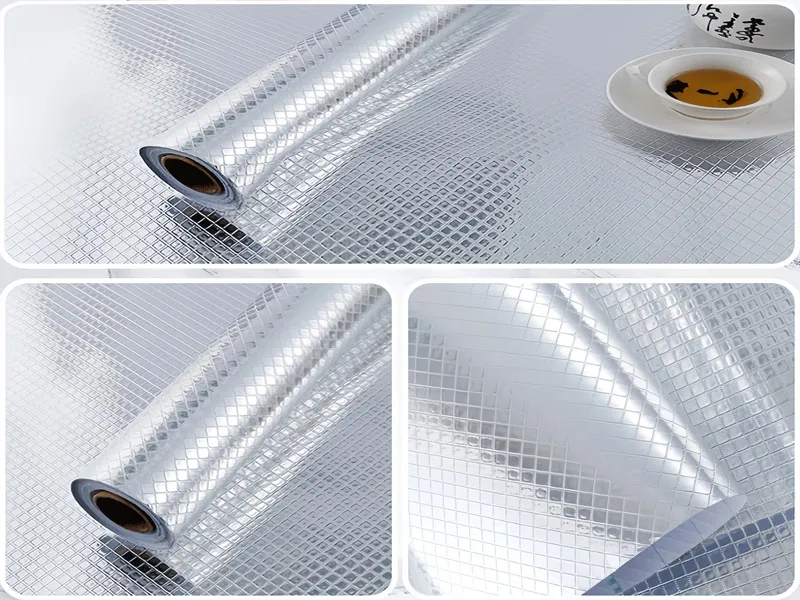
PVC shrink film, a versatile and indispensable material in modern packaging, offers a unique combination of clarity, strength, and conformability. Its ability to tightly wrap around products of almost any shape creates a secure, tamper-evident, and visually appealing package. This article delves into the various types of PVC shrink film, explores its wide-ranging applications, and highlights the custom solutions available to meet specific packaging challenges.

The effectiveness of PVC shrink film begins with selecting the right type. Variations in formulation and manufacturing yield films with distinct properties suited for different needs.
Films are engineered with specific shrinkage characteristics. Bi-axially oriented films shrink evenly in both the machine and transverse directions, providing a smooth, wrinkle-free finish ideal for boxes and regular shapes. In contrast, films with a higher differential in shrinkage ratios are perfect for bundling irregular items or creating a tight neck seal on bottles.
Thickness, measured in microns or gauge, directly impacts durability. Light-duty films (e.g., 12-15 microns) are cost-effective for lightweight consumer goods. Medium-duty films (17-25 microns) offer a balance of strength and clarity for retail products. Heavy-duty films (30+ microns) provide maximum puncture and tear resistance for industrial parts or heavy bundles.
Advanced formulations incorporate additives to meet specialized requirements:
🔹 Anti-fog Films: Prevent condensation inside packages containing moist or cold products, like fresh produce or frozen foods, ensuring product visibility.
🔹 UV Inhibited Films: Protect contents from fading or degradation caused by sunlight, crucial for products displayed in store windows.
🔹 High-Clarity & Gloss Films: Enhance the visual appeal of products on retail shelves by providing a crystal-clear, glossy finish that makes colors pop.
🔹 Printable Films: Designed to accept high-quality flexographic or digital printing for branding, barcodes, or instructions directly on the package.
PVC shrink film’s adaptability makes it a hero across numerous packaging sectors, from securing multi-packs to creating stunning displays.
This is the most visible application. Shrink film securely bundles items like bottled beverages, software boxes, toy sets, and gift packs. It provides tamper evidence and allows for the inclusion of promotional leaflets or coupons under the film. For items like furniture components or tools, it protects against dust and scratches during storage and transit.
Shrink film is vital for bundling cans, bottles, and jars. It also forms tamper-evident seals on container lids. For fresh produce, breathable or perforated shrink films can extend shelf life. The use of food-grade compliant films is non-negotiable in this sector, ensuring safety and compliance with regulations.
Beyond retail, shrink film is a workhorse in logistics. It stabilizes palletized goods, preventing movement and damage during shipping. It also protects machinery parts, metal components, and building materials like PVC skirting boards from corrosion and environmental contaminants.
Shrink film can create unique “skin” packaging, where the film is shrunk over a printed cardboard backing, securely holding the product in place. This method is excellent for hardware, small electronics, and DIY items, combining security with high-impact graphics.
Off-the-shelf solutions don’t always suffice. Modern manufacturers like Pulivk Film offer extensive customization to solve unique packaging problems.
Films can be precision-slit to any width, from narrow bands for sealing to wide formats for pallet wrapping. Core sizes, roll lengths, and outer packaging (e.g., shrink-wrapped on pallets, boxed) can all be specified to integrate seamlessly with your automated or manual packaging lines.
While clear is standard, films can be produced in colors (tints, white, black) or opacities for brand differentiation or light protection. Custom printing up to multiple colors can be applied directly onto the film, eliminating the need for secondary labels. This is ideal for creating branded multi-packs or promotional bundles.
Collaborating with a technical team allows for the development of films with specific properties. This could mean adjusting the shrink force to protect delicate products, enhancing tear resistance for sharp-edged items, or developing a film with specific static control properties for electronic components. For interior applications, films with specific textures or finishes, akin to 3D silk texture films used in decoration, can be conceptualized for premium packaging.
Leveraging expertise from producing diverse films like calendered films for industrial uses, Pulivk Film brings a robust approach to shrink film customization. Our full in-house control over the production process—from raw material compounding to final slitting and packaging—ensures stringent quality control at every stage. This vertical integration allows for rapid prototyping, consistent batch-to-batch quality, and the agility to meet tight deadlines for both small trial orders and large-scale production runs. Our global export experience means we understand the logistical and compliance requirements of international markets.
Quality in shrink film is measured by consistency in thickness, shrinkage performance, seal strength, and clarity. Reputable suppliers implement rigorous QC checks, including batch testing for physical properties. On the sustainability front, while PVC is recyclable, the industry is increasingly focused on optimizing film gauge (down-gauging) to use less material without compromising performance, and exploring bio-based or more easily recyclable polymer blends for the future.
PVC shrink film remains a cornerstone of efficient, secure, and attractive packaging across global industries. Its true power is unlocked when the correct type is matched to the application and when custom solutions are leveraged to address specific challenges. By partnering with a technically capable and experienced manufacturer, businesses can optimize their packaging operations, enhance product presentation, and achieve greater supply chain efficiency.
PVC shrink film offers excellent clarity, a high gloss finish, and superior conformability to complex shapes. It has a wide sealing temperature range, good puncture resistance, and is cost-effective. Compared to some polyolefin films, it often provides a tighter, more rigid “skin” package.
Yes, but it is crucial to use films specifically formulated to be food-grade compliant. These films are manufactured with additives that meet relevant food contact safety regulations (such as FDA in the USA or EFSA in Europe) to ensure no harmful substances migrate to the food.
The choice depends on your product’s shape and the desired finish. For uniform boxes, a balanced, bi-axial film (∼50% in both directions) is standard. For bundling irregular shapes or creating a tight “neck” on bottles, a film with a differential ratio (e.g., 60% machine direction, 20% transverse direction) is better. Your supplier can recommend the best option based on a sample.
MOQ varies significantly by supplier and the complexity of the customization. For standard films slit to a custom width, MOQs can be relatively low (a few pallets). For fully custom formulations, colors, or prints, the MOQ will be higher due to production line setup. Many reputable suppliers, however, are willing to accommodate small trial orders for new projects.
The process involves wrapping a loose sleeve or bag of film around the product, making a seal (usually with an L-sealer or impulse sealer), and then applying heat. This is done in a heat tunnel or with a heat gun, where hot air causes the film to contract tightly around the product. Equipment ranges from manual sealers and guns for low volume to fully automated high-speed L-sealers and tunnels for production lines.