Address
304 North Cardinal St.
Dorchester Center, MA 02124
Work Hours
Monday to Friday: 7AM - 7PM
Weekend: 10AM - 5PM
Address
304 North Cardinal St.
Dorchester Center, MA 02124
Work Hours
Monday to Friday: 7AM - 7PM
Weekend: 10AM - 5PM


PVC Super Clear Film represents a pinnacle in transparent material technology, offering unparalleled clarity and versatility across numerous industries. This guide delves deep into its benefits, diverse applications, and essential considerations for making an informed purchase.
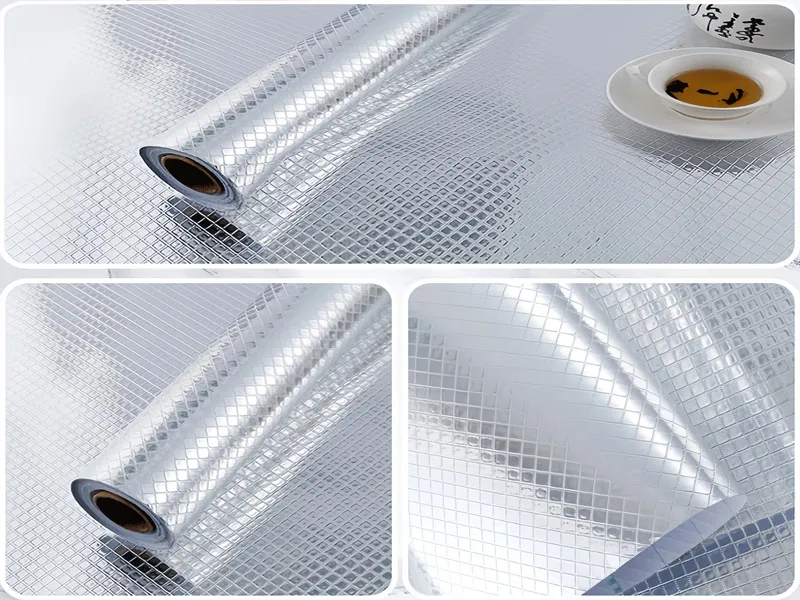
The primary advantage of PVC Super Clear Film lies in its exceptional optical clarity, which rivals that of glass while being significantly lighter and more flexible. This high transparency makes it ideal for applications where visual appeal and unobstructed viewing are paramount.
Beyond clarity, this film boasts impressive durability. It is resistant to moisture, many chemicals, and abrasion, ensuring long-term performance even in demanding environments. Its flexibility allows for easy application on curved or irregular surfaces, a feat impossible with rigid materials like glass or acrylic sheets.
From a safety perspective, PVC Super Clear Film is shatterproof, eliminating the risk of dangerous fragments. This feature is crucial in settings like schools, public transportation, or retail displays. Furthermore, many manufacturers, including industry leaders, now produce films using eco-friendly formulations and non-toxic inks, ensuring safety for indoor use and compliance with international standards like REACH and RoHS.
✓ Superior Light Transmission: Maximizes natural or artificial light passage.
✓ Weather & UV Resistance: Prevents yellowing and degradation from sunlight.
✓ Easy Maintenance: Surfaces are simple to clean with standard detergents.
✓ Cost-Effectiveness: Offers a high-end look at a fraction of the cost of glass.
The utility of PVC Super Clear Film spans from industrial packaging to high-end interior design, demonstrating its remarkable adaptability.
In retail, clarity is sales power. This film is extensively used for product clamshell packaging, allowing customers to inspect items while keeping them secure and hygienic. It’s also perfect for creating eye-catching window displays, shelf dividers, and protective barriers for interactive kiosks.
Architects and designers leverage this film for modern applications. It can be applied as a protective overlay on vinyl flooring or decorative surfaces to guard against scratches while maintaining the aesthetic. It’s also used in frameless glass partitions, shower doors, and as a protective layer for high-traffic wall areas, combining safety with sleek design.
The film’s smooth, consistent surface makes it an excellent substrate for high-quality printing. It is a staple for producing durable outdoor banners, vehicle graphics, and point-of-sale stickers. Its clarity ensures that printed colors remain vibrant and true, making it a favorite in the advertising industry.
Beyond common uses, it serves critical roles in electronics as a protective mask during circuit board assembly, in agriculture as greenhouse glazing, and in medical settings for clear, sterile barrier protection. Its versatility is a testament to advanced calendering film production techniques.
The “super clear” property is achieved through precise control of raw material purity and advanced calendering processes that minimize optical distortion and haze. This level of quality control is a hallmark of specialized producers.
Selecting the right film requires careful consideration of several technical and supplier-related factors to ensure it meets your project’s specific needs.
Do not just buy based on thickness (measured in microns or mils). Key specs include:
Always request technical data sheets from the supplier.
For applications involving food contact, toys, or indoor air quality, certifications are non-negotiable. Look for evidence of compliance with FDA, EU food contact regulations, ISO 9001 for quality management, and fire safety ratings (e.g., Class B, ASTM E84). Reputable suppliers will provide test reports or certificates of analysis.
Partner with a manufacturer that offers more than just a product. Key supplier advantages include:
Customization: Can they tailor the width, length, core size, or even the slip additive level?
Consistent Supply: Do they have stable raw material sources and production capacity?
Technical Support: Will they assist with application challenges or recommend the right film grade?
Companies with full in-house production control, like those offering comprehensive product ranges, typically ensure better quality consistency and faster lead times.
Always test a sample in your real-world application. Check for clarity, ease of application (lay-flat properties), adhesion (if applicable), and clean removability. This step can prevent costly mistakes on large orders.
A slightly higher-priced film with superior yield (less waste due to defects), easier application, and longer lifespan often has a lower total cost of ownership than a cheaper, problematic alternative. Factor in logistics, minimum order quantities (MOQs), and payment terms offered by the supplier.
PVC Super Clear Film undergoes specialized manufacturing processes and uses higher-purity resins to achieve significantly lower haze levels (often below 2-3%) and higher light transmission compared to standard clear film. This gives it a crystal-clear, almost invisible appearance when applied.
Yes, but it is critical to select a grade with UV stabilizers. Films without UV protection will degrade, become brittle, and yellow over time when exposed to sunlight. Always specify “UV-resistant” or “weather-grade” for outdoor use and confirm the expected service life with your supplier.
It can be, but only if it is explicitly manufactured and certified as food-grade. This means it complies with regulations (like FDA 21 CFR or EU 10/2011) concerning the migration of substances. Never assume a standard clear film is suitable for direct food contact.
Use a soft, lint-free cloth or sponge with a mild soap and water solution. Avoid abrasive cleaners, scouring pads, or solvents like acetone or strong alcohol, as they can scratch or cloud the film’s surface. For adhesive-backed films, clean the substrate thoroughly before application.
Recycling PVC film is challenging due to potential contaminants (adhesives, inks) and the need for specialized separation streams. While technically recyclable, infrastructure is limited. It’s best to consult local waste management authorities. Choosing a supplier committed to environmental responsibility, which you can learn more about on their knowledge hub, is a positive step.