Address
304 North Cardinal St.
Dorchester Center, MA 02124
Work Hours
Monday to Friday: 7AM - 7PM
Weekend: 10AM - 5PM
Address
304 North Cardinal St.
Dorchester Center, MA 02124
Work Hours
Monday to Friday: 7AM - 7PM
Weekend: 10AM - 5PM



PVC film developing a hazy or cloudy surface is a common concern for manufacturers, fabricators, and end users. This article explains the typical causes of haze on PVC film, how to identify the root problem, practical cleaning and repair steps, and proven prevention strategies to keep your film looking clear and glossy.
Haze usually appears as a dull, cloudy, or whitish film on the surface that reduces gloss and obscures printed patterns or textures. For applications such as furniture wrap, flooring film, and glossy wardrobe film, haze impacts aesthetic appeal and perceived quality, often prompting costly rework or replacements.
Understanding the cause is critical for choosing the right solution. Below are the most frequent reasons haze appears.
Dust, release agents, and residues from adhesives or handling can leave a fine layer that scatters light. This is often removable with proper cleaning.
Plasticizers or additives can migrate to the surface over time, creating a whitish or greasy bloom. This is more common in softer PVC films and in warm or high-humidity environments.
UV exposure and oxidation can chemically alter surface layers, producing haze, loss of gloss, and sometimes micro-cracking. Outdoor applications or poorly UV-stabilized films are most at risk.
Tiny scratches from rough handling, transport, or abrasive cleaning tools create microscale scattering sites that reduce clarity. These are common during installation in busy factory or construction settings.
Calendering, coating, or lamination issues—uneven cooling, interlayer contamination, or improper corona treatment—can trap internal stress or introduce haze during production.
Follow a simple checklist to narrow down the cause:
Choose the safest method that matches the diagnosis. Always test on an inconspicuous area first.
Use a soft microfiber cloth and a mild detergent solution or 70% isopropyl alcohol. Wipe gently along the film surface—avoid abrasive pads. Rinse with clean water and dry with a soft cloth.
Plasticizer bloom may require multiple cleanings with isopropyl alcohol, then a mild detergent wash. For persistent bloom, a commercial plastic-safe cleaner formulated for PVC may help. Note: heavy or repeated chemical cleaning can alter finish—proceed conservatively.
Very fine scratches sometimes improve with a gentle polish using a non-abrasive plastic polish and a soft buffing pad. Avoid aggressive polishing on printed films or textured surfaces.
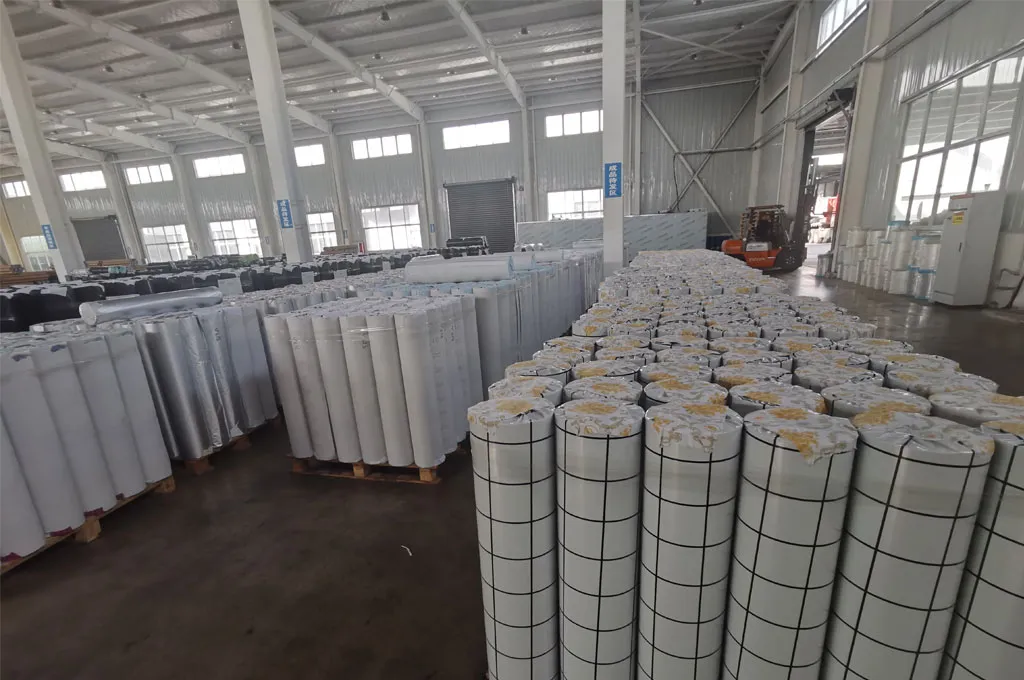
Preventing haze is far more cost-effective than fixing it. Implement these measures:
If haze is due to surface contamination or light bloom, cleaning can restore appearance. However, deep oxidation, severe plasticizer migration throughout the film thickness, or mechanical damage often warrants replacement to meet quality standards.
| Cause | Typical Sign | Recommended Action |
|---|---|---|
| Surface contamination | Dusty/dull layer, removable | Clean with mild detergent or IPA |
| Plasticizer migration | Oily/whitish bloom | Multiple cleanings; consider replacement if deep |
| Oxidation / UV damage | Uniform dullness, cracking | Replace; use UV-stabilized film next time |
| Micro-scratches | Matte streaks under light | Polish gently or replace if deep |
Pulivk produces a wide range of PVC films with full in-house control of calendering, printing, and packaging to help minimize haze risks at the source.
By combining careful diagnosis, appropriate cleaning, and preventive controls during production and storage, most haze problems can be resolved or prevented. For persistent or large-scale haze issues, consult your film supplier or quality team to evaluate material grade, additives, and processing parameters.