Address
304 North Cardinal St.
Dorchester Center, MA 02124
Work Hours
Monday to Friday: 7AM - 7PM
Weekend: 10AM - 5PM
Address
304 North Cardinal St.
Dorchester Center, MA 02124
Work Hours
Monday to Friday: 7AM - 7PM
Weekend: 10AM - 5PM


 ByPulivk
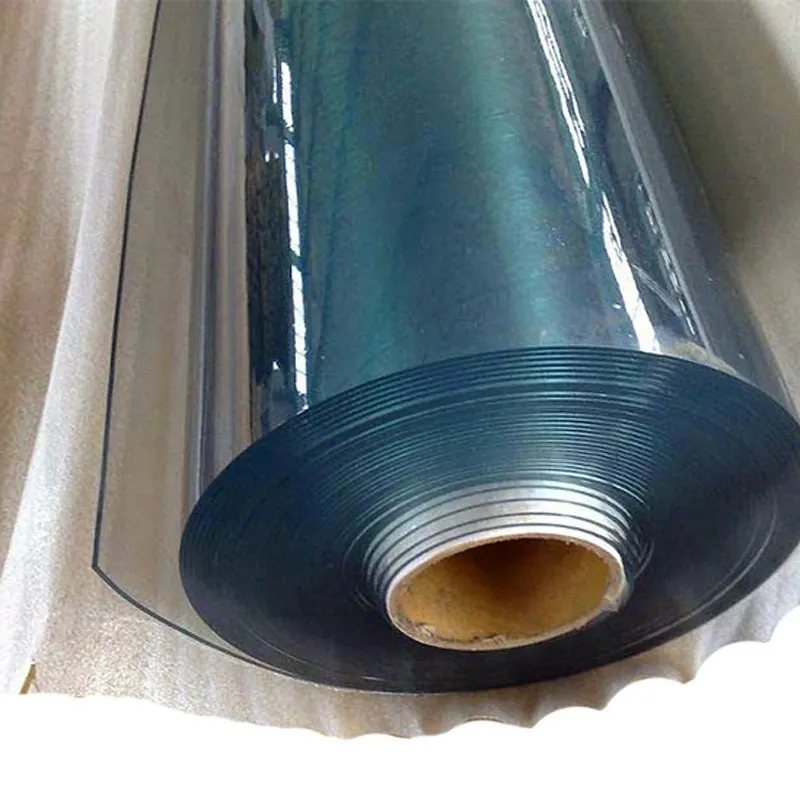
PVC film is a versatile, cost-effective material used across many industries for decorative, protective, and functional applications. This guide explains common uses, key benefits, and industry-specific examples to help buyers, designers, and procurement teams choose the right PVC film solution.
Durability & water resistance — PVC film resists moisture, abrasion, and many chemicals, making it ideal for environments that require protection and long life.
Design flexibility — Available in glossy, matte, wood-grain, marble, metallic, and 3D textures, PVC film supports high-quality printing and embossing for aesthetic finishes.
Cost efficiency & easy processing — Compared with natural materials, PVC film offers lower production costs, straightforward installation, and efficient roll-to-roll manufacturing for OEM and private-label projects.
PVC film has hundreds of real-world applications. Here are the most popular categories:
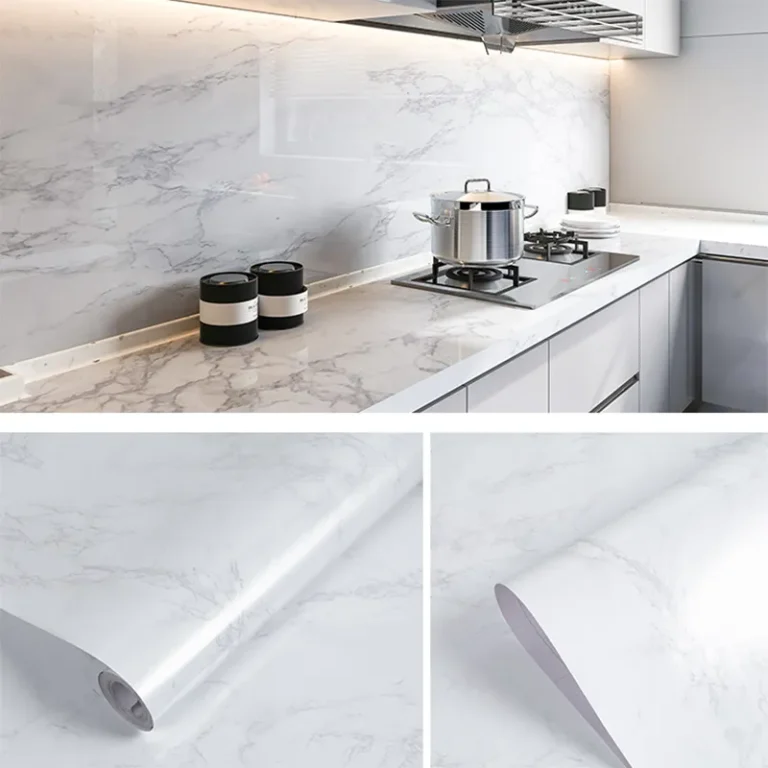
Interior decoration: surface wraps for cabinets, wardrobes, skirting, and wall coverings that mimic wood, marble, or solid colors.
Floor & bathroom stickers: protective, anti-slip, and waterproof films for temporary or semi-permanent coverings.
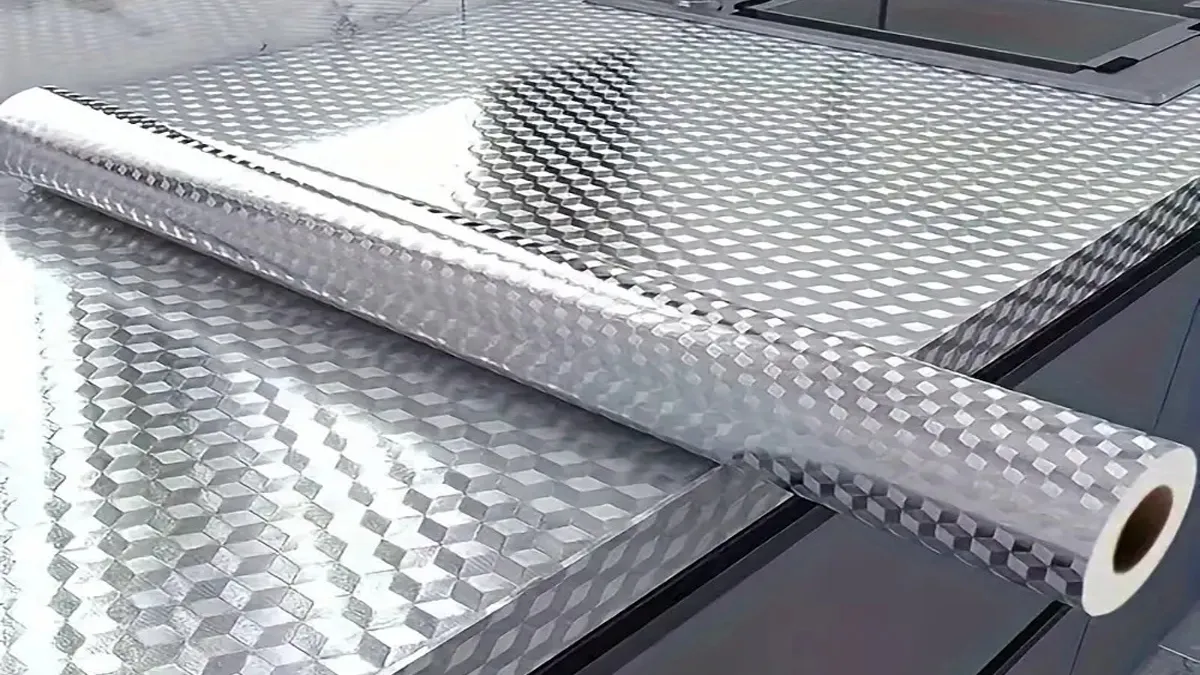
Kitchen & anti-oil films: grease-resistant films designed for backsplashes, countertops, and appliance protection.
Packaging & protective films: product wrapping, anti-rust PE overlays, and split-packaged rolls for logistics convenience.
PVC film is widely used for cabinet faces, door skins, skirting membranes, and decorative wall coverings. Its ability to simulate expensive finishes like marble or wood keeps project budgets in check while delivering designer looks.
Furniture makers use PVC film for surface lamination on wardrobes, shelving, and table tops. The film improves scratch resistance and enables fast, economical production runs with consistent color and texture.
PVC film is applied for interior trims, dashboard overlays, and protective wraps. Its printability and embossing options allow matching to vehicle interiors while providing UV and abrasion resistance.
Food-grade and oil-proof films protect products and kitchen surfaces. PVC film is often combined with split-packaging and PE wrapping to maintain hygiene and simplify distribution.
Antibacterial and anti-static PVC films are used in medical equipment covers, protective barriers, and packaging for sterile products due to their ease of cleaning and barrier properties.
Printed PVC films are common in banners, displays, and vehicle graphics. They accept high-definition printing, are cost-effective for large runs, and withstand outdoor exposure when treated for UV protection.
Choosing the correct type depends on the end use. The table below highlights common types, typical thickness ranges, and best-use scenarios.
| Type | Typical Thickness | Best Applications |
|---|---|---|
| Transparent / Glossy | 20–200 µm | Packaging, protective overlays |
| Frosted / Matte | 50–500 µm | Interior décor, anti-glare surfaces |
| Embossed / 3D Texture | 80–600 µm | Furniture, cabinetry, special finishes |
| Self-adhesive | 80–300 µm | Quick-install décor, stickers, signage |
| Anti-static / Antibacterial | 50–400 µm | Medical, electronics, protective films |
Identify the end environment — humidity, heat, UV exposure, and abrasion determine the necessary additives and thickness.
Check print and emboss requirements — high-definition graphics and deep textures need films made for calendering and quality printing.
Request split-packaging options for easier storage and assembly lines—this can reduce waste and speed up installation.
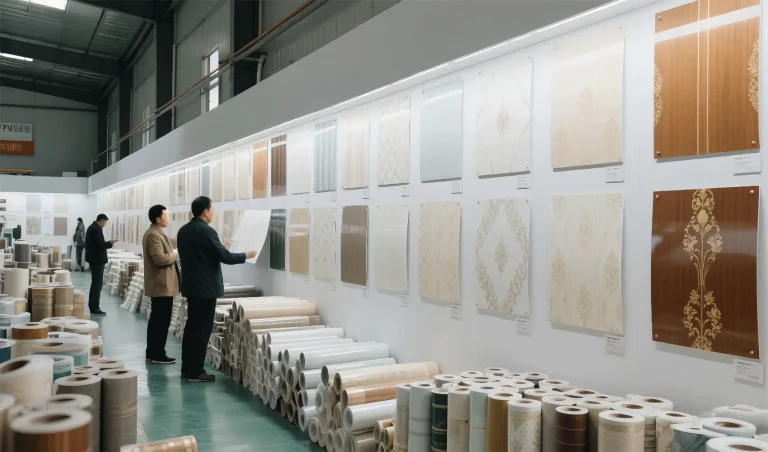
Pulivk is equipped with calendering lines, printing, and split-packaging capabilities that support full in-house production, strict QC checkpoints, and flexible OEM services to meet contract and private-label needs.
Most manufacturers offer color matching, custom prints, and cut-to-length rolls. To ensure stable lead times, confirm specs, test samples, and packaging preferences early in the procurement process.
Ready to specify PVC film for your project? Consider material type, finish, thickness, and whether split-packaging or OEM labeling is required. Well-chosen PVC film delivers durability, attractive finishes, and cost savings across a broad range of industries.