Address
304 North Cardinal St.
Dorchester Center, MA 02124
Work Hours
Monday to Friday: 7AM - 7PM
Weekend: 10AM - 5PM
Address
304 North Cardinal St.
Dorchester Center, MA 02124
Work Hours
Monday to Friday: 7AM - 7PM
Weekend: 10AM - 5PM


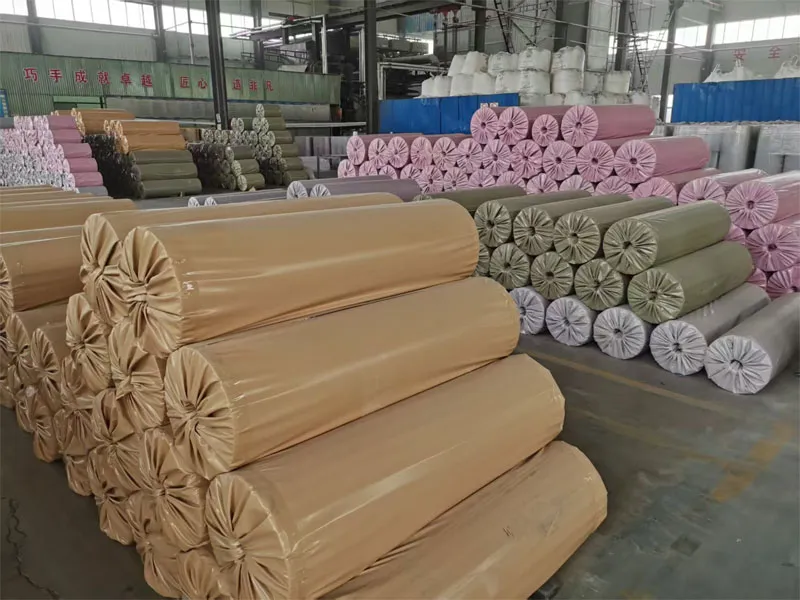
PVC film that warps, cups, or twists can ruin a finish, cause installation headaches, and increase waste. This guide explains the most common causes, proven prevention methods, and practical on-site solutions so you can keep PVC decorative and protective films flat, predictable, and ready for use.
Material and formulation: Uneven additives, inconsistent plasticizer distribution, or incompatible layers can create internal stresses that show up as warping after cooling or during storage.
Calendering and extrusion issues: Improper roll tension, uneven nip pressure, or fluctuating roll speeds produce differential stretch across the web, causing curling or twisting once rewound.
Cooling and winding: Rapid or uneven cooling and incorrect winding diameter/pressure introduce residual stresses. A tightly wound edge vs. loose center often causes edge-curling.
Environmental factors: Humidity absorption, temperature swings, and UV exposure cause dimensional changes—especially in thin films or films without stabilizers.
Storage and packaging: Stacking heavy rolls, uneven pallet loading, or contact with moisture and heat during transit encourages deformation.
| Cause | How it shows | Quick fix |
|---|---|---|
| Uneven additives or plasticizer | Local warps or stiffness differences | Blend batches; use homogenizing mixers before film forming |
| Roll tension problems | Edge curl or helical twist | Adjust tension settings; re-roll with controlled tension |
| Moisture or humidity changes | Buckling in extreme humidity swings | Climate-controlled storage; desiccants in packaging |
Control during production is key. Use these process improvements to reduce or eliminate film deformation:
Maintain stable temperatures in extruders, calender rolls, and cooling zones to avoid uneven shrinkage.
Optimize roll tension and ensure even web tracking so the entire width experiences the same stress.
Use proper winding and unwind equipment with programmable tension and lay-flat guides for uniform core builds.
Improve raw material consistency—standardize additives and plasticizers, and test each batch before production.
Allow gradual cooling or staged cooling tunnels to minimize differential contraction.
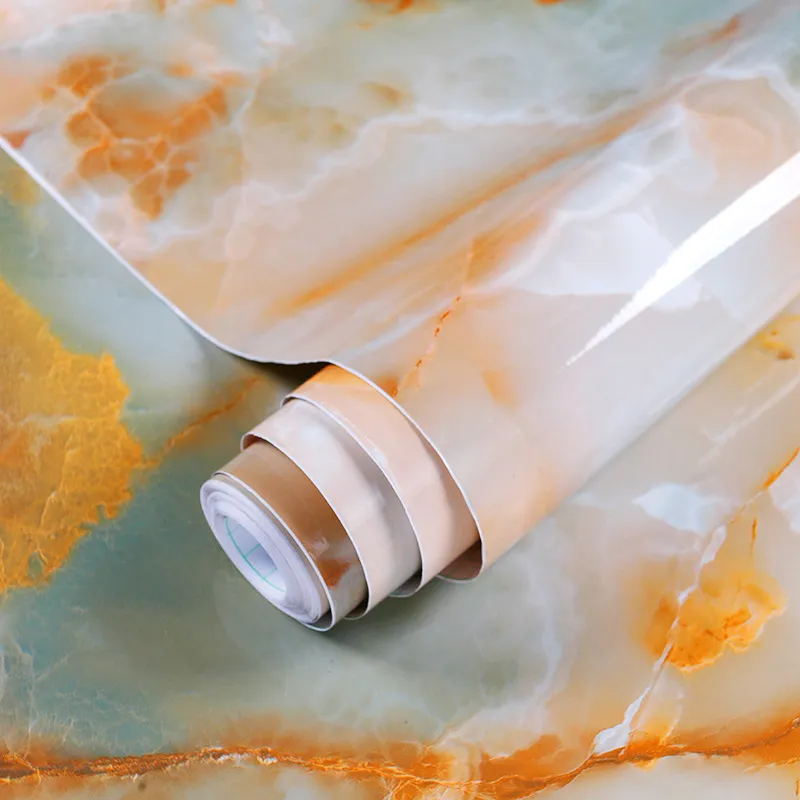
Improper handling after production can reintroduce problems. Follow these recommendations for storage and on-site installation:
Keep temperature and humidity stable—store films indoors away from direct sunlight and extreme heat.
Store rolls upright on flat pallets and avoid stacking heavy loads that can distort the core.
Condition film before use: Allow rolls to acclimate to the jobsite environment for 24–48 hours to reduce dimensional shock.
Use proper application tools such as weighted rollers, heat guns on low settings, and large flat squeegees to tension and flatten during mounting.
If your application is sensitive to dimensional stability—outdoor signage, wide panels, or environments with temperature swings—consider films with added stabilizers, multi-layer composites, or thicker calendered products that naturally resist curling.
To reduce returns and improve customer satisfaction, incorporate these QC steps into every shift:
Batch verification of plasticizer and additive levels.
Regular tension and nip pressure logs for calendering lines.
Visual and dimensional checks (flatness, gauge uniformity) before splitting and packaging.
Sample conditioning tests—simulate jobsite conditions to confirm stability.
Minor warps can often be corrected without returning the film to the factory. Try these steps in order:
Lay the film face down on a flat surface and place a few weights at opposite edges to gently reverse curl.
Use a warm (not hot) environment or low-heat gun while gradually rolling and applying tension to flatten the film.
If adhesive-backed, use a slow, overlapping application and heat to relieve stresses as you squeegee down the film.
For persistent distortion, re-roll the material with a corrective winding profile or consult your supplier.
Need production-grade PVC film that resists warping? Pulivk provides full in-house production—calendering, printing, and split-packaging—to control quality from raw materials to finished rolls. Visit https://pvcfilmtec.com/ for specifications and OEM options.