Address
304 North Cardinal St.
Dorchester Center, MA 02124
Work Hours
Monday to Friday: 7AM - 7PM
Weekend: 10AM - 5PM
Address
304 North Cardinal St.
Dorchester Center, MA 02124
Work Hours
Monday to Friday: 7AM - 7PM
Weekend: 10AM - 5PM



Food grade PVC film is widely used in modern packaging and food-contact protection because it is flexible, sealable, transparent, and cost-efficient. But “food grade” is not a generic label—it depends on the formula, manufacturing control, and compliance testing. This guide explains where food grade PVC film is used, which safety standards matter, what benefits you can expect, and how to choose the right roll for your application and production line.

Key takeaway:
A PVC film becomes “food grade” only when it meets relevant food-contact rules (e.g., FDA or EU frameworks), uses compliant additives (often phthalate-free), and is produced under controlled, traceable quality systems.
✔ Ask for compliance statements + test reports
✔ Verify migration limits for your food type
✔ Match thickness, hardness, and surface to your line speed
PVC film is a thin sheet made from polyvinyl chloride resin plus stabilizers, processing aids, and (when needed) plasticizers for softness. Food grade PVC film refers to PVC film designed for direct or indirect contact with food under specified conditions (time, temperature, food type), while meeting regulatory and internal quality requirements.
In practice, “food grade” usually means:
Food grade PVC film is chosen when brands need a balance of cling, clarity, and formability. It is used across retail, food service, and industrial food operations, especially where short-to-medium contact times are expected.
Common in overwrap and display packaging where visual appeal matters:
🛒
Meat and produce trays, bakery items, deli portions, fresh-cut fruit containers, and multi-pack grouping. Clear film helps customers assess freshness and quality quickly.
Food grade PVC film can be used for temporary coverage, separation, and contamination control. Examples include covering bowls, pans, or protecting semi-finished ingredients during staging—when temperature and contact conditions remain within the film’s compliance scope.
For some packaging structures, PVC film may serve as a layer in a composite, a window patch, or a protective overlay—where it does not continuously touch food or does so only under defined conditions. Always confirm the intended compliance scenario (direct vs. indirect contact).
The most important point: standards depend on where you sell and how the film is used. A reputable supplier should be able to provide supporting documentation and, when needed, third-party test reports.
Focus area: migration safety—whether any components can transfer to food beyond allowed limits.
Even if your primary concern is food safety, many buyers require chemical compliance frameworks. REACH relates to restricted substances in the EU supply chain, while RoHS is common in electronics-related requirements (and often requested as a general restriction baseline).
ISO certificates don’t replace food-contact laws, but they signal process consistency and environmental management. This matters for stable roll quality, traceability, and repeatable delivery across batches.
🔎
Practical buyer checklist: Ask your supplier for a compliance statement (FDA/EU as applicable), REACH/RoHS declarations, and recent migration/heavy-metal/phthalate test reports for the specific product code you are purchasing.
Clear PVC film supports strong shelf presentation and reduces the need for excessive labeling. For fresh foods, visibility influences perceived freshness and can reduce product handling by shoppers.
A key advantage is controlled cling, helping film conform tightly to trays and irregular shapes. This can reduce air pockets and improve pack stability during transport.
When thickness, softness, and roll quality are matched to your equipment, PVC film can run smoothly with stable unwind behavior, predictable tension, and good sealing performance (depending on the structure and line setup).
Compared with some specialty barrier films, PVC can be a cost-effective option where extreme oxygen/moisture barrier is not the primary requirement but clarity + handling + consistency are critical.
Choosing the right roll is about matching the film’s characteristics to food type, temperature exposure, pack format, and machinery. Below are the decision points that most directly affect safety, performance, and cost.
Film used as direct wrap (touching food) generally requires stricter evaluation than film used as an outer layer or secondary packaging. Provide your supplier with:
Thicker film usually improves toughness and puncture resistance, while thinner film improves yield (more packs per roll). The best thickness depends on tray edges, product geometry, and transport vibration.
📌
Tip: If you see frequent corner punctures or tearing at sealing stations, review thickness first—then confirm roll hardness, winding tension, and tray edge radius.
For retail display, specify optical requirements: transparency, haze, and gloss. Also confirm odor neutrality, especially for sensitive foods. If your packaging uses printing or labels, ensure the surface energy is suitable for adhesion.
Many operations struggle with condensation in chilled environments or dust attraction in dry conditions. Optional functional treatments can improve line performance and shelf appearance:
Even a compliant film can fail operationally if roll specs are mismatched. Confirm:
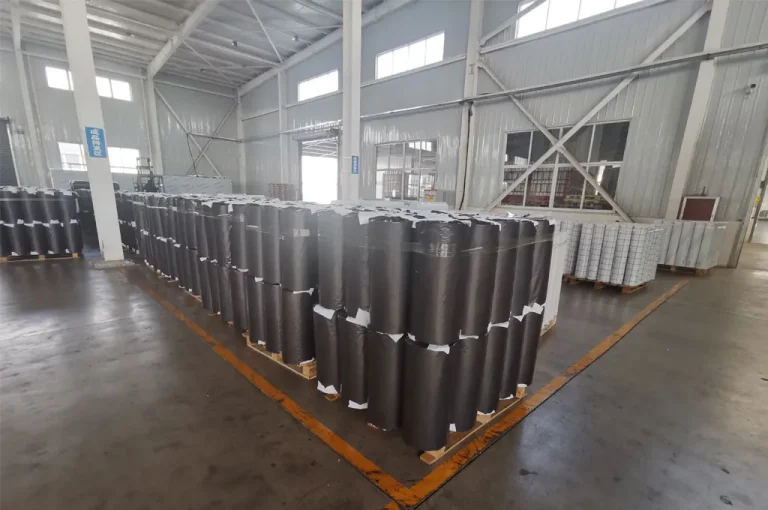
Food-contact packaging is not only about the resin—it’s also about how the film is produced, handled, and packed. End-to-end production control (from calendering to printing and slitting) reduces variability and helps keep each batch consistent.
For example, calendered film manufacturing can deliver stable thickness distribution and surface finish when process parameters and QC checks are managed tightly. If your operation requires decorative or functional surfaces, similar discipline is needed in printing and coating stages to prevent odor, poor adhesion, or inconsistent unwind.
What strong QC commonly includes:
Priority: high clarity, stable cling, and smooth machinability. You’ll typically specify tight roll tolerances and low defect standards to avoid wrinkles and “fisheyes” on display.
Priority: anti-fog performance and clean appearance under cold storage. Confirm anti-fog durability for the expected shelf time and validate it with real products in your cold chain.
Priority: documentation readiness (REACH/RoHS, management systems, traceability). If you also buy other PVC-based materials for facilities, it can help to work with a supplier who supports multiple film categories and consistent documentation. You can browse general product ranges via the product section and review technical updates via the knowledge hub.
Compliance can be compromised by poor storage and handling. Adopt basic controls to reduce contamination and maintain roll performance:
Selecting a reliable supplier is often the difference between stable production and recurring downtime. Beyond pricing, confirm whether the supplier can support: consistent roll-to-roll quality, customization, and export-ready packaging. If you need sampling or want to align on specifications quickly, use the contact channel to share your target thickness, width, roll length, surface requirements, compliance market (US/EU), and expected annual volume.
✅
PO-ready spec list: thickness, width, roll length, core ID, winding direction, target haze/gloss, treatment (anti-fog/anti-static), intended food type and temperature, compliance requirement (FDA/EU), and packaging method (PE film/kraft wrap + labels).
No. Only PVC film produced with compliant formulations and supported by appropriate food-contact documentation and testing should be used for food applications.
Ask for a food-contact compliance statement (FDA and/or EU as applicable), plus supporting test reports (migration, heavy metals, phthalates if required) and REACH/RoHS declarations when needed.
Start from your puncture risk (tray edges, product shape) and line speed. If tearing/wrinkling occurs, review thickness along with roll hardness, winding tension, and unwind settings.
If condensation reduces product visibility in chilled displays, anti-fog treatment can help. Validate performance in your actual cold chain and shelf time.
Yes. Common custom options include width, thickness, roll size, and functional treatments (anti-fog, anti-static, food-grade coating), plus packaging and labeling for traceability.