Address
304 North Cardinal St.
Dorchester Center, MA 02124
Work Hours
Monday to Friday: 7AM - 7PM
Weekend: 10AM - 5PM
Address
304 North Cardinal St.
Dorchester Center, MA 02124
Work Hours
Monday to Friday: 7AM - 7PM
Weekend: 10AM - 5PM



Flexible PVC film is a versatile plastic sheet made from polyvinyl chloride formulated with plasticizers to achieve softness, bendability, and easy forming. Because it can be transparent or highly decorative, and engineered for wear resistance, chemical resistance, and stable processing, it’s widely used across furniture, building materials, flooring, electronics, advertising, medical packaging, and household products. This guide explains where flexible PVC film performs best, which properties actually matter in real-world use, and how to choose the right type for your project or product line.
✔ Quick takeaway:
Choose flexible PVC film by matching application stress (abrasion, heat, moisture, chemicals), appearance needs (gloss/matte/texture/pattern), and processing method (lamination, wrapping, vacuum press, self-adhesive, die cutting). Then confirm key specs: thickness, hardness (Shore), elongation, adhesion, and compliance.
PVC film is produced as a thin sheet that can be tailored from soft and drapable to semi-rigid depending on formulation. In flexible grades, plasticizers create the ability to bend and conform to curves, while stabilizers and additives improve durability, color stability, and process consistency. Compared with many alternative decorative layers, flexible PVC film is valued for:
Tip: If your product needs consistent thickness and high throughput, explore
calendered film
as a base for decorative and functional laminations.
Flexible PVC film is widely used to wrap or laminate cabinet doors, wardrobes, office furniture panels, and table tops. It supports realistic patterns and textures (wood grain, cloth grain, brushed effects) while improving scratch resistance and cleanability.
For natural-looking furniture finishes, many brands choose
wood grain film
to achieve consistent color and grain across batches—especially important for modular furniture programs.
In architectural and renovation settings, flexible PVC film is used for wall panels, decorative boards, door surfaces, and skirting. It offers moisture resistance and is easier to maintain than porous materials. For trim details and edge finishing, specialized films can provide the right stiffness and surface durability.
A popular option for baseboard aesthetics and protection is
PVC skirting film,
often supplied in matched colors/patterns to coordinate with flooring and wall décor.
Flooring applications require higher abrasion resistance, dimensional stability, and stain resistance. Flexible PVC films can serve as decorative layers or protective wear layers depending on product construction. In high-traffic areas, the correct film structure and coating choice is critical.
If you’re sourcing materials for resilient floor systems, see
floor film
options designed for tougher surface performance.
Flexible PVC film can be engineered as anti-static, protective, or decorative layers for appliance panels, display surrounds, and internal insulation needs. In electronics-related use, buyers typically focus on surface resistivity targets, thickness tolerance, adhesion stability, and cleanliness.
Printability and surface consistency matter in signage and promotional materials. Flexible PVC films can be optimized for vivid color reproduction, stable flatness, and easy cutting/installation, including self-adhesive structures for faster application.
In controlled environments, flexible PVC film may be selected for protective barriers, clean packaging, and surfaces where low odor, safety compliance, and reliable QC are required. Always confirm applicable regulations (such as REACH/RoHS/FDA requirements) for your market and application.
Household use emphasizes comfort, appearance, and easy maintenance. Transparent and soft-touch variants are common for protective table covers and decorative home surfaces, where flexibility and wipe-clean behavior improve daily usability.
🔍 Spec checklist you can copy into your RFQ:
Thickness influences performance and process yield. Thicker films generally provide better coverage of substrate imperfections and higher durability, but may require adjusted forming conditions and can increase material cost. Thinner films can wrap complex profiles more easily but need tighter quality control on thickness tolerance to avoid weak points.
Texture determines how a product looks and feels in the customer’s hand. For premium interior panels and modern cabinetry, textured or fabric-like surfaces can reduce fingerprints and create a “designed” impression without changing the substrate. If you want an elevated tactile effect, consider
3D silk texture film
for a soft, refined surface style that can differentiate retail products.
Many problems blamed on “film quality” are actually mismatches between film, adhesive, primer, and substrate. In production, confirm:
Define the “enemy” before choosing a film: abrasion in retail spaces, kitchen oil in cabinets, humidity in bathrooms, or frequent disinfectant use in healthcare settings. Films can be formulated and coated differently to handle these stresses. For example, kitchens often benefit from surfaces designed for easier cleaning and better oil resistance.
Write down what the film will face daily: rubbing, sharp objects, sunlight exposure, humidity, oils, cleaners, and temperature swings. A wardrobe door in a bedroom is not the same as a cabinet front next to a stove. This step prevents over-spec (wasted cost) and under-spec (returns and complaints).
★ Common selection mistake:
choosing based on pattern only. Always confirm abrasion resistance for floors, oil/stain resistance for kitchens, and dimensional stability for large panels.
Appearance is part of product positioning. Glossy finishes can look premium and bright in showrooms but show fingerprints and scratches more easily. Matte or textured finishes hide minor wear and offer a modern look. Embossed and 3D textures can create realistic wood or fabric impressions and improve grip.
If you wrap deep profiles or complex edges, prioritize elongation and tear resistance to avoid edge cracking or whitening. For flat laminations with high wear, hardness and surface coating become more important.
For stable mass production, specify roll width, roll length, core size, and slitting tolerance. Packaging also matters: individual wrap with dust-proof PE film or kraft paper plus clear labels helps avoid transit damage and improves warehouse control.
Do not rely only on datasheets. Build a simple test plan: adhesion after aging, scratch tests on corners, stain tests using your real cleaning agents, and heat/press trials using the same equipment settings as your production line. Then adjust thickness, finish, or coating accordingly.
Used for protective layers, stationery, windows, and packaging. Key metrics include clarity, haze, surface defects, and anti-block behavior.
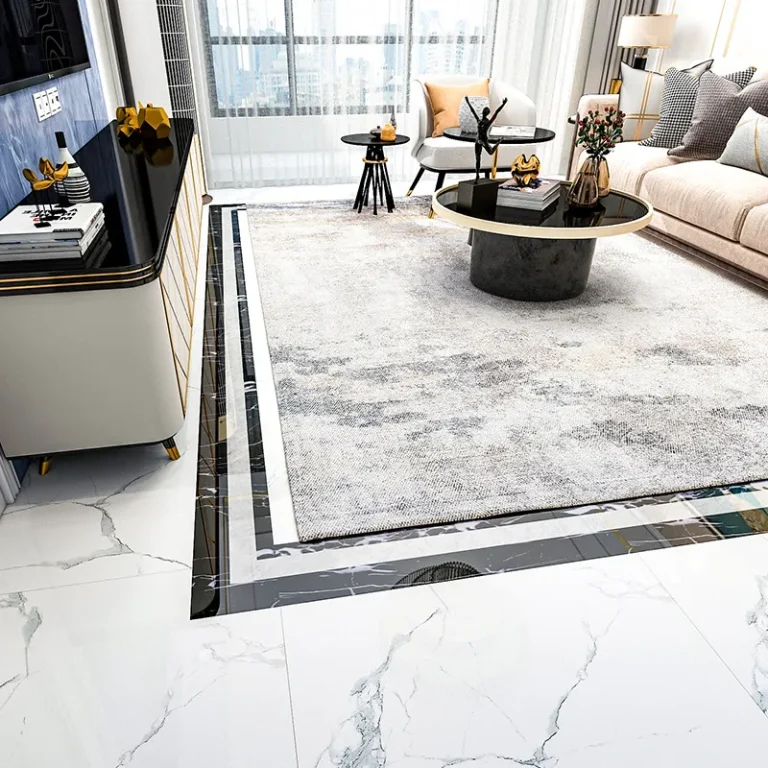
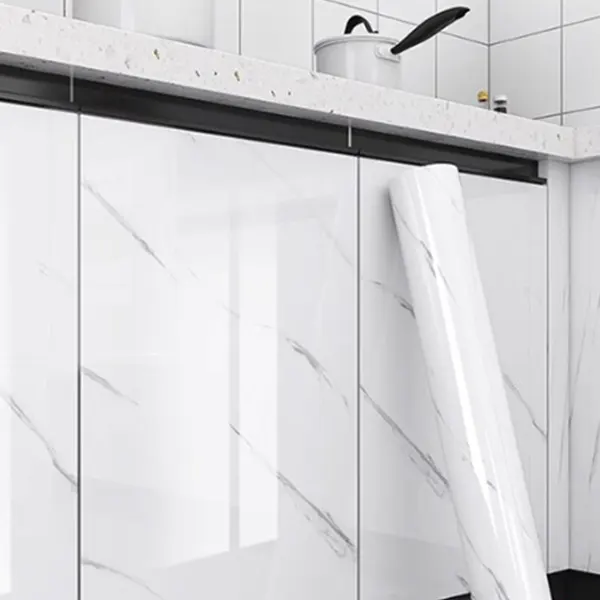
Designed to deliver consistent pattern repeat, stable color, and surface durability. For high-end interiors, marble patterns are common because they provide a premium look with easier installation and maintenance than natural stone. You can review
marble film
options when you need stone aesthetics for panels, doors, or commercial décor.
These films add tactile depth and can hide minor substrate imperfections. They are popular in furniture, wall panels, and retail fixtures where visual impact matters.
Functional treatments are chosen when performance requirements go beyond decoration. For electronics packaging, anti-static behavior can be essential; for certain household or industrial uses, anti-fog or food-contact performance may be required depending on regulations.
Flexible PVC film programs often succeed when buyers treat film as a engineered component, not a commodity. OEM/ODM customization can cover thickness, width, roll size, color matching, printing patterns, surface finish, and packaging. If you’re building a private-label or large project supply chain, confirm these items early:
For many export markets and branded products, quality assurance is as important as design. Professional suppliers typically run multi-step QC from raw materials through finished rolls, including thickness checks, surface inspection, adhesion testing, and batch traceability. When you source flexible PVC film, ask for:
Operational insight:
Full-process capability (calendering, printing, slitting, packaging) helps reduce lead time and cost because fewer steps are outsourced, and QC is easier to standardize across the workflow.
Typically caused by adhesive mismatch, insufficient pressure/temperature, substrate moisture, or contamination (dust/oil). Prevention includes proper substrate preparation, adhesive validation, and confirming the film’s surface treatment is compatible with your process.
Often linked to insufficient elongation for the profile depth, low processing temperature, or too-high hardness. Fix by choosing a film with better stretch performance, adjusting heating, and verifying forming windows with samples.
Manage by locking a color standard, defining acceptable tolerance, and requiring batch traceability. For patterned films, also confirm printing repeat control and gloss consistency between lots.
Choose matte, textured, or soft-touch finishes when fingerprints are a concern, and verify abrasion resistance for high-contact areas. Also evaluate packaging and handling—many “surface defects” occur during transport and warehouse movement.
A clear RFQ speeds sampling and reduces back-and-forth. Include:
Flexible PVC film contains plasticizers to increase softness and elongation, making it suitable for wrapping, lamination, and curved surfaces. Rigid PVC is harder and more dimensionally stiff, typically used where forming flexibility is not required.
Glossy highlights color and depth but shows fingerprints more easily. Matte offers a modern look and hides small scratches. Embossed textures add premium touch and can improve scratch concealment—ideal for furniture and wall panels.
Yes. Typical OEM/ODM options include thickness, width, roll size, color and pattern printing, surface embossing, functional coatings (anti-static/anti-fog), and export-ready packaging with labeled specifications.
Request relevant test reports for your market and application, commonly including REACH and RoHS. If the film is intended for food-contact or sensitive environments, ask for the appropriate FDA-related compliance documentation and third-party verification when needed.
Provide application, film type, thickness, width, roll length, surface finish, color/pattern reference, compliance requirements, and expected quantity. Clear details reduce sampling cycles and prevent costly spec mismatches.