Address
304 North Cardinal St.
Dorchester Center, MA 02124
Work Hours
Monday to Friday: 7AM - 7PM
Weekend: 10AM - 5PM
Address
304 North Cardinal St.
Dorchester Center, MA 02124
Work Hours
Monday to Friday: 7AM - 7PM
Weekend: 10AM - 5PM


PE (polyethylene) film and PVC (polyvinyl chloride) film are two of the most common plastic films used in packaging, protection, decoration, and industrial converting. They may look similar in a roll, but they behave very differently in real-world use—especially when you consider flexibility, durability, printability, chemical resistance, temperature performance, and long-term aesthetics. This guide explains the differences, typical uses, and a practical way to choose the right film for your project.
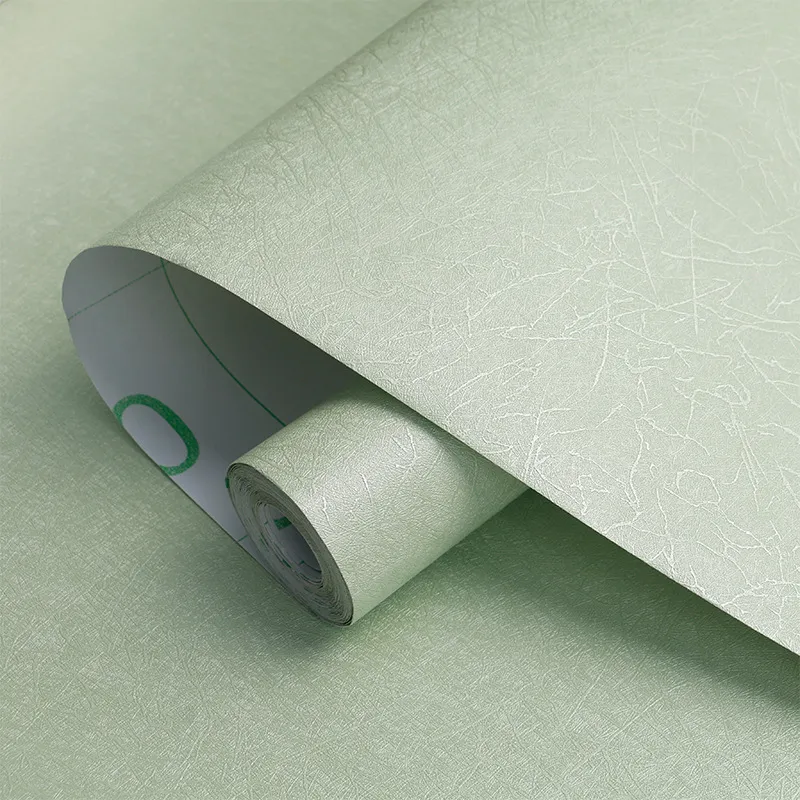
PE film is made from polyethylene, a widely used polymer known for being lightweight, flexible, and moisture-resistant. In practice, “PE film” often refers to LDPE (low-density PE) for soft, stretchable films, or HDPE (high-density PE) for stiffer films. PE is frequently chosen for packaging because it is easy to process, seals well with heat, and performs reliably as a protective barrier against water vapor and dust.
Because PE is naturally non-polar and “waxy,” it can be more challenging to print on without surface treatment (like corona treatment). However, for many protective and packaging uses, printing is not the primary requirement.
PVC film is made from polyvinyl chloride and is widely used for decorative, industrial, and specialty applications. Compared with PE, PVC can deliver richer surface effects (gloss/matte, embossed textures, 3D patterns), better dimensional stability, and strong compatibility with laminating, calendering, and coating processes. Many PVC films can be formulated to be flexible or rigid depending on plasticizers and structure.
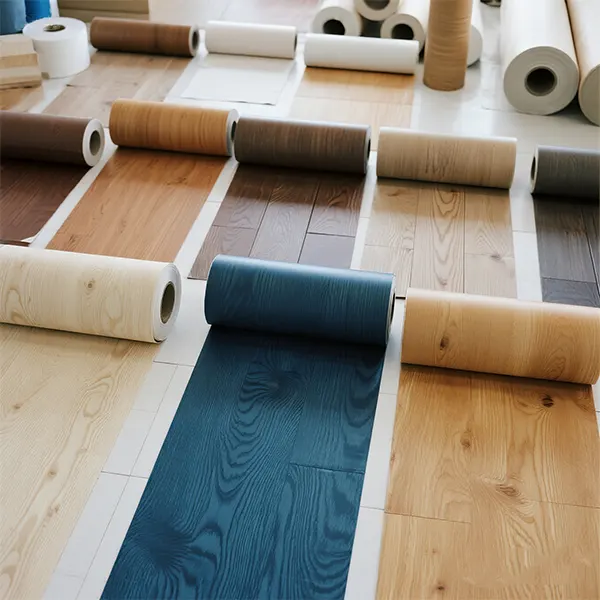
In interior decoration and furniture surfacing, PVC film is valued for its ability to replicate materials like wood, marble, textile, metal, and soft-touch finishes—while remaining easy to clean and consistent from batch to batch.
Important: “PVC film” is a broad category. Your results depend heavily on formulation (plasticizers), production method (calendered, cast), thickness, surface treatment, and whether it’s single-layer or laminated composite.
| Factor | PE Film | PVC Film |
|---|---|---|
| Feel & flexibility | Often softer and more stretchable (especially LDPE) | Can be flexible or more “body/stiffness,” better shape retention |
| Appearance options | Usually clear/translucent; fewer premium textures | Excellent decorative range: glossy/matte, embossed, wood/marble/metal looks, soft-touch |
| Printability | Often needs treatment for stable ink adhesion | Typically strong print/lamination compatibility for décor |
| Chemical & oil resistance | Good for water; varies with oils/solvents | Often performs well for household cleaning & indoor use; formulation dependent |
| Heat performance (practical) | Can soften; common for heat-seal packaging | Good stability for indoor surfaces; choose the right grade for heat exposure |
| Typical thickness | Wide range; thin packaging films common | Decor/industrial films often medium thickness for surface performance |
| Best-fit mindset | Protection, wrapping, liners, low-cost barriers | Surface finishing, decorative lamination, durable interior applications |
PE film is a workhorse for packaging and protection. It’s commonly selected when the film’s main job is to cover, wrap, seal, or protect rather than deliver a premium visual surface.
PVC film is widely used when you need a repeatable, premium surface—especially in furniture, architectural decoration, and functional industrial applications. The ability to calender, print, emboss, and laminate PVC into consistent patterns is a major reason it dominates the decorative film segment.
PVC decorative film is commonly used on cabinets, doors, wall panels, skirting boards, and other interior components because it can combine visual design with durability and easy maintenance.
In flooring systems, PVC-based films are used for wear layers, décor layers, and protective surfacing depending on structure. If you need reliable visuals and abrasion-oriented performance, film selection and structure matter.
Why PVC wins in décor: it’s not just “a plastic sheet.” Calendering + printing + embossing makes it possible to deliver stable color, texture depth, and tactile finishes that look premium on large surfaces.
Instead of choosing by name alone, choose by job-to-be-done. Use the checklist below to avoid common mismatches (for example, selecting PE for a decorative panel where embossing and stiffness matter, or selecting PVC for low-cost disposable wrapping).
If your customer will see and touch the surface every day (cabinet doors, wall panels, skirting, furniture), PVC decorative film is usually the safer, more controllable route for:
Tip: If you’re unsure, request small trial rolls and run a full process simulation (lamination/pressing, curing, cleaning, abrasion, and heat exposure) before committing to mass production.
Choose PVC decorative film. It offers stable color matching, broad pattern libraries (wood, stone, solid color, textile), and surface options like glossy, matte, embossed, and soft-touch. This is why PVC films are commonly used in furniture manufacturing and architectural decoration.
Choose PE film. It’s typically the packaging workhorse due to sealing, flexibility, and moisture protection. For transit protection where appearance is secondary, PE is often the most economical choice.
Choose PVC, especially embossed or specialty texture options. For example, 3D tactile decorative effects are usually delivered by calendering + embossing structures rather than typical PE packaging films.
Both materials can be converted, but PVC decorative production lines are often optimized for high repeatability of design + surface. If your buyer cares about matching a sample board, batch-to-batch stability is critical—PVC decorative film is frequently selected for that reason.
In decorative and industrial PVC, calendering is a key process for producing films with consistent thickness, surface finish, and mechanical behavior. Calendered film can be paired with printing, embossing, and functional coatings to build a surface that looks and feels premium while staying practical for manufacturing.
If you’re sourcing decorative-grade PVC, you’ll often see calendered film specified for furniture, building decoration, and interior surfacing. For reference, see Calendered Film.
For any film—PE or PVC—quality is not just about thickness. It includes optical consistency, tensile behavior, adhesion performance (if coated/laminated), odor control for indoor use, and traceability for large projects. If your application touches people (home interiors, medical environments, consumer products), ask suppliers about compliance and test reports.
Procurement checkpoint: Request confirmation of relevant standards (such as REACH/RoHS) and ask for batch consistency controls (QC steps, thickness tolerance, gloss tolerance, adhesion test method).
If your priority is cost-effective protection and packaging, PE film is often the most practical choice. If your priority is interior decoration, premium appearance, and stable surface performance, PVC film is typically the better tool—especially in furniture, building decoration, and high-visibility applications. The best decision comes from matching the film to your process, substrate, and performance targets, then validating with trials.
In many markets, “vinyl” commonly refers to PVC-based materials. However, always confirm the exact specification (PVC type, thickness, finish, and whether it’s calendered or laminated).
PVC is usually preferred for furniture and decorative panels because it supports realistic patterns, embossing, stable gloss control, and consistent surface feel.
PE can be printed, but it often requires surface treatment and is not typically used for high-end decorative texture effects. For premium décor and tactile finishes, PVC is more common.
Provide the intended application, thickness, width, roll length, surface finish (glossy/matte/embossed), color/pattern reference, and any functional requirements (anti-static, easy-clean, etc.).