Address
304 North Cardinal St.
Dorchester Center, MA 02124
Work Hours
Monday to Friday: 7AM - 7PM
Weekend: 10AM - 5PM
Address
304 North Cardinal St.
Dorchester Center, MA 02124
Work Hours
Monday to Friday: 7AM - 7PM
Weekend: 10AM - 5PM


Buying PVC film sounds simple until you face real project variables: surface texture, thickness, gloss level, adhesive performance, roll size, compliance, and lead time. Whether you are wrapping cabinet doors, laminating panels, protecting floors during construction, or producing packaging, the “right” PVC film is the one that matches your application environment, fabrication method, and durability target—without overpaying for features you don’t need.
✔ Quick takeaway:
Choose PVC film by (1) type & structure, (2) size & thickness, (3) surface finish, (4) functional treatments, and (5) quality & compliance.
PVC film is a thin sheet made from polyvinyl chloride, engineered for decoration, protection, insulation, and packaging. It can be produced with different textures (wood grain, stone, cloth, brushed metal), finishes (glossy, matte, soft-touch), and functional properties (anti-static, anti-fog, waterproof, self-adhesive). That flexibility is why PVC film is widely used across furniture manufacturing, interior decoration, home improvement, electronics, advertising displays, medical/cleanroom packaging, and household products.
In practice, PVC film is often selected because it can deliver consistent appearance, easy cleaning, and durable protection while remaining cost-effective and scalable for mass production.
For many decorative and industrial uses, calendered PVC film is the go-to option because it offers stable thickness control, good surface quality, and high output efficiency. If you want a strong, scalable base film for printing, embossing, or laminating, start here.
You can explore product details for Calendered Film.
💡 When calendered film fits best:
stable thickness, smooth or embossed surfaces, consistent roll quality, and reliable performance for furniture wrap, wall panels, doors, and flooring layers.
Decorative PVC films focus on aesthetics and touch. Common patterns include wood grain, marble/stone, cloth grain, metal, artistic textures, and 3D embossed effects. These films are widely used on cabinet doors, wall panels, partitions, skirting boards, and retail display surfaces.
Functional PVC films are chosen for performance rather than decoration. For example, clear and frosted films support visibility and privacy; anti-static films reduce dust attraction for electronics environments; self-adhesive films simplify installation; waterproof films protect substrates in wet areas; soft-touch films improve premium feel on furniture and consumer products.
★ Tip:
If your environment includes oil, cleaning chemicals, humidity, or frequent contact, prioritize surface coating choice and adhesion stability over appearance alone.
PVC film is typically purchased in rolls, and the “best size” depends on your lamination equipment, cutting method, and waste tolerance. When comparing suppliers, confirm three dimensions: thickness, usable width, and roll length (or weight).
Thickness influences stiffness, conformability, scratch resistance, and perceived quality. Thinner films generally wrap easier and cost less, while thicker films improve durability and emboss depth. For decorative wrapping on flat surfaces, you can often use a moderate thickness; for high-traffic contact or deeper emboss, a thicker option may perform better.
📌 Ask your supplier to confirm:
Choose a width that matches your panel size and slitting plan. If you frequently cut to narrow strips (e.g., skirting, trims, edge wraps), custom slitting can significantly reduce scrap. Roll length affects line uptime: longer rolls reduce changeovers, but can be heavier and require better handling to avoid edge damage.
Start with what the film will be applied to: MDF, plywood, metal, glass, plastic boards, composite panels, or existing surfaces. Then confirm the bonding method: hot lamination, cold lamination, vacuum pressing, wrapping, or pressure-sensitive adhesive. Different applications require different plasticizer balance, surface energy, and adhesive systems.
Glossy finishes look clean and premium but show fingerprints and micro-scratches more easily. Matte reduces glare and hides minor marks. Soft-touch adds a high-end feel, often favored for modern furniture and retail fixtures. For showrooms or bright retail lighting, request samples and check appearance under the same lighting conditions where the product will be used.
If you are building a consistent collection (e.g., kitchen cabinets + wall panels + skirting), pick patterns that align in tone and grain direction. For premium looks, 3D textures can add depth and realism. For example, a refined textile-like surface can be sourced from options such as
3D Silk Texture Film.
🔎 Design consistency checklist:
confirm batch color stability, emboss repeat consistency, and whether the film has directional grain that affects cutting plans and installation.
Functional coatings and treatments can increase cost, but they are worth it when they prevent failures. Consider anti-static for electronics packaging or dust-sensitive spaces, anti-fog for humidity-prone surfaces, waterproofing for wet-zone decorative panels, and oil-resistant solutions for kitchen areas. If your application involves frequent cleaning, ask about chemical resistance and stain resistance.
For consistent production, focus on repeatable QC indicators: thickness uniformity, color delta between batches, surface defect rate (gel, pinholes, scratches), adhesion performance, and roll edge condition. A strong supplier should offer batch traceability and be willing to align test standards before mass production.
Cabinet doors, wardrobes, tabletops, and office furniture often demand decorative realism plus daily wear resistance. Wood grain and matte options are common; soft-touch is popular for premium lines. Pay special attention to scratch resistance, edge wrapping performance, and color consistency across production batches.
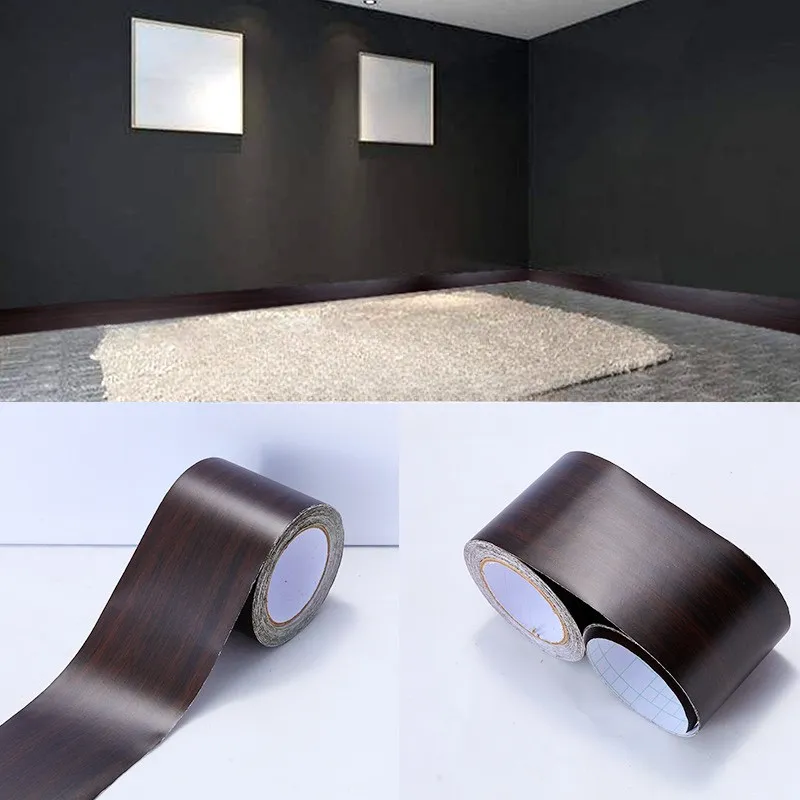
Wall panels, partitions, ceilings, and skirting require stable appearance over time. If you are covering long runs (like skirting), selecting a dedicated skirting solution helps with width, durability, and installation expectations:
PVC Skirting Film.
Protective and insulating films may require anti-static behavior and tighter surface cleanliness control. Here, consistent thickness and functional coating stability matter more than decorative depth.
Display films are often judged under strong lighting and camera capture. Prioritize color vibrancy, surface uniformity, and printability. If the film is used for short-term campaigns, optimize cost and installation speed.
Clean environments demand dependable material safety and consistent performance. Confirm compliance expectations early and ensure the film’s additives meet the regulatory requirements of your market.
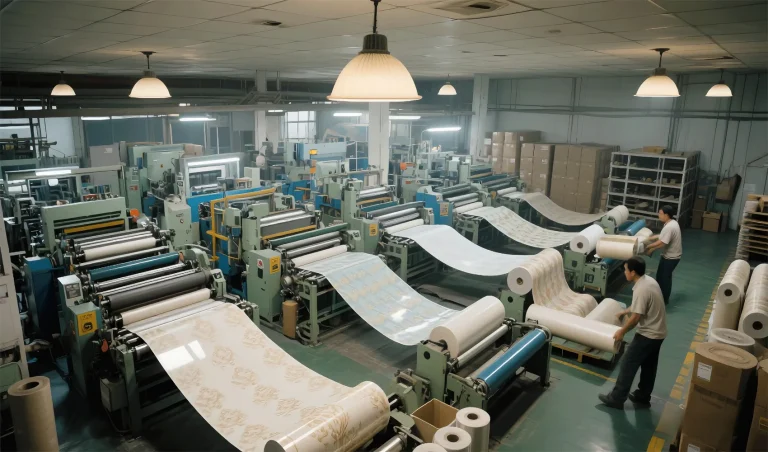
Two suppliers can sell “the same” PVC film type but deliver very different outcomes in mass production. Look for suppliers with full process control—calendering, printing, and slitting/packaging—so they can manage quality, shorten lead time, and reduce cost drivers that come from outsourcing.
✅ What “full-process” usually improves:
If you need your PVC film to match a brand palette, a furniture collection, or a specific lamination line, OEM/ODM is often the best route. Common customizable items include thickness, width, roll size, color and pattern, emboss texture, surface finish (glossy/matte/soft-touch), and functional coatings (anti-static, anti-fog, food-grade).
Film quality can be ruined in transit by edge crush, dust contamination, or moisture. Ask for roll-by-roll protective wrapping (such as dust-proof PE film or kraft paper), clear labeling, and export-ready outer packaging. These details matter most when you run automated laminating lines that are sensitive to edge defects.
Many buyers now require materials that align with global safety and environmental expectations. If your product is used indoors or involves human contact, request documentation that supports your compliance needs. Common references include ISO management systems, REACH, RoHS, and—where applicable—FDA-related requirements for specific contact scenarios.
Important:
Always confirm whether the film is free of restricted substances (for example, heavy metals and certain plasticizers) and whether third-party test reports are available for your target market.
To get a quote that matches your real needs, provide a clear specification pack instead of only saying “PVC film price.” Include the film type (e.g., wood grain, marble, clear, self-adhesive), thickness, width, roll length, finish (glossy/matte/embossed/soft-touch), functional requirements (anti-static, anti-fog, oil resistance), intended application process (vacuum press, hot lamination, wrapping), and your estimated quantity.
🧾 Sample evaluation checklist:
PVC film is a thin polyvinyl chloride sheet used for decoration, protection, insulation, and packaging. It’s common in furniture wrapping, interior wall panels, flooring layers, electronics protection, advertising displays, and household waterproof applications.
Choose glossy for high-shine visuals, matte to reduce glare and hide fingerprints, and textured/embossed when you want a more realistic feel (wood, cloth, stone) and better scratch-hiding performance.
Yes. OEM/ODM options commonly include thickness, width, roll size, color matching, pattern printing, emboss texture, surface finish, and functional coatings such as anti-static or anti-fog.
Ask for batch traceability and relevant compliance documentation such as ISO management certifications and, when required by your market, REACH/RoHS/FDA-related test reports and third-party verification.
Provide film type, thickness, width, roll length, finish, functional requirements, your application method, and order quantity. This helps the supplier quote correctly and recommend the most cost-effective construction.