Address
304 North Cardinal St.
Dorchester Center, MA 02124
Work Hours
Monday to Friday: 7AM - 7PM
Weekend: 10AM - 5PM
Address
304 North Cardinal St.
Dorchester Center, MA 02124
Work Hours
Monday to Friday: 7AM - 7PM
Weekend: 10AM - 5PM



Static electricity is a common nuisance in manufacturing, packaging, electronics assembly, and even home renovation projects. When materials rub, peel, or unwind from a roll, electric charges can build up—leading to dust attraction, uncomfortable shocks, print defects, or even ESD (electrostatic discharge) risks. PVC film is widely used across industries, so a natural question follows: can PVC film prevent static—and if so, under what conditions?
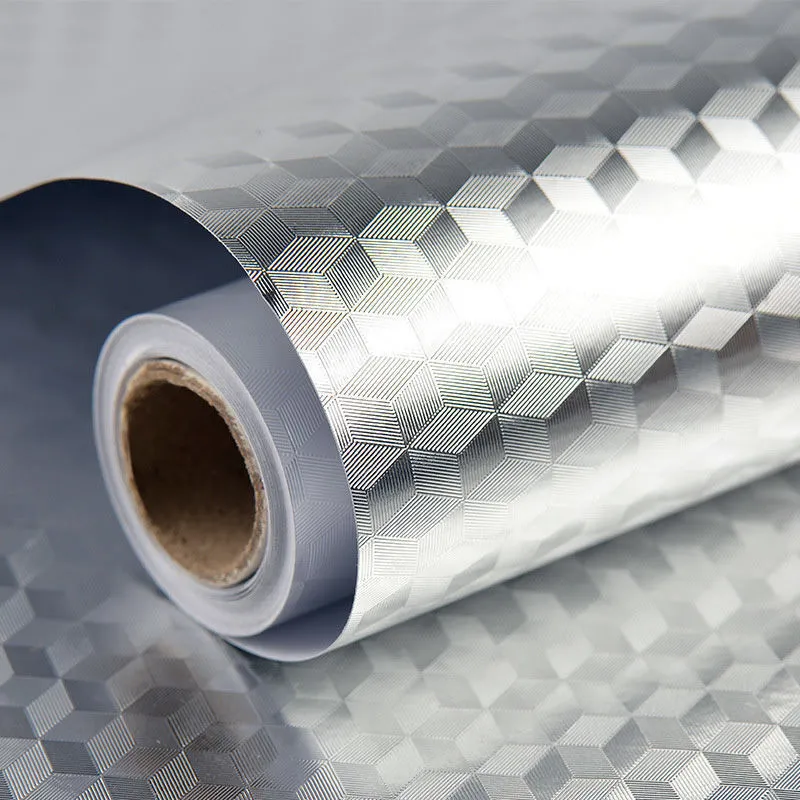
This guide explains the anti-static properties of PVC film, the difference between standard and anti-static grades, where anti-static PVC is used, and practical solutions you can apply in real production lines to reduce static problems.
Static electricity on films mostly comes from the triboelectric effect: when two surfaces contact and separate (film unwinding, laminating, die-cutting, sliding over rollers), electrons transfer and remain trapped on the surface. Plastics are generally good insulators, so the charge does not dissipate quickly.
Key factors that increase static on films:
Standard PVC film does not “prevent” static by itself. Like many polymer films, regular PVC can build charge during processing and handling. However, PVC can be engineered to reduce static through anti-static additives, anti-static coatings, and surface treatments—creating what the market typically calls anti-static PVC film.
⚠ Practical takeaway:
If your application involves electronics, clean rooms, dust-sensitive lamination, or fast unwinding, you should specify anti-static grade rather than assuming a standard decorative or transparent PVC film will solve static issues.
Anti-static PVC film typically reduces static by allowing surface charges to dissipate more quickly. This is often achieved by incorporating agents that migrate to the surface and attract a thin layer of moisture, forming a weakly conductive path. Some solutions focus on internal additive systems; others rely on top coatings designed for controlled surface resistivity.
Additives blended during PVC compounding can provide ongoing anti-static behavior. They may gradually bloom to the surface and reduce charge build-up. The benefit is convenience and cost efficiency; the tradeoff is that performance can vary with humidity, abrasion, and aging.
Coatings can be applied inline or offline to achieve more stable surface resistivity and consistent performance, especially in demanding processes like high-speed slitting or electronics packaging. Coatings can also be engineered to preserve optical clarity or matte appearance.
In ESD-protected areas, “anti-static” may not be enough. Some applications require ESD-dissipative or conductive film structures, sometimes using specialized fillers or multilayer constructions. Choosing the correct grade depends on your ESD standard, target surface resistivity, and whether the film contacts sensitive components.
Anti-static PVC film is widely applied where static causes quality defects, contamination, or safety risks. Below are common usage categories—many of which overlap in modern production lines.
If you are selecting a base film for converting, the processing method matters. For example, calendered PVC film is common for decorative and industrial applications and can be specified with functional surface treatments such as anti-static, depending on your requirements.
Many buyers describe the problem as “dust on the film.” Static is one driver of dust attraction, but not the only one. Even with anti-static treatment, you can still get dust from:
Anti-static film reduces electrostatic attraction, but it should be paired with basic cleanliness and controlled handling. For decorative applications where tactile feel and visual texture matter (such as premium interiors), textured surfaces like 3D silk texture film may also require tailored cleaning and process settings to avoid trapping particles in micro-textures.
If you’re facing static shocks, dust attraction, or slitting problems, treat it as a system issue: material selection + environment + equipment grounding + process parameters. The checklist below is designed for fast implementation on real production lines.
✔ Material-level actions:
Dry environments cause static to persist. Many converting facilities see immediate improvement by maintaining stable relative humidity. Even small adjustments can reduce shocks and dust attraction because moisture helps charges dissipate.
Tip: If you cannot humidify the whole workshop, start with a localized solution near unwinding/rewinding stations, where charge generation is highest.
Static management fails quickly if equipment is not properly grounded. Ensure the unwind stand, rewind shafts, idler rollers, slitting frames, and operator platforms are bonded to ground. Replace worn conductive brushes and confirm continuity with a meter.
Ionizing bars or blowers neutralize charges on the film surface in real time. They are especially useful in high-speed slitting, laminating, and printing where static is generated faster than it can dissipate through additives alone.
Excessive tension and aggressive wrap angles increase friction and contact area, producing more charge. Adjusting tension, using suitable roller coverings, and changing the peel geometry can significantly reduce static—often without any material change.
Static issues often appear as “dirty film.” Combine anti-static measures with controlled cleaning: lint-free wipes, filtered compressed air, roller cleaning schedules, and sealed storage. For decorative surfaces such as wood grain film, good dust control is essential because particles can become highly visible after lamination under raking light.
To avoid mismatched expectations, define “anti-static” using measurable requirements and real process conditions. When requesting a quotation or samples, provide:
Manufacturers with full in-house lines—calendering, printing, and slitting/packaging—can usually tune anti-static performance while keeping visual and mechanical requirements stable across batches. This matters because “anti-static” is not a single feature; it’s a balance between performance, durability, and surface aesthetics.
Anti-static PVC film helps reduce charge build-up and dust attraction, but it is not magic. Performance can drop if the surface is abraded, heavily cleaned with incompatible chemicals, or used in extremely dry conditions. Also, anti-static additives that rely on surface migration may change over time, especially if the film is stored for long periods before use.
🔎 Good practice:
Validate anti-static performance on your actual line speed and environment using trial rolls, and store film in sealed packaging to reduce contamination and moisture swings.
No. Standard PVC film can generate and hold static. Anti-static behavior typically requires additives, coatings, or specific ESD-control structures.
It can significantly reduce electrostatic dust attraction, but dust control also depends on air cleanliness, handling, roller hygiene, and storage conditions.
If you are protecting sensitive electronics or working in an ESD-controlled area, you may need ESD-dissipative performance rather than general anti-static. Define your target surface resistivity and compliance needs, then test samples on-site.
Yes. Low humidity is one of the biggest contributors to persistent static. Many static issues improve quickly when humidity is stabilized in the processing area.
Share the film type (transparent/decorative/adhesive-backed), thickness and width, surface finish, application process (slitting/lamination/printing), and your anti-static target or the problem you are trying to solve (dust, shocks, ESD risk).