Address
304 North Cardinal St.
Dorchester Center, MA 02124
Work Hours
Monday to Friday: 7AM - 7PM
Weekend: 10AM - 5PM
Address
304 North Cardinal St.
Dorchester Center, MA 02124
Work Hours
Monday to Friday: 7AM - 7PM
Weekend: 10AM - 5PM


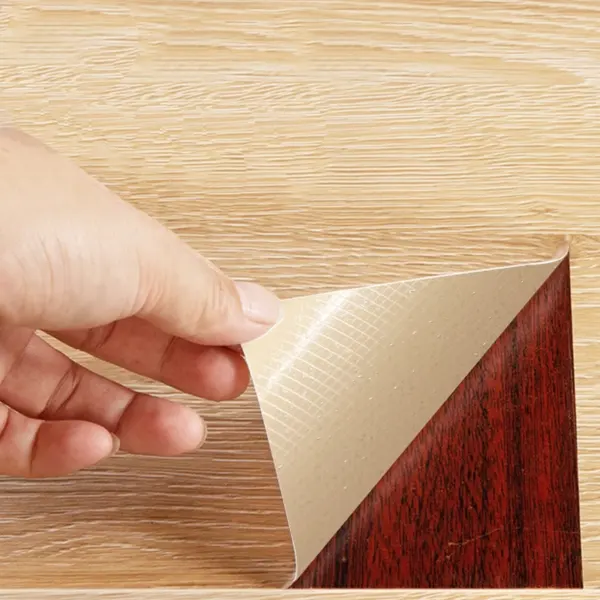
Fire-retardant PVC film is engineered to help slow flame spread, reduce ignition risk, and improve overall safety in spaces where decorative and functional surfaces are widely used—such as furniture panels, wall cladding, ceilings, partitions, and cable or equipment protection. Compared with standard PVC decorative film, fire-retardant grades are formulated and processed to deliver more reliable performance when exposed to heat, while still offering the aesthetics, durability, and workability that make PVC film a practical material choice in modern interiors and industrial environments.
✔ Quick takeaway:
A “fire-retardant” PVC film does not mean non-combustible. It typically means the material is designed to self-extinguish or resist ignition under defined test conditions, helping you meet safety targets while keeping a premium surface finish.
Fire retardant PVC film is a polyvinyl chloride film produced with specific formulations and process controls that improve its reaction-to-fire behavior. Depending on the grade, this may include optimized resin selection, flame-retardant additives, controlled plasticizer systems, and surface or functional coatings. In practice, the goal is to reduce how easily the film ignites, limit flame propagation, and reduce dripping or afterflame time.
What it isn’t: it is not a replacement for structural fireproofing, and it does not eliminate the need to design the full assembly (substrate + adhesive + film) for the target regulation. Fire performance is always a system result, not only a film result.
● Practical note:
Always confirm whether the required compliance applies to the film alone (material test) or to the laminated panel/finished product (assembly test). This single detail determines how you should specify thickness, adhesive type, and substrate.
Decorative surfaces are often widespread—cabinet doors, wall panels, skirting, elevator surrounds, retail fixtures—so even small improvements in reaction-to-fire behavior can have a meaningful impact. Fire-retardant PVC film helps add a safety margin while still supporting woodgrain, marble, solid color, metallic, matte, glossy, and textured looks.
In addition to fire behavior, many FR PVC films are specified because they also deliver stable everyday performance: abrasion resistance, stain resistance, moisture resistance, and easy maintenance. This is especially valuable in high-traffic areas, public interiors, and furniture surfaces that must maintain appearance over time.
PVC film can be supplied in formats suitable for lamination, wrapping, and surface bonding. When produced with consistent calendering, printing, and slitting control, it helps manufacturers reduce waste, stabilize yield, and shorten lead times—especially important for OEM programs with color/pattern consistency requirements.
★ Buyer checklist (performance):
Confirm afterflame time, afterglow, dripping behavior, smoke tendency (if required), heat shrink, and color stability after heat exposure. These factors affect both compliance and appearance.
Fire-retardant PVC film is used across interior finishing and industrial surface protection where designers want decorative impact but projects demand higher safety consideration. Below are typical use cases and why FR grades are chosen.
For cabinet doors, wardrobes, office furniture, and store fixtures, FR PVC film supports attractive aesthetics and helps reduce fire risk in dense interior environments. Popular looks include woodgrain and glossy solid colors; for reference product families, see
Wood Grain Film
and
Glossy Wardrobe Film.
In commercial interiors (offices, retail, hospitality), decorative PVC films are laminated onto boards to create consistent, cleanable finishes. FR grades are especially relevant for corridors, shared areas, and high-occupancy zones where local codes may be stricter. Solid colors and subtle textures can be used to support minimalist design; a related product direction is
Solid Color Wallpaper.
Skirting and trim areas sit at the perimeter of rooms and are exposed to cleaning, scuffing, and occasional heat sources. A stable, well-laminated FR film can support both durability and safety targets—particularly in public buildings and dense residential projects. Related surface options include
PVC Skirting Film.
Some flooring constructions and protective layers use PVC film technologies where wear, cleaning chemicals, and frequent traffic are expected. If the project requires reaction-to-fire consideration in the floor assembly, selecting an appropriate film grade is part of the system design. A reference category is
Floor Film.
Not all PVC films behave the same under heat. Even within “FR” categories, performance depends on a combination of formulation and process control. Manufacturers that run a complete line—calendering, printing, slitting, and packaging—can stabilize these factors and improve batch consistency.
Fire-retardant performance is influenced by the base PVC resin and the balance of plasticizers, stabilizers, fillers, and flame-retardant additives. The “right” formulation is application-specific: a film for furniture wrapping may prioritize thermoforming stability and adhesion, while a film for wall panels may prioritize dimensional stability and long-term color consistency under indoor lighting.
Calendering consistency affects thickness uniformity, tensile properties, and surface quality—all of which impact lamination behavior and end-use durability. In some designs, thickness can also influence reaction-to-fire results, so specifying a target thickness range and controlling tolerance is important. If you’re evaluating base materials, a useful reference is
Calendered Film.
Decorative films often rely on printed layers, topcoats, and functional coatings (anti-static, anti-fog, easy-clean). For FR applications, you should ensure ink and coating selections don’t undermine fire performance targets or introduce unwanted smoke/odor issues. Using environmentally conscious inks can also be important for indoor projects and human contact surfaces.
⚑ Don’t miss this:
If your final product uses an adhesive, the adhesive type and coat weight can significantly affect fire test outcomes. Ask for guidance on compatible lamination systems and request an evaluation on the finished assembly, not only the raw film.
The “best” fire-retardant PVC film grade is the one that meets compliance needs while delivering stable manufacturing and long-term surface performance. Use the steps below to narrow down options quickly and reduce costly rework.
Define where the film will be used (furniture surface, wall panel, trim, equipment cover) and what the project must satisfy (client spec, building code, transportation requirement, etc.). Confirm whether the target requirement is about flame spread, ignition resistance, smoke, toxicity, or a combination. Then decide whether testing is needed at the material level or as a laminated panel.
Thickness affects handling, wrap performance, and surface feel. Embossing and texture impact scratch hiding and perceived quality, while high-gloss finishes may show surface defects more easily. If you are wrapping profiles or deep shapes, check elongation and thermoforming behavior. For panel lamination, flatness and dimensional stability are often the priority.
Adhesion failure can ruin an otherwise compliant project. Provide your supplier with substrate details (MDF, plywood, SPC, metal, foam board), adhesive type, press temperature, dwell time, and intended service environment (humidity, cleaning chemicals, heat sources). Request peel tests and heat aging results relevant to your production line.
Many buyers need proof of quality management and chemical compliance for global markets. If your supply chain requires it, confirm availability of ISO-based quality systems, traceability, and statements regarding restricted substances. If you operate in regulated industries, request third-party test reports aligned with your target market before mass production.
Surface films are sensitive to dust, pressure marks, and moisture during shipping. Define roll length, core size, edge protection, and outer wrap requirements. Export-ready packaging—such as individual wrapping with protective materials and clear specification labels—helps ensure the film arrives ready for production.
✓ RFQ essentials:
Provide application, thickness, width, roll length, surface finish (gloss/matte/emboss), pattern/color reference, adhesive/lamination method, fire test target, and annual volume. This speeds sampling and improves first-pass success.
Many projects fail not because of fire performance, but due to everyday functional mismatches. When selecting a fire-retardant PVC film, check these additional factors to ensure the surface stays attractive and stable throughout its life cycle.
A disciplined sampling process is the fastest way to confirm that a fire-retardant PVC film is the right fit for your production and compliance goals. Start with lab samples, move to pilot runs on your actual lamination or wrapping equipment, and only then lock in bulk production specifications.
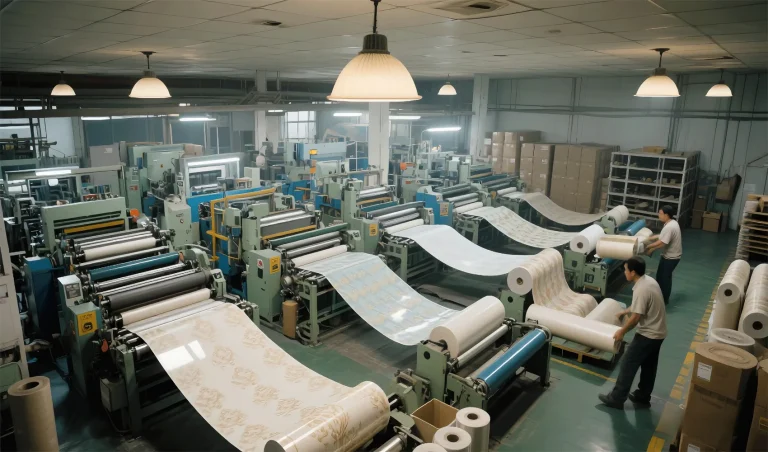
Fire-retardant performance and surface quality depend on repeatable control—material inputs, calendering parameters, printing alignment, curing, slitting tension, and packaging protection. A supplier with integrated capabilities (calendering, printing, and slitting/packing) can better manage traceability and reduce variability between lots, which is essential when your project requires consistent testing outcomes and stable appearance.
If your project involves customized patterns, special embossing, anti-static or easy-clean features, or OEM branding/packaging, confirm the supplier can execute these options without compromising the targeted fire-retardant grade.
1) Does fire-retardant PVC film mean the product is fireproof?
No. It generally means the film is designed to resist ignition or slow flame spread under defined test methods. Always confirm what standard and test condition your project requires.
2) Should fire testing be done on the film or on the laminated panel?
Many regulations apply to the final assembly (substrate + adhesive + film). If compliance is required for the finished product, test the complete construction, not just the film.
3) Will flame-retardant additives affect appearance or flexibility?
They can. That’s why grade selection should include visual evaluation, wrap/lamination trials, and heat aging checks to ensure the desired gloss, emboss, and forming behavior remain stable.
4) How do I choose thickness for a fire-retardant decorative film?
Start from your application process (flat lamination vs. wrapping), surface durability needs, and the required test target. Then validate with pilot runs to confirm adhesion, shrinkage, and surface performance.
5) What information should I send to get an accurate quotation?
Share application, thickness/width/roll length, surface finish, pattern/color reference, substrate and adhesive method, fire performance requirement, and estimated order volume. This enables faster sampling and more precise pricing.