Address
304 North Cardinal St.
Dorchester Center, MA 02124
Work Hours
Monday to Friday: 7AM - 7PM
Weekend: 10AM - 5PM
Address
304 North Cardinal St.
Dorchester Center, MA 02124
Work Hours
Monday to Friday: 7AM - 7PM
Weekend: 10AM - 5PM


High temperature PVC film is engineered for demanding environments where standard plastic films may soften, deform, or lose insulation performance. In industrial insulation applications—such as wire harness protection, electrical cabinets, motor insulation layers, appliance heat zones, and factory equipment shielding—heat-resistant, flame-retardant PVC film provides a balanced combination of thermal stability, mechanical toughness, and process-friendly converting.

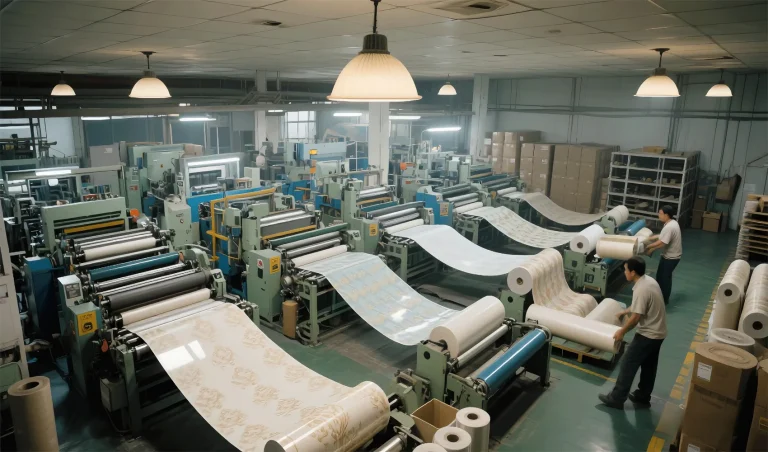
At Pulivk Film, we develop and manufacture PVC films with full-process control (calendering, printing, slitting, and packaging), helping industrial buyers achieve consistent quality and stable lead times for large-volume projects. If you’re evaluating materials for insulation, safety compliance, or long-life durability, the sections below explain what high temperature PVC film does, how to specify it, and how to use it effectively in real industrial workflows.
“High temperature” in PVC film usually refers to a formulation and manufacturing process optimized to maintain performance under elevated heat exposure. While PVC is not a high-temperature polymer like PTFE, properly engineered PVC film can deliver reliable insulation and flame-retardant behavior in many industrial environments where operating temperatures are moderate to moderately high, intermittent heat spikes occur, or strict flame spread requirements apply.
Industrial insulation is not only about temperature control—it’s about minimizing risk in real operating conditions: heat cycling, vibration, oils, dust, and occasional short-circuit or arcing hazards. Flame-retardant PVC film is commonly selected because it offers a strong safety-performance-cost balance and integrates smoothly into production lines.
PVC film converts efficiently through slitting, die-cutting, laminating, and wrapping. This matters when insulation materials must scale across thousands of units without slowing production.
Flame-retardant formulations help reduce ignition probability and slow flame spread, supporting safer electrical and equipment insulation structures.
PVC’s dielectric properties make it a practical material for protective layers in electrical assemblies, control cabinets, and industrial equipment interiors.
High temperature, flame-retardant PVC film can be deployed across multiple insulation-related use cases. The right choice depends on operating temperature range, contact media (oil, moisture, cleaning agents), required thickness, and whether the film is used as a standalone barrier or as part of a laminated composite.
For insulation projects, buyers often choose either a single-layer PVC film or a composite built by laminating PVC with foam, fabric scrim, aluminum foil, or specialty functional layers. The best option depends on your thermal performance target, mechanical reinforcement needs, and installation method.
Single-layer films are widely used when the insulation structure already exists (e.g., a housing design provides air gaps), and the film acts as a flame-retardant protective barrier, electrical separator, or surface layer for durability and cleanability.
Laminates are selected when you need additional thermal resistance, cushioning, or reinforcement. PVC film becomes the outer protective skin or inner barrier layer, while the companion substrate provides bulk insulation or structural stability.
If your design will be laminated or hot-pressed, confirm thermal shrinkage control and adhesive compatibility early—this prevents bubbling, edge curl, and delamination during mass production.
Calendered PVC film is produced using calender rolls that create stable thickness and uniform surface quality—important for insulation applications where consistent dielectric separation and predictable converting behavior are required. With a well-controlled calendering line, you can achieve tighter tolerances, steadier roll flatness, and reliable downstream processing.
For buyers who need stable roll-to-roll performance, you can review our calendered film capabilities here:
https://pvcfilmtec.com/product/calendered-film/
Insulation failures often come from unclear specifications—especially when the film must perform under heat, mechanical stress, and strict safety expectations. A robust specification sheet reduces risk and improves supplier alignment.
Industrial insulation materials are often audited for safety and environmental compliance. Pulivk Film uses environmentally safer inks and supports documentation aligned with major compliance expectations. Many buyers also require films that are free of heavy metals and restricted plasticizers, plus traceable QC data by batch.
Ask for third-party test reports when necessary, plus internal QC records covering thickness, tensile strength, adhesion (if applicable), and visual inspection. For regulated markets, confirm alignment with ISO systems and material compliance frameworks such as REACH/RoHS where applicable.
Insulation projects value repeatability. When your film is used across many assemblies, even small variations in thickness or shrinkage can create downstream issues. Pulivk’s integrated production—from calendering to printing, slitting, and packaging—helps reduce variation, shorten communication loops, and support consistent delivery for ongoing contracts.
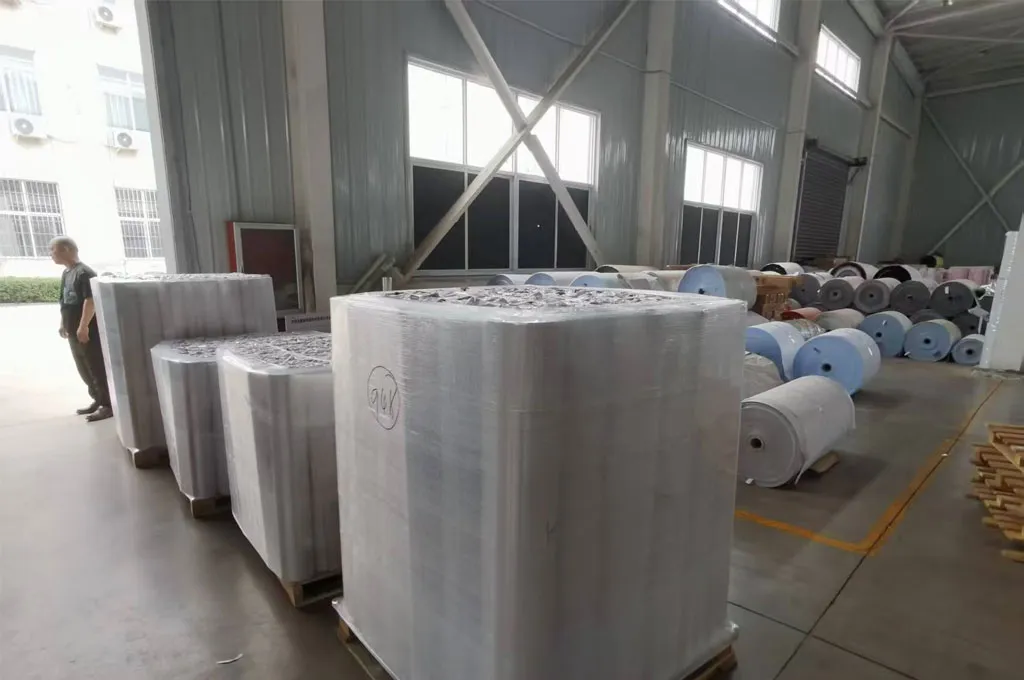
We handle transparent, matte, embossed, pearlescent, colored, anti-static, self-adhesive films, as well as single-layer and multi-layer composite structures. Rolls can be slit to customer-required widths and packaged with dust-proof PE film or kraft paper, labeled for easier warehouse scanning and production line identification.
To explore more product categories or request a tailored option, you can navigate:
https://pvcfilmtec.com/product/
or visit our company overview:
https://pvcfilmtec.com/about-us/
Many insulation applications need more than “heat resistant.” Consider how the film is touched, cleaned, and installed. For example, if the film doubles as a protective decorative surface for panels or enclosures, surface texture and scratch resistance matter. If it is internal and unseen, dimensional stability and dielectric behavior may dominate.
Some industrial customers use functional PVC film while also caring about appearance—especially for equipment housings, modular panels, or high-visibility enclosures. In those cases, decorative PVC films can be engineered with functional add-ons such as flame retardancy, anti-static performance, or easier cleaning.
If your project needs a textured, abrasion-friendly surface while keeping PVC processability, you may evaluate options like:
https://pvcfilmtec.com/product/3d-silk-texture-film/
and for high-coverage floor/panel protection layers used in facility upgrades:
https://pvcfilmtec.com/product/floor-film/
Industrial insulation designs differ widely by equipment geometry, temperature profile, and compliance needs. OEM/ODM customization helps you lock in the right balance of heat resistance, flame retardancy, thickness, stiffness, and surface treatment—without compromising on production stability.
With in-house calendering, printing, and slitting/packaging, we reduce handoffs that typically create delays. This supports stable delivery for long-running insulation programs and recurring replenishment orders.
For samples, specifications, or quotation requests, contact us directly:
https://pvcfilmtec.com/contact/
Yes. PVC film is widely used as an insulating and protective layer in many electrical and industrial assemblies. Confirm dielectric requirements, thickness tolerance, and operating temperature profile with your supplier before mass production.
Flame-retardant PVC film uses a formulation designed to reduce ignition risk and slow flame spread. The exact performance depends on grade and testing requirements, so align the film grade with your compliance target.
Yes. OEM/ODM customization commonly includes thickness, roll width/length, surface finish (matte/glossy/embossed), and functional treatments such as anti-static, depending on the application.
Request batch traceability and QC inspection data, including thickness measurements and key mechanical tests. For critical projects, confirm sampling plans and acceptance tolerances before the first production run.
Share the target application, thickness, width, roll length, required flame-retardant level, surface finish, color/printing needs, and estimated order quantity. This enables accurate costing and lead-time confirmation.