Address
304 North Cardinal St.
Dorchester Center, MA 02124
Work Hours
Monday to Friday: 7AM - 7PM
Weekend: 10AM - 5PM
Address
304 North Cardinal St.
Dorchester Center, MA 02124
Work Hours
Monday to Friday: 7AM - 7PM
Weekend: 10AM - 5PM


Understanding how clear PET protective film is helps buyers, engineers, and designers choose the right material for packaging, displays, automotive trim, and electronics protection. This guide explains transparency, clarity, haze, and performance so you can match PET film specs to your application.
Transparency in PET protective films is determined mainly by base polymer quality, film thickness, and surface treatments. Higher light transmission and lower haze result in visually clearer films. Manufacturers control these factors during extrusion and calendering to produce films suited for high-clarity needs like display protection or advertising graphics.
Two numbers tell the clarity story:
| Film Type | Light Transmission (%) | Haze (%) | Typical Thickness (µm) |
|---|---|---|---|
| Ultra-clear PET | 92–95 | <5 | 12–50 |
| Standard clear PET | 85–92 | 5–15 | 20–100 |
| Frosted / matte PET | 40–80 | >20 | 30–150 |
Thicker PET increases light absorption and can slightly reduce transmission; microvoids or incompatible additives create scattering and raise haze. Surface coatings—anti-glare, anti-scratch, anti-fingerprint, or anti-static—can alter perceived clarity. Good manufacturers optimize coating thickness and refractive index to keep haze low while adding function.
Ultra-clear PET — engineered for optical-grade applications (LCD protectors, high-end packaging).
Standard clear PET — cost-effective, clear enough for many protective and decorative uses.
Matte / frosted PET — reduces glare, used where diffused light is preferred.
Functional PET — UV-blocking or anti-reflective films trade some transmission for protection.
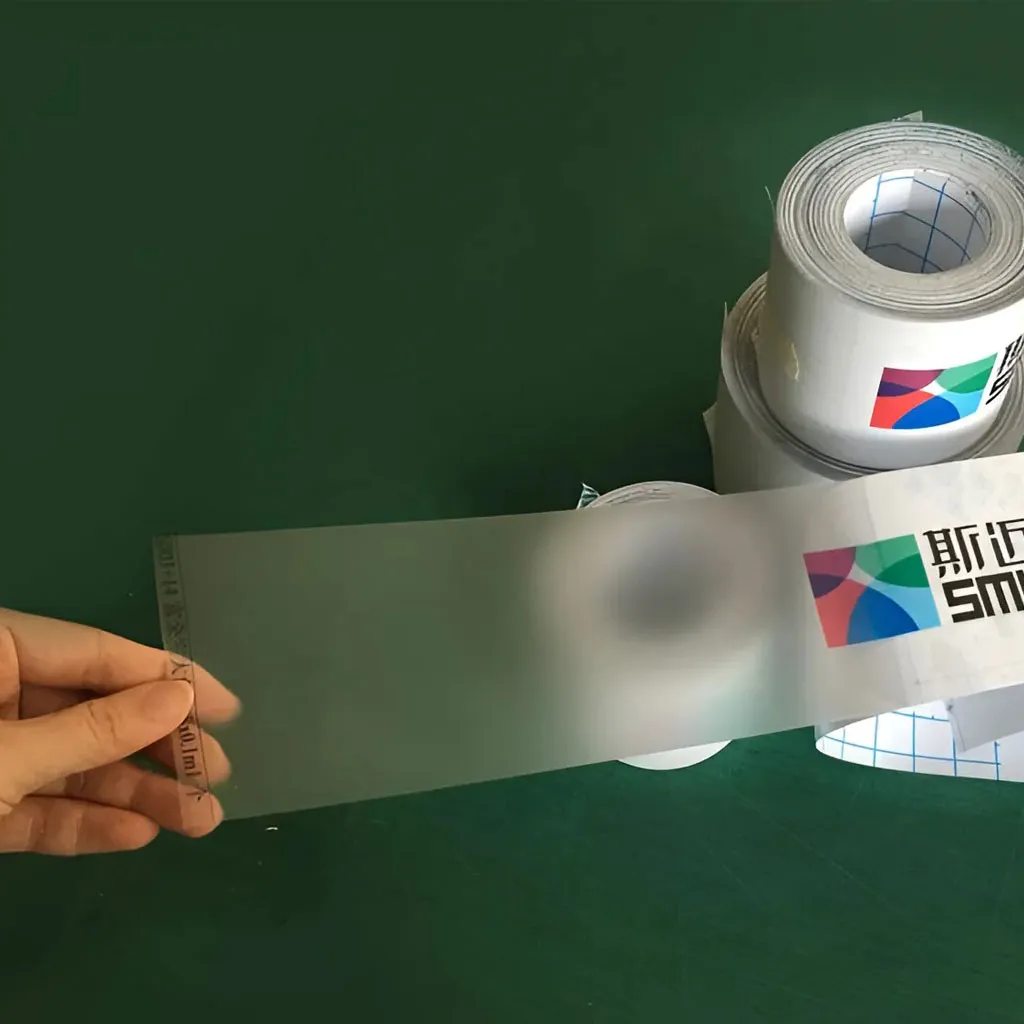
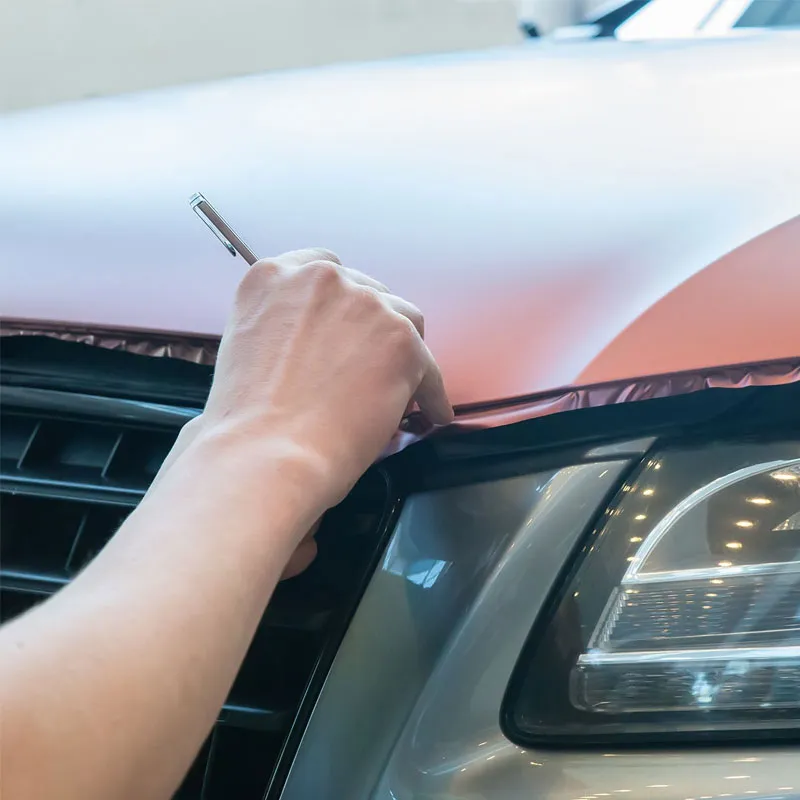
Automotive: Clear PET protective films on trims and displays need low haze and high scratch resistance. Thicker calendered films protect surfaces during assembly and transport while maintaining the look of underlying trim.
Electronics & displays: Ultra-clear PET with haze <5% is preferred to preserve brightness and color fidelity.
Packaging & signage: High transmission attracts customers; some applications add matte finishes for anti-glare when used outdoors.
Ask suppliers for measured values from calibrated instruments: total light transmission (%) and haze (%) measured per ASTM D1003 (or equivalent). For critical projects, request sample pieces and check visual clarity under target lighting conditions—bright, diffuse, and directional.
Display protection: Transmission 90%+, haze <5%.
Automotive interior: Transmission 85%+, haze <10%, with abrasion resistance.
General packaging: Transmission 80%+, haze acceptable up to 15% depending on effect.
Clean PET films with mild soap and water; avoid abrasive pads or harsh solvents. For anti-fingerprint or anti-scratch coated films, follow supplier cleaning recommendations to maintain optical clarity and coating integrity.
For reliable supply and custom solutions, consider a manufacturer with full in-house production capability to control clarity and consistency—Pulivk (Henan Pulivk New Materials Co., Ltd.) offers calendering, printing, and split-packaging lines and supports OEM customization: https://pvcfilmtec.com/