Address
304 North Cardinal St.
Dorchester Center, MA 02124
Work Hours
Monday to Friday: 7AM - 7PM
Weekend: 10AM - 5PM
Address
304 North Cardinal St.
Dorchester Center, MA 02124
Work Hours
Monday to Friday: 7AM - 7PM
Weekend: 10AM - 5PM



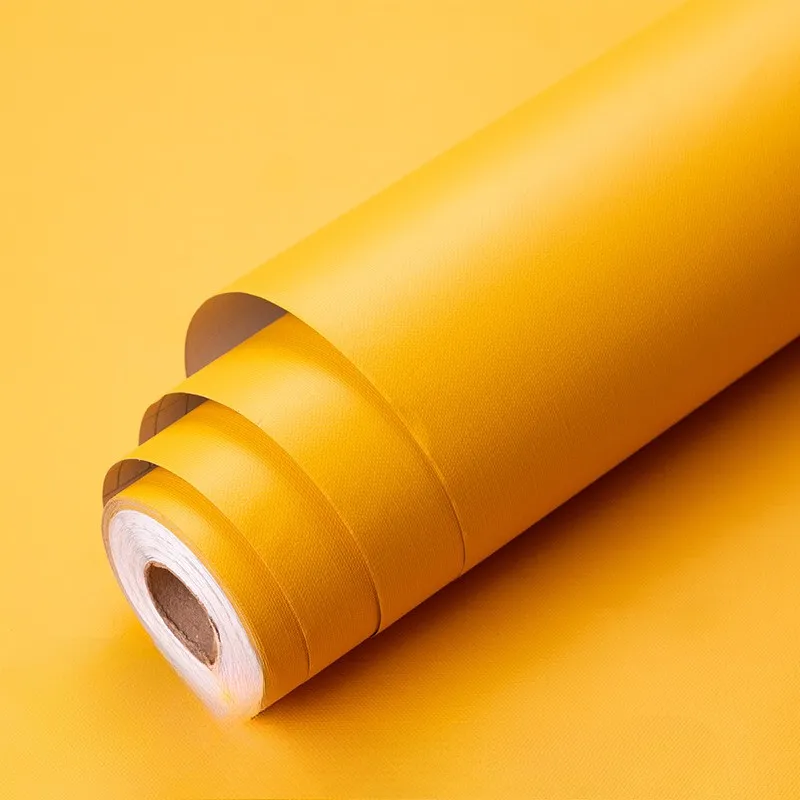
Industrial PVC films are no longer “one-size-fits-all.” Today’s packaging, lamination, and surface-protection projects demand consistent thickness control, stable roll quality, reliable printing performance, and application-ready finishes—whether you need rigid PVC for forming or flexible PVC for wrapping, covering, and cushioning. Pulivk Film focuses on R&D and manufacturing of PVC films, supplying calendered and decorative solutions for furniture, construction, electronics, advertising, medical, and home-use markets with export-ready capability.
Key takeaway:
A dependable industrial PVC film manufacturer should provide
full-process control (calendering → printing → slitting → packing),
OEM/ODM customization, and
documented QC that matches your end-use requirements.
For product categories and references, you can browse the official site:
https://pvcfilmtec.com/
PVC film is a thin sheet made of polyvinyl chloride used for decorative, industrial, and packaging purposes. In industrial purchasing, PVC film is usually grouped into two performance directions:
rigid (higher dimensional stability, stronger forming/shape retention) and
flexible (better conformability, wrap performance, cushioning, and easier lamination).
Selecting the right family reduces waste, improves processing speed, and stabilizes finished-product appearance.
Rigid PVC films are often used where shape holding,
surface stability, and
clean cutting are critical—such as protective sheets, lamination layers, graphic panels, and certain packaging structures. A stable rigid film can reduce warpage, improve die-cut accuracy, and keep laminates visually uniform over large surfaces.
Flexible PVC films are widely chosen for wrapping,
surface protection, and
decorative lamination on complex geometries—like furniture edges, profile wrapping, signage layers, and consumer-goods protection. With the right formulation and finish, flexible film can support printing, embossing, and adhesive bonding with consistent unwind and lay-flat performance.
Production capability directly affects your procurement risk. Pulivk operates integrated
calendering,
printing, and
slitting & packaging lines—so each step can be coordinated for thickness accuracy, surface consistency, and delivery schedule control.
Industrial buyers typically evaluate PVC film by how it behaves in real production—unwind stability, bonding/adhesion, print receptivity, shrink/warp control, and surface durability. Below are practical use-cases where custom PVC films deliver measurable value.
Packaging applications often require optical clarity or controlled haze, consistent thickness, and dependable roll edges to avoid downtime. Depending on your packaging line, you may also need surface treatments that improve anti-blocking performance, reduce dust attraction, or enhance print anchorage.
Lamination is where PVC film becomes a design and performance layer. From wood-grain cabinet doors to stone-texture wall panels, the film must bond evenly, resist wear, and keep consistent color across batches. Pulivk’s decorative portfolio includes wood grain, glossy/matte, cloth texture, marble/stone grain, metallic looks, embossed patterns, and 3D textures—supporting both aesthetics and durability.
Explore common lamination-ready categories:
Wood Grain Film,
Marble Film,
and advanced texture options like
3D Silk Texture Film.
Important:
For lamination projects, color matching and
pattern continuity are as important as mechanical performance. A controlled printing workflow and batch traceability help prevent mismatched panels during installation.
If you need industry references, you can also consult the knowledge hub:
https://pvcfilmtec.com/knowledge/
Protective PVC films are used to prevent scratches, scuffs, dust contamination, and minor abrasion on sensitive surfaces—especially for furniture boards, decorative panels, electronics housings, and building materials. Protection films often need balanced tack (if self-adhesive), clean removability, and stable performance under temperature changes or humidity.
Calendering is widely used to make PVC films with stable thickness and high output efficiency—making it a practical choice for packaging, lamination, and general industrial protection. When you need repeatable roll-to-roll performance, calendered film is often the baseline specification for quality and consistency.
Product reference:
Calendered Film
Pulivk provides flexible OEM/ODM services to help brands and converters standardize performance across product lines. Customization can cover
thickness,
width,
roll length,
color/pattern,
printing,
and application-focused surface treatments such as anti-static and anti-fog, as well as glossy or matte finishes.
Consistent PVC film quality comes from measurable controls—not assumptions. Pulivk implements multi-step QC from raw materials to finished rolls, with batch traceability and performance testing that can include thickness, strength, adhesion, and optical properties. Third-party verification and test reports can be provided when required by your market or customer audits.
Compliance focus:
Materials can be supplied to meet common expectations such as ISO 9001,
ISO 14001,
REACH,
RoHS, and relevant
FDA requirements depending on application scope.
Environmental and safety considerations are supported through the use of eco-friendly, non-toxic inks, suitable for indoor decoration and human-contact scenarios when properly specified.
Industrial film is only as good as the roll you receive. Pulivk supports roll-by-roll slitting and packaging based on customer requirements. Each roll can be individually wrapped using dust-proof PE film or kraft paper and labeled with specifications—helping your warehouse and production team identify lots quickly and reduce handling errors.
● Less contamination: cleaner surfaces improve lamination yield and final appearance.
● Fewer claims: moisture and abrasion protection reduce transport-related defects.
● Better traceability: clear labels simplify batch control across multiple projects.
PVC films are selected not only for appearance, but also for durability and ease of maintenance across demanding environments. Typical industries include furniture manufacturing, construction and decoration, electronics and appliances, advertising and exhibitions, medical/cleanroom, and home products.
When you source industrial PVC film, the real cost is not only the price per kilogram—it’s also downtime risk, claim probability, and batch consistency. Pulivk’s manufacturing model is designed to reduce total procurement cost while improving predictability.
To request samples or a quotation, prepare your target film type, thickness, width/roll size, color or pattern, functional requirements (anti-static, anti-fog, self-adhesive, etc.), and estimated order quantity. A clear specification helps the factory recommend the best structure and finish, reducing sampling rounds and speeding up approval.
For direct inquiries, use the contact page:
https://pvcfilmtec.com/contact/
1) What is PVC film?
PVC film is a thin sheet made of polyvinyl chloride, used for decorative, industrial, and packaging purposes. Options include wood grain, marble, metal-like textures, soft-touch, transparent, and self-adhesive films.
2) Do you provide custom rigid or flexible PVC film solutions?
Yes. OEM/ODM customization is available for thickness, width, roll size, color/pattern, printing, and surface treatments such as anti-static, anti-fog, food-grade coatings, and gloss/matte finishes.
3) What is the minimum order quantity (MOQ)?
MOQ depends on product type, specifications, and customization level. Small trial orders may be supported; share your requirements to confirm the exact MOQ.
4) Are your PVC films compliant with quality and safety standards?
Films can comply with ISO 9001, ISO 14001, REACH, RoHS, and FDA-related requirements depending on the application. Third-party certifications and test reports can be provided upon request.
5) What is the typical lead time and do you ship globally?
Lead time varies by order size and customization, but production schedules are optimized for on-time delivery. Yes, global shipping is supported with export-ready packaging and multiple freight options.