Address
304 North Cardinal St.
Dorchester Center, MA 02124
Work Hours
Monday to Friday: 7AM - 7PM
Weekend: 10AM - 5PM
Address
304 North Cardinal St.
Dorchester Center, MA 02124
Work Hours
Monday to Friday: 7AM - 7PM
Weekend: 10AM - 5PM


Medical grade PVC film is a specialized polyvinyl chloride (PVC) sheet engineered for high-hygiene environments where patient safety, process consistency, and regulatory compliance matter as much as performance. It is widely used in healthcare packaging, cleanroom protection, device components, and surface protection—especially where transparency, sealing behavior, and chemical resistance are essential.

Key idea: “Medical grade” is not just a marketing term. It typically implies tighter control over raw materials, additives, traceability, clean handling, and testing aligned with standards such as ISO, REACH/RoHS, and—when relevant—FDA requirements.
PVC film in general is produced by calendering or casting to create a thin, flexible sheet. Medical grade variants are designed to reduce risk in clinical or controlled environments by focusing on low contamination, stable composition, and repeatable processing (cutting, thermoforming, sealing, lamination).
Medical grade PVC film may be clear or tinted, soft or semi-rigid, and can be formulated for properties such as anti-fog, anti-static, or enhanced barrier. However, it is not automatically “implantable” or suitable for direct internal body contact unless explicitly tested and certified for that use-case.
Medical environments require materials that are predictable and easy to clean, while still being economical and scalable. Medical grade PVC film is commonly selected because it balances clarity, forming performance, and processing versatility (die-cutting, RF/heat sealing, printing).
✔ Typical applications: blister packaging, protective liners, pouch windows, medical kit overwrap, cleanroom component packaging, and dust protection during device assembly.
For packaging, the critical requirements often include seal integrity, puncture resistance, controlled WVTR/OTR targets (when specified), and stable performance under sterilization conditions chosen by the packaging engineer.
PVC film is also used as a protective surface layer for equipment panels, temporary covers, workstation protection, and short-term shielding in renovation or maintenance scenarios. When paired with the right adhesives or static-cling constructions, it can help reduce scuffs and contamination transfer.
In non-implant contexts, PVC film can be converted into parts such as covers, protective windows, and flexible layers where visibility and chemical resistance are needed. Selection here focuses on plasticizer system, fogging behavior, and compatibility with disinfectants.
Compliance is usually a combination of material restrictions, management systems, and application-specific testing. For buyers, it’s important to ask for documentation aligned with your market and end-use rather than assuming one certificate covers everything.
⚠ Important:
“Compliant with” should be supported by test reports, declarations, and batch traceability. For regulated applications, request the latest third-party documentation and confirm the exact grade and formulation used in your order.
When specified correctly, medical grade PVC film offers an excellent balance of performance and cost for healthcare-related converting and packaging.
★ What teams value most: repeatable lots, reliable delivery schedules, and clear QC checkpoints—especially for packaging lines that run 24/7 where material variance can cause downtime.
Choosing the right film starts with defining the application boundary: is it packaging, surface protection, or device component? Then match thickness, hardness, additives, and compliance requirements to the process (forming/sealing/printing) and the environment (cleanroom, sterilization, disinfectants).
Thickness: impacts stiffness, puncture resistance, and forming depth.
Hardness (soft vs semi-rigid): affects drape, sealing, and handling.
Surface: glossy for clarity, matte for reduced glare, textured for grip or aesthetics (confirm cleanability).
Always run pilot trials on your actual equipment. Key parameters include sealing window, cycle time, thermoforming stability, ink adhesion (if printed), and post-process appearance (haze, stress whitening, warpage). If you need large-scale, stable supply, calendered options are often preferred due to consistent thickness control.
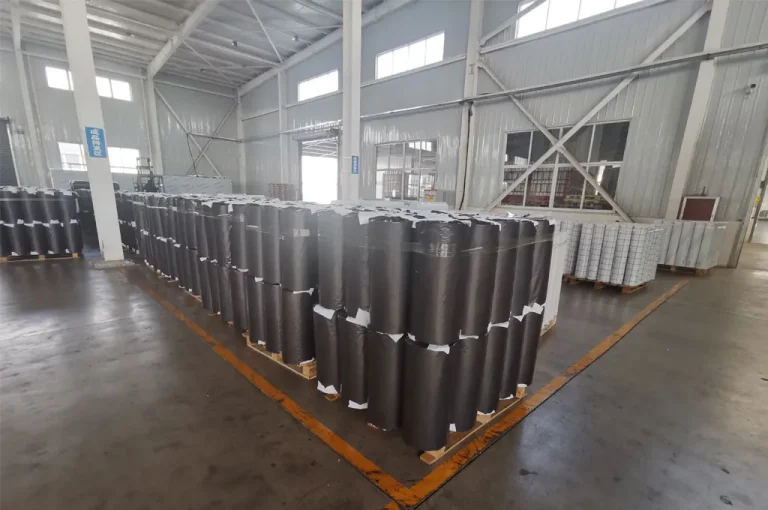
For medical and cleanroom users, how the film is slit, wrapped, labeled, and protected matters. Best practice is individual roll protection (e.g., dust-proof PE wrap or kraft protection), clear spec labels, and moisture/damage-resistant export packaging to preserve roll edges and surface quality.
To avoid delays, align your requirements before sampling. A professional supplier can support OEM/ODM customization across dimensions, surface finishes, and functional coatings—while maintaining consistent QC.
📌 Share these details for faster quoting:
thickness range, width, roll length, target hardness, clarity/haze targets, required compliance (REACH/RoHS/FDA), surface finish, and intended process (thermoforming, sealing, lamination, printing).
Medical supply programs benefit from stable process control. Suppliers with integrated calendering, printing, slitting, and packaging are often better positioned to manage lot-to-lot consistency, shorten lead times, and support change control—because fewer steps are outsourced.
For example, if your project needs surface protection film and decorative identification layers in the same supply plan, working with a partner that can coordinate multiple film types under one QC system reduces qualification workload and simplifies procurement.
If you’re evaluating broader PVC film options for facility upgrades or non-medical support areas, you can review product categories via
Product
or explore technical articles in
Knowledge.
For supplier qualification steps and documentation expectations, the
FAQ
page can be helpful when building your internal checklist.
Not automatically. Many medical programs specify phthalate-free or restricted-phthalate formulations, so you should request a declaration and matching test report for the specific grade and lot.
It can be, but suitability depends on the sterilization method, packaging structure, and validation requirements. Always confirm performance with your sterilization process and request supporting data.
Thickness depends on forming depth, rigidity targets, and puncture risk. Start with your forming geometry and drop-test needs, then run trials to confirm clarity and cycle time.
Compare documentation quality (COA, REACH/RoHS/FDA statements), traceability, QC checkpoints, packaging cleanliness, and the supplier’s ability to maintain stable specs across repeat orders.
Provide film type, thickness, width, finish, compliance needs, and expected quantity—then request pilot rolls that match the final production route (not only lab samples) for accurate line validation.