Address
304 North Cardinal St.
Dorchester Center, MA 02124
Work Hours
Monday to Friday: 7AM - 7PM
Weekend: 10AM - 5PM
Address
304 North Cardinal St.
Dorchester Center, MA 02124
Work Hours
Monday to Friday: 7AM - 7PM
Weekend: 10AM - 5PM


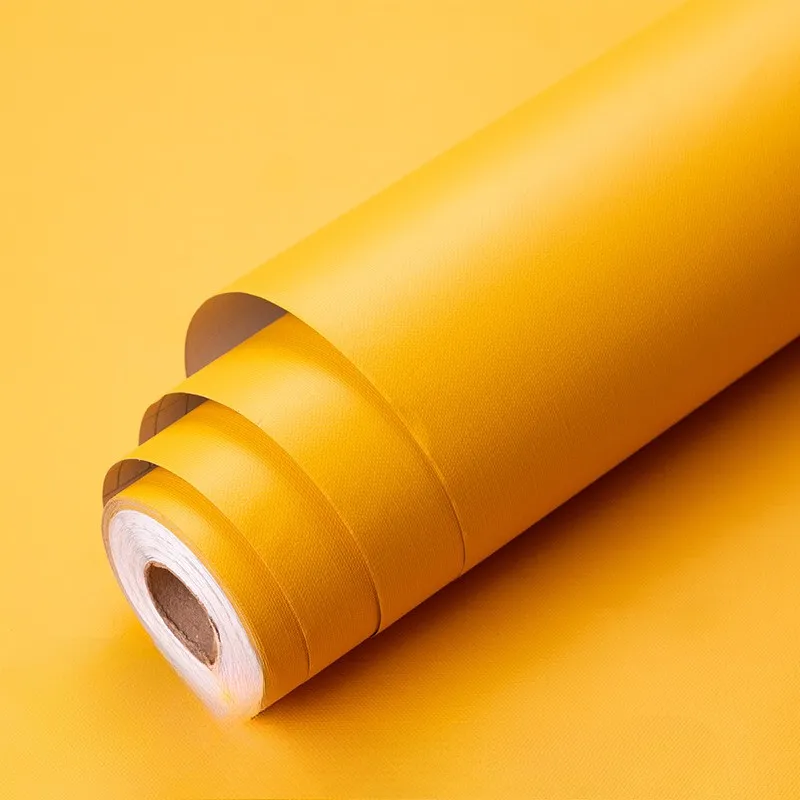
Metallic PVC film for vacuum pressing has become a go-to decorative solution for modern furniture and doors because it delivers a premium metal-like appearance while keeping surfaces practical for daily use. From wardrobe doors and cabinet fronts to hotel millwork and retail fixtures, this film helps manufacturers achieve consistent color, stable gloss, and scratch-resistant performance—without the weight, cost, or oxidation concerns of real metal sheets.
Key takeaway:
Metallic PVC film is designed to be formed under heat and pressure over MDF/HDF profiles, creating a seam-minimized, durable decorative finish that suits both flat panels and complex 3D shapes.
Metallic PVC film is a decorative polyvinyl chloride sheet engineered with a metallic visual layer (metallic pigments, pearlescent effects, or foil-like styling) and surface finishes such as glossy, matte, satin, or brushed-metal look. When used in vacuum membrane pressing, the film is heated until pliable and then pulled tightly over a substrate (commonly MDF) by vacuum, bonding via adhesive to achieve a continuous, wrapped surface.
Compared with traditional laminates, metallic PVC film is especially valued for its ability to reproduce clean, modern aesthetics—think champagne gold, brushed silver, gunmetal, titanium gray—while remaining flexible enough for routed door panels, edge wrapping, and curved profiles.
✔ Premium appearance, industrial practicality
The surface can mimic anodized aluminum, brushed stainless, or soft metallic satin, making it ideal for contemporary interior trends.
✔ Works with 3D profiles
Vacuum pressing helps film conform to grooves, bevels, and raised panels—excellent for door skins and cabinet fronts.
✔ Efficient production and stable consistency
Roll-based film processing supports repeatable color and batch-to-batch stability, helping reduce rework in mass production.
✔ Easy-care surface
Many metallic PVC films are designed to resist common stains and allow quick cleaning—an advantage in kitchens, rentals, and hospitality projects.
In a typical vacuum press line, the door or panel is coated with adhesive, the film is placed on top, and heat softens the film. Vacuum pressure then pulls the film down to follow every contour. Finally, the adhesive cures, and the panel is trimmed.
Important:
Vacuum pressing success depends on a balanced combination of film elongation, thermal stability, surface coating durability, and adhesive compatibility. A metallic look is only valuable if it remains consistent after forming.
Metallic finishes are a staple in modern interiors because they pair well with neutral wood tones, glass, stone, and matte solid colors. With vacuum pressing, manufacturers can achieve high-end styling at scale across multiple product categories.
Ideal for wardrobes, TV units, sideboards, office storage, and retail fixtures. Metallic tones can be used as full surfaces or as accent doors to create contrast.
Common in apartment projects, hotels, and commercial interiors where a consistent “brushed metal” aesthetic is desired without the maintenance of real metal cladding.
For cohesive interiors, matching films across panels and trims is a major advantage. If your project requires coordinated skirting solutions, you can also reference
PVC skirting film
for complementary finishing options.
Most vacuum-press decorative PVC films are produced using calendering technology, enabling stable thickness control and smooth roll output. Choosing the right base film and topcoat can significantly affect forming behavior and long-term wear.
If you are comparing base constructions, review
Calendered Film
as a starting point for understanding consistency, thickness ranges, and roll-format supply.
Design tip:
Metallic doors pair especially well with woodgrain panels for warmer balance. For coordinated collections, you can compare
Wood Grain Film
as a complementary option in the same product family.
For furniture factories, door manufacturers, and brand owners, OEM customization is often the difference between a standard metallic look and a signature finish. A capable supplier can adjust structure and surface performance to match your press line, substrate, and market expectations.
Pulivk Film supports flexible OEM/ODM production across calendering, printing, and slitting/packing—helping buyers align cost, lead time, and consistency for both trial and mass orders.
Metallic PVC film is often used on high-visibility surfaces. Consistent quality is not only about appearance; it also reduces after-sales issues such as edge lifting, color differences, and surface defects that become obvious under bright lighting.
Buyer note:
If your products are used in residential interiors, childcare areas, or hospitality spaces, ask for documentation related to low odor, heavy-metal/phthalate controls, and indoor suitability.
For vacuum pressing lines, stable roll handling can be as important as film chemistry. Dust, edge damage, and poor winding tension may cause press defects that look like “process problems” but actually originate from packaging or storage.
📌 Store properly:
Keep rolls upright (or per supplier guidance), away from direct sunlight, and in stable temperature/humidity conditions.
📌 Prevent contamination:
Open protective wrap only when needed; dust and fine particles can imprint during heating.
📌 First-in, first-out:
Use FIFO to reduce variation risks and maintain consistent forming behavior.
Many projects require more than cabinet doors. Designers often specify matching or contrasting finishes across walls, trims, and functional zones (kitchen, bathroom, retail). A film supplier with a broad decorative catalog can help keep tone consistency across multiple product lines.
For example, if you need alternative textures that still look premium, you can explore
3D Silk Texture Film
for a softer visual effect that pairs well with satin metallic doors in modern interiors.
Project planning tip:
If your metallic finish is used near cooking zones, prioritize coatings that are easier to clean and more resistant to household chemicals. For specialized kitchen protection materials, you may also review
Kitchen Anti-oil Film
as a separate, functional surface solution.
When a supplier controls calendering, printing, and slitting/packing in-house, it becomes easier to manage quality consistency and delivery schedules. This matters for metallic films because minor process differences can change gloss, texture clarity, or metallic particle distribution—especially noticeable under showroom lighting.
A full-process manufacturer can also support faster prototyping, stable repeat ordering, and packaging tailored to long-distance shipping, helping reduce transit damage and on-site waste.
1) Is metallic PVC film suitable for deep 3D door designs?
Yes—when the film is designed for vacuum pressing with appropriate elongation and thermal behavior. Always validate with your profile depth and press parameters.
2) Will the metallic finish look uniform after pressing?
It should, provided the film has stable thickness and consistent metallic effect distribution, and your heating is even. Sampling on your own press line is recommended.
3) What substrate is commonly used with vacuum-press metallic PVC film?
MDF/HDF is most common for doors and furniture panels because it machines cleanly and bonds well with suitable adhesives.
4) Can I customize color, gloss, and roll size?
Yes. OEM/ODM programs typically support customized thickness, width, surface finish (gloss/matte/emboss), pattern, and packaging.
5) How do I request samples or a quotation?
Prepare your application details, required finish, thickness/width, and estimated quantity, then share your target color or sample reference for accurate matching.