Address
304 North Cardinal St.
Dorchester Center, MA 02124
Work Hours
Monday to Friday: 7AM - 7PM
Weekend: 10AM - 5PM
Address
304 North Cardinal St.
Dorchester Center, MA 02124
Work Hours
Monday to Friday: 7AM - 7PM
Weekend: 10AM - 5PM


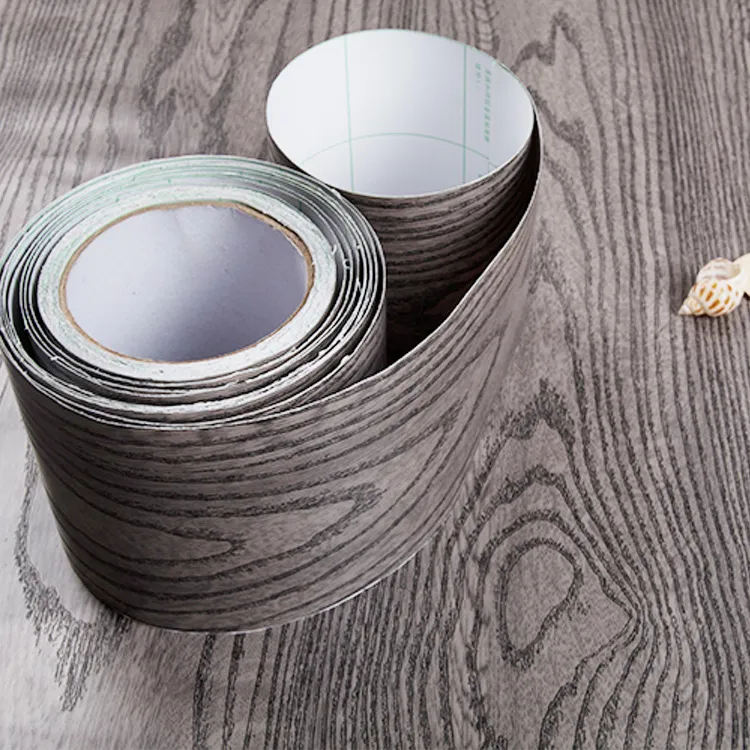
A PVC film calender machine is the core equipment behind consistent, high-output calendered PVC film used across furniture, interior decoration, building materials, electronics, advertising, medical cleanrooms, and household products. If you are planning a new PVC film line—or upgrading an existing one—understanding the machine’s key features, how it works, and what to check before selecting a model will help you avoid costly mismatches in capacity, film performance, and long-term operating stability.

In simple terms, a calender machine forms PVC compound into a continuous sheet/film by passing it through a series of heated, precision-ground rollers. Compared with other forming methods, calendering is widely chosen for excellent thickness uniformity, high surface quality, and scalable production.
✔ Typical outcomes of a well-configured calender line:
• Stable thickness tolerance suitable for decorative and industrial uses
• Smooth, glossy, matte, embossed, or functional surfaces depending on downstream units
• Good mechanical strength and dimensional stability for lamination, wrapping, and thermoforming
For buyers developing product lines such as Calendered Film, furniture-grade decorative films, or protective industrial films, the calender machine’s roller system, heating control, and tension coordination largely decide your final film consistency and yield.
Although line configurations vary, most PVC film calender lines follow a similar physical logic: plasticize the compound, gradually form it into a sheet, then stabilize, treat, and wind it into rolls. Understanding each stage helps you specify the right machine options and avoid under/over-investment.
PVC resin is blended with plasticizers, stabilizers, pigments, fillers, and functional additives (e.g., anti-static or low-VOC formulations). The compound must be consistent; otherwise, even a premium calender will show defects such as gels, specks, or unstable thickness.
The compound is heated and plasticized to an optimal viscosity window. If plasticization is insufficient, the film may show roughness or weak strength; if overheated, it may discolor or lose properties. This is why temperature zones and melt stability matter as much as roller precision.
The calender section typically uses a 3-roll or 4-roll layout. Roll gaps and speeds gradually shape the sheet into target thickness and surface finish. Fine gap adjustment and stable roll temperature are essential for avoiding thickness bands, edge waviness, or surface marks.
⚙ Key physical controls inside calendering:
• Roll temperature uniformity (reduces haze, thickness drift, and gloss variation)
• Nip pressure stability (improves gauge control and surface replication)
• Speed ratio coordination (reduces internal stress and shrinkage)
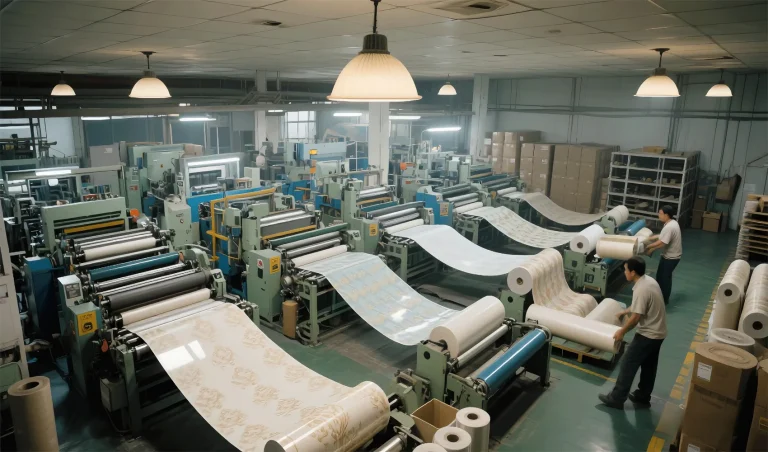
After calendering, cooling rolls and downstream units stabilize the film dimensions. Depending on product targets, the line may include embossing, lamination, coating, or corona treatment. If you plan to develop high-value decorative SKUs such as 3D Silk Texture Film or deep-embossed patterns, specify enough cooling length and stable tension control to preserve the texture definition.
The film is slit into requested widths and wound into rolls. Winding quality affects downstream lamination, wrapping, and cutting efficiency. Poor winding can cause telescoping, wrinkles, and edge damage—issues that increase claims even when film thickness is acceptable.
Rollers are the “mold” of calendering. Look for proven roll material, precision grinding, and stable heating design. For glossy decorative films, surface finish and cleanliness are especially important; for embossed or functional films, compatibility with embossing and consistent nip pressure is crucial.
PVC is sensitive to heat history. A production-ready line provides repeatable temperature profiles across shifts and seasons, minimizing color drift and maintaining consistent gloss/matte appearance.
📌 Practical checkpoint:
Ask the supplier what temperature deviation (±°C) is guaranteed across roll width under continuous load, and how they verify it during FAT (factory acceptance testing).
Modern production benefits from automation: stable speed control, synchronized drives, and optional on-line thickness measurement. Even if you do not install full automatic gauge control on day one, ensuring the machine supports upgrades protects your future product roadmap.
Many film quality disputes are actually tension problems. Stable unwinding (if laminated), controlled traction through cooling, and precise winding tension prevent wrinkles and waviness—especially for wide films and thin gauges.
A reliable machine design considers operator safety and fume handling. If you serve indoor decoration markets, you may also need formulations and processes aligned with regulatory requirements and customer demand for safer materials (e.g., heavy-metal-free and phthalate-free options).
The “best” calender machine is the one that matches your targeted film portfolio. Before choosing a model, define your primary applications and the performance priorities customers will actually pay for: appearance, embossing depth, scratch resistance, softness, transparency, anti-static behavior, or adhesive compatibility.
• Decorative films for furniture and doors (wood grain, stone, solid color, soft-touch)
• Building & interior finishing films (wall panels, skirting, ceiling, partitions)
• Industrial functional films (anti-static, protective, insulation, packaging)
• Flooring-related films requiring high wear balance and stable dimensions
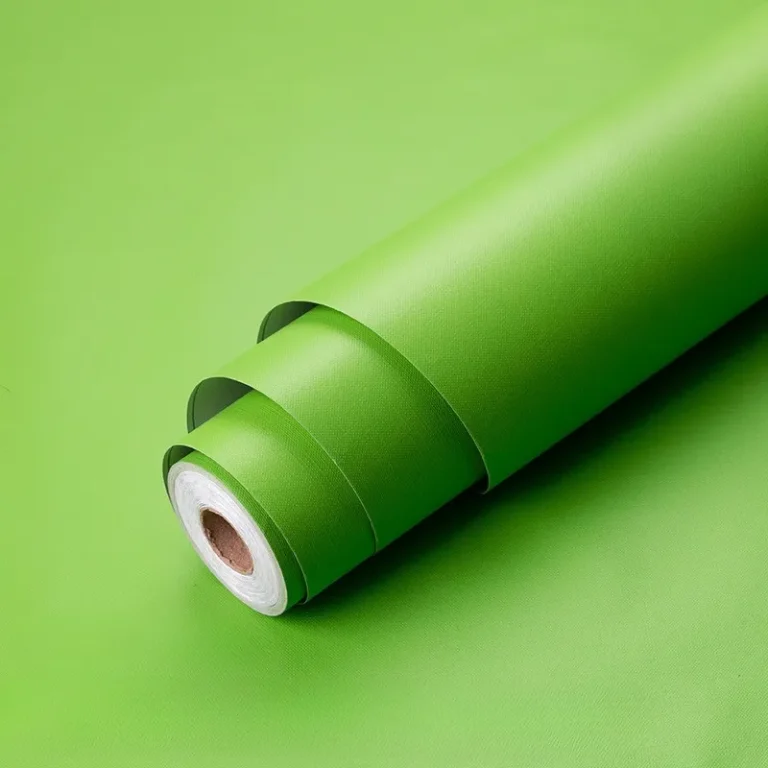
For example, if your main output is architectural finishing materials such as PVC skirting film or wall-covering products like Solid color wallpaper, you will likely prioritize stable color matching, consistent embossing replication, and clean winding for fast lamination and installation.
Compare real output in kg/h or m/min at your target thickness range, not only the advertised maximum line speed. Ask for references producing similar film types and thicknesses. A machine that runs fast only at thick gauges may not match your thin-film business plan.
Your target customers may require certain finished widths for lamination lines or wrapping machines. Confirm the line’s usable film width after edge trimming and the achievable edge quality. This directly impacts material efficiency and unit cost.
Specify the thickness range you will sell now and in the future. Then ask the supplier to commit to a measurable thickness tolerance and explain how it’s tested (sampling method, frequency, equipment). Thickness capability should remain stable during long runs, not only during short demonstrations.
Surface performance is where decorative film value is created. If you plan to produce premium patterns (wood/stone/metal effects) or soft-touch finishes, check compatibility with downstream embossing/lamination/coating units and evaluate defect control: flow lines, pinholes, orange peel, haze, and surface contamination.
Confirm power load, water cooling requirements, compressed air, ventilation, and floor space. Also consider how many operators per shift are needed and what training/support is offered. A slightly more automated system can reduce skill dependency and stabilize quality across shifts.
🧾 Questions to ask before signing:
• What are the guaranteed KPIs (thickness tolerance, defect rate, output) for my film type?
• What spare parts are recommended for the first year of operation?
• How long is installation/commissioning, and what training is included?
• Can the line be upgraded later (gauge control, embossing, coating, additional slitting)?
A strong PVC film business is built on consistency. Even small variations can cause lamination failures, installation complaints, or aesthetic rejection. Align your calender machine selection with a QC plan that measures what your customers feel and see.
Keep resin grades and additive suppliers consistent where possible. Track batches and correlate defects to formulation or mixing. If you provide OEM/ODM customization, establish a controlled process for color matching and additive changes to prevent unintended property shifts.
During production, measure thickness across width, gloss/matte level, tensile strength, elongation, and adhesion performance (when laminated or self-adhesive). Early detection reduces scrap and avoids shipping unstable lots.
Many film issues happen after production. Use dust-proof protective wrapping, clear labeling, and moisture/damage protection to keep rolls clean and edges intact. This matters especially for export shipments where handling and climate vary.
Competitive manufacturers typically integrate calendering with printing and slitting/packaging to shorten lead time and maintain consistent quality across the full process. A calender machine that is designed to integrate smoothly with downstream units reduces handling defects and supports faster order turnaround.
💡 Integration tip:
If your business plan includes frequent SKU changeovers (colors/patterns/embossing), choose a model with faster cleaning access, stable temperature recovery, and repeatable parameter recipes to reduce downtime.
Often linked to roll temperature non-uniformity, unstable nip pressure, worn roll surfaces, or inconsistent compound feeding. Verify roll heating control, bearing condition, and gap adjustment resolution.
Common sources include dirty rolls, degraded material, poor filtration, or airborne dust. Evaluate cleaning accessibility and environmental controls around the calender section.
Usually caused by tension imbalance, inadequate cooling, or winding settings. Check if the machine provides stable traction control, sufficient cooling path, and a winding system suitable for your target roll diameter and core type.
PVC film demand continues to diversify: from durable interior decoration to functional industrial films. A flexible calender machine configuration can support multiple markets with faster ROI. If you plan to serve furniture and interior applications, prioritize surface aesthetics and embossing performance. If you target electronics or packaging, prioritize cleanliness, functional coatings compatibility, and stable mechanical properties.
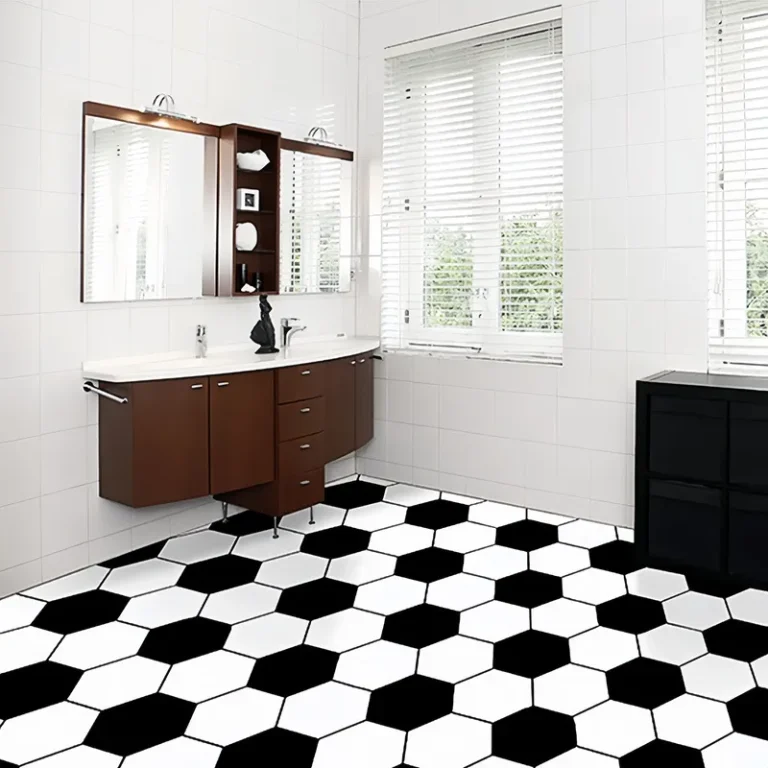
For flooring-related output, consider product lines such as Floor Film, where consistent gauge, dimensional stability, and winding quality support downstream lamination and cutting efficiency.
It depends on roll configuration, plasticizing stability, and downstream cooling/winding design. Define your target thickness range first, then request a verified tolerance commitment under continuous production conditions.
Use disciplined formulation control, stable temperature management, clean roll surfaces, and consistent mixing quality. Ask the machine supplier how temperature uniformity is maintained across roll width and over long runs.
Prioritize stable nip pressure, compatible embossing units, sufficient cooling capacity to “lock in” the texture, and precise tension control to prevent pattern distortion and wrinkles.
Yes—if the base line is designed for flexibility and supports downstream modules (coating/lamination, embossing, slitting). Confirm upgrade paths, changeover time, and whether the winding system fits all target films.
Prepare target film type(s), thickness range, finished width, surface requirement (gloss/matte/embossed), expected output, roll diameter/core, power/water availability, and any compliance requirements for your market.