Address
304 North Cardinal St.
Dorchester Center, MA 02124
Work Hours
Monday to Friday: 7AM - 7PM
Weekend: 10AM - 5PM
Address
304 North Cardinal St.
Dorchester Center, MA 02124
Work Hours
Monday to Friday: 7AM - 7PM
Weekend: 10AM - 5PM



A PVC film cutting machine (often called a slitting & rewinding machine) is the bridge between a “good film” and a “sellable roll.”
Whether you produce decorative PVC for furniture, construction, electronics, or packaging, your cutting process determines roll accuracy, edge quality,
winding tightness, label consistency, and ultimately customer acceptance. This guide explains the main machine types, core features, typical workflows,
and a practical checklist to help you choose the right setup for your PVC film products.
Why cutting matters more than people expect
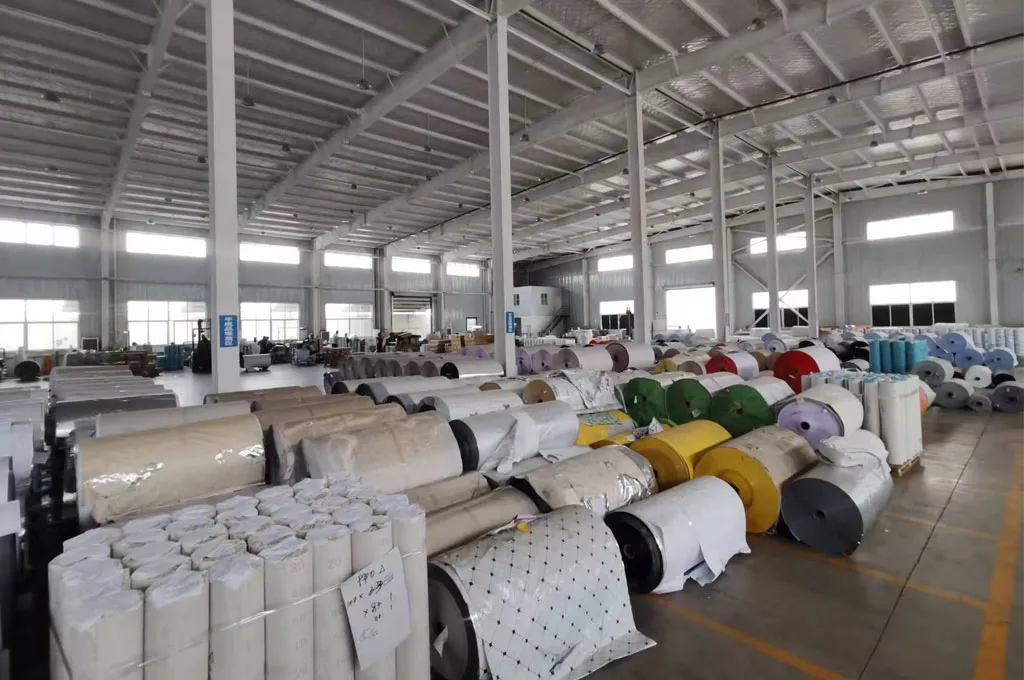
In modern PVC film production, “cutting” usually means slitting + rewinding. The machine unwinds a jumbo roll,
controls tension, guides the web, slits it into multiple narrow lanes, then rewinds each lane into finished rolls with target OD, hardness,
and edge alignment. Advanced machines also integrate inspection, meter counting, static elimination, and automated core loading.
Razor slitting uses replaceable razor blades to slice the web. It is popular for thinner, softer films when the goal is a clean cut at high speed with low cost.
Shear slitting cuts like scissors using matched rotary knives. It is widely used for demanding edge quality and thicker decorative films.
Score slitting uses a blade pressed against an anvil roller. It is sometimes used for certain films but can be less ideal for premium decorative PVC where edge appearance matters.
Cutting is only half of the result; rewinding determines how the roll behaves in shipping and customer use. PVC films—especially embossed, glossy, or self-adhesive types—need stable tension and controlled roll hardness to avoid wrinkles, telescoping, blocking, and surface marks.
A common, cost-effective choice for many PVC converters. One roll finishes while the operator manages roll change.
Combines center drive and surface support to better manage roll hardness. Often preferred for films where appearance and flatness are critical,
such as glossy decorative rolls or certain laminations.
A turret system allows fast roll changeover and higher throughput with less downtime—useful for mass production orders and export packaging schedules.
For PVC film, tension affects stretch, wrinkles, edge curl, and telescoping. Look for stable closed-loop control (load cells/dancer systems),
and the ability to set different tension profiles from start to full roll diameter.
✔ Practical tip
If you slit multiple surface styles (glossy, matte, embossed, soft-touch), you’ll want recipe-based tension settings so operators can switch quickly and repeatably.
Accurate guiding keeps printed patterns centered, controls edge trim, and prevents lane width drift.
For decorative PVC (wood grain, marble, textile textures), consistent alignment improves yield and customer satisfaction.
PVC film can build static during high-speed unwinding and rewinding, attracting dust and causing handling issues.
Consider static bars, grounded rollers, and optional protective interleaf solutions if you cut high-gloss or sensitive coatings.
The “right” slitter is the one that matches your product portfolio. Below are common PVC film categories and what they typically require from a cutting machine.
If you produce multiple categories, prioritize a configuration that can handle the most demanding one.
Calendered film often aims for consistent thickness, good flatness, and clean edges for lamination or wrapping.
A stable shear slitting setup and good tension control are common requirements.
Example product reference: Calendered Film.
Embossed textures can be sensitive to pressure marks and winding hardness.
Center-surface rewinding and careful tension ramps help keep texture uniform and prevent “pressure lines.”
Example product reference: 3D Silk Texture Film.
Floor films and related protective layers often require stable winding, consistent meter counting, and robust handling due to heavier rolls.
Larger unwind/rewind diameters and stronger shafts may be necessary.
Example product reference: Floor Film.
High-gloss and pattern films are unforgiving: dust, scratches, and telescoping show immediately.
You’ll want strong web guiding, anti-static measures, cleanroom-like handling discipline, and packaging integration.
Example product reference: Wood Grain Film.
If you sell premium decorative rolls, shear slitting is often the safer long-term choice. If you mainly run thin films and need fast,
low-cost operation, razor slitting can be efficient. For mixed production, many plants choose a platform that can support multiple knife setups.
Even the best machine can produce poor rolls if the workflow is unstable. These practical controls help keep PVC film cutting predictable across shifts.
If you source PVC rolls instead of cutting in-house, ask suppliers how they control the full chain: calendering, printing, slitting, and packaging.
A full-process operation can usually deliver more stable lead times and consistent specifications because the cutting parameters are matched to the film formulation and surface treatment.
Pulivk Film, for example, operates integrated calendering, printing, and slitting/packaging lines and supports OEM/ODM customization for thickness, width, color/pattern, and packaging.
When evaluating any supplier, prioritize traceable QC (from raw materials to finished rolls), export-ready packaging, and the ability to run consistent repeat orders.
Explore product categories and technical knowledge resources to better define your cutting requirements before purchasing equipment or placing bulk orders.
For appearance-critical decorative PVC (wood grain, marble, glossy, embossed), shear slitting is often preferred for cleaner edges and better consistency, though razor slitting can work well for thinner films when tension is stable.
Telescoping usually comes from unstable tension, poor web guiding, uneven nip pressure, or incorrect winding hardness settings—especially when film surfaces differ (glossy vs matte vs embossed).
Use anti-static control, keep rollers and cutting zones clean, minimize manual contact, and match winding hardness to avoid pressure marks; packaging immediately after rewinding also helps.
Yes, if it has strong tension control, flexible knife configurations, stable web guiding, and adjustable rewinding modes; however, the most demanding film (often glossy/embossed or adhesive) should drive the final specification.
Send film type, thickness, jumbo roll size, finished roll widths, core ID, target OD, quality tolerance, and monthly quantity; adding surface type (gloss/matte/embossed) and packaging method improves accuracy.