Address
304 North Cardinal St.
Dorchester Center, MA 02124
Work Hours
Monday to Friday: 7AM - 7PM
Weekend: 10AM - 5PM
Address
304 North Cardinal St.
Dorchester Center, MA 02124
Work Hours
Monday to Friday: 7AM - 7PM
Weekend: 10AM - 5PM


Choosing a PVC film extruder is not only about output speed. The right machine must match your target film type, thickness tolerance, surface effect, downstream converting, and compliance needs—so your film stays stable in production and consistent in the customer’s application. This guide breaks down the key selection criteria that directly affect film clarity, embossing fidelity, bonding performance, and long-term durability.
✔ Quick takeaway: The “best” extruder is the one that can repeatedly hit your melt stability + die uniformity + cooling control targets while fitting your plant’s energy, labor, and quality-control capabilities.
If you are evaluating end products such as Calendered Film, Wood Grain Film, or Floor Film, your machine configuration should be built around the surface, thickness, and handling requirements of those categories.
PVC film spans decorative, industrial, and packaging applications—each with its own process window. Before comparing extruders, lock down a short “film spec sheet” that includes:
This definition step prevents a common mismatch: buying a high-output extruder, then discovering it struggles with low-shear melt stability for ultra-clear films or cannot hold embossing detail on textured decorative products.
In the PVC film world, many producers use calendering for decorative and stable-thickness films, especially when surface quality and width uniformity are critical. Extrusion can be used to form sheets/films and feed downstream lines; in some factories it works in tandem with calendering, printing, and slitting/packaging.
➤ Choose the equipment route based on the product’s “must-have” property:
If your end products include textured decorative options like 3D Silk Texture Film, you’ll want to prioritize temperature uniformity, embossing stability, and surface protection throughout winding and packaging.
PVC is sensitive to heat history. Overheating or excessive residence time can cause discoloration, odor, and loss of mechanical performance. A properly specified PVC film extruder should deliver:
Many PVC film formulations (especially rigid PVC and compound-heavy recipes) benefit from twin-screw solutions due to better mixing and temperature control, while single-screw can be effective for stable, well-compounded materials where throughput and simplicity are priorities. The right answer depends on your compounding approach, additive load, and tolerance for process drift.
⚠ Selection risk to avoid: An extruder that reaches high output but lacks melt stability will create “hidden costs” via scrap, customer claims, and frequent parameter adjustments.
Ask suppliers to demonstrate color stability over long runs, not only short commissioning trials.
For film, the die system is as important as the extruder. Even with perfect melt quality, poor distribution causes thickness bands, edge beading, and unstable winding. Evaluate:
Ensure the die supports your target width and thickness range with fine lip adjustment and stable thermal zoning. For products that must present a clean decorative surface (cabinet panels, wall films, skirting, flooring), even minor thickness variation can show up as gloss difference, print density shifts, or lamination defects.
Clean melt matters more for clear and high-gloss films. A filtration approach (screen changer, melt pump considerations) should be selected based on:
After the die, cooling and handling determine whether you preserve the surface you worked hard to create. PVC film can pick up scratches, blocking, or texture flattening if the line is not optimized. Key points:
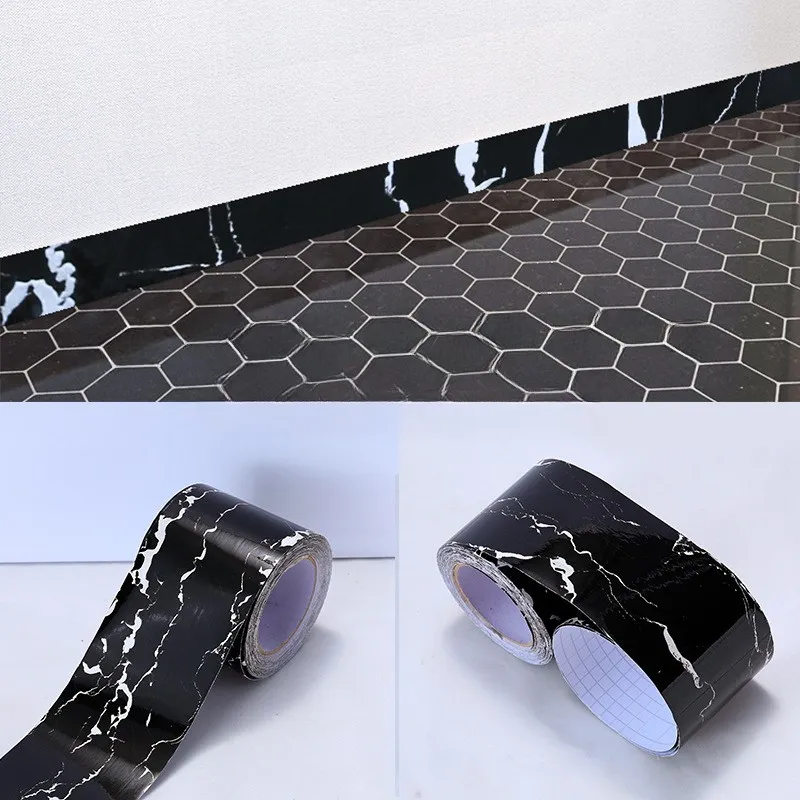
For thick and wear-oriented products (for example, Floor Film), cooling and winding stability directly influence roll hardness uniformity and later converting performance. For decorative patterns such as wood grain and marble, surface protection helps maintain the perceived “premium” look after shipping and installation.
Nameplate output (kg/h) is only meaningful when the line can sustain it at acceptable scrap rates. When comparing extruders, discuss effective productivity:
Request a performance projection using your film’s target thickness, width, and surface requirement, including expected scrap percentage and changeover schedule. A slightly lower output machine that runs steadily may deliver higher monthly tonnage than a high-output line with frequent stops and quality drift.
Consistency is what customers pay for—especially in decorative films used on furniture, doors, wall panels, and flooring. Consider building the line around:
✔ High-impact automation options
If your business model includes OEM/ODM orders with frequent customization, automation helps keep lead times stable while protecting quality when you change thickness, width, color, or surface treatment.
Markets evolve: customers may request phthalate-free materials, low-odor indoor films, anti-static for electronics, or anti-fog surfaces for special environments. Choose an extruder system that can accommodate:
Producers with full-process capability—covering calendering, printing, and slitting/packaging—often maintain better consistency because they control the entire chain from formulation behavior to final roll protection and labeling.
A film line is a system. If your film will be printed, laminated, or converted into end-use rolls, the extruder must produce film with:
Packaging and labeling also matter. Individual wrapping (e.g., dust-proof PE film or kraft paper) and clear spec labels improve logistics and reduce installation complaints—especially for high-gloss and patterned decorative films where surface damage is easy to notice.
A PVC film extruder is a long-term investment. Beyond machine specs, verify the supplier’s ability to deliver stable commissioning, training, and after-sales support. Ask for:
If your sales include export markets, confirm that the supplier supports export-ready packing standards and documentation. If you want more background resources on film applications and selection guidance, you can also explore Knowledge content and product references to align machine output with market demand.
Decorative films rely on visual consistency. Prioritize stable thickness across width, consistent surface finish, and protection against scratches. Products like Wood Grain Film benefit from repeatable temperature control and downstream handling that preserves embossing and gloss.
For clear or high-gloss films, invest in melt cleanliness, filtration, and low-defect handling. One contamination event can produce large volumes of off-grade film, so operator discipline and preventive maintenance become part of machine selection.
Flooring-oriented films need stable gauge and strong mechanical performance. Cooling uniformity, roll build quality, and tension control reduce problems during lamination and installation, especially when customers demand consistent appearance across rooms and projects.
To make decision-making easier, score each candidate line across the factors below. This helps align procurement, engineering, and sales teams on what “right machine” actually means.
Melt stability and uniform die distribution. If melt temperature and flow are consistent, thickness control and surface quality become much easier to maintain.
Only if the line can hold your target quality at that speed. Real productivity is driven by low scrap, fast changeovers, and stable long runs, not just nameplate capacity.
Temperature uniformity, surface protection through handling, and tension control. These prevent gloss variation, pattern distortion, and scratches that customers notice immediately.
It can—if the design supports a wide process window: stable plastification, appropriate filtration, flexible downstream modules, and disciplined QC/cleaning routines.
Focus on roll build consistency, edge quality, and protective packaging. Wrapping each roll and applying clear specification labels helps prevent surface damage and mix-ups in warehouses and job sites.