Address
304 North Cardinal St.
Dorchester Center, MA 02124
Work Hours
Monday to Friday: 7AM - 7PM
Weekend: 10AM - 5PM
Address
304 North Cardinal St.
Dorchester Center, MA 02124
Work Hours
Monday to Friday: 7AM - 7PM
Weekend: 10AM - 5PM


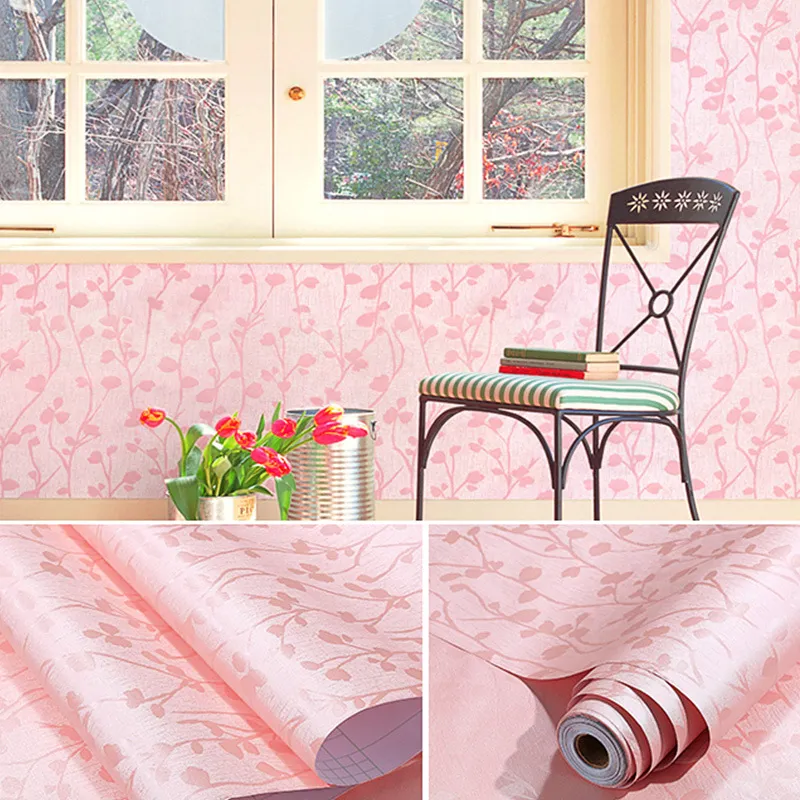
Membrane wrapping has become one of the most efficient ways to achieve premium-looking, durable surfaces on MDF, particleboard, and engineered wood components. At the center of this process is PVC film—a versatile decorative and functional layer that conforms to complex profiles under heat and vacuum pressure. If you’re choosing PVC film for membrane pressing (also called vacuum membrane pressing), understanding benefits, real-world uses, and thickness selection will help you reduce defects, control cost, and deliver a consistent finish.
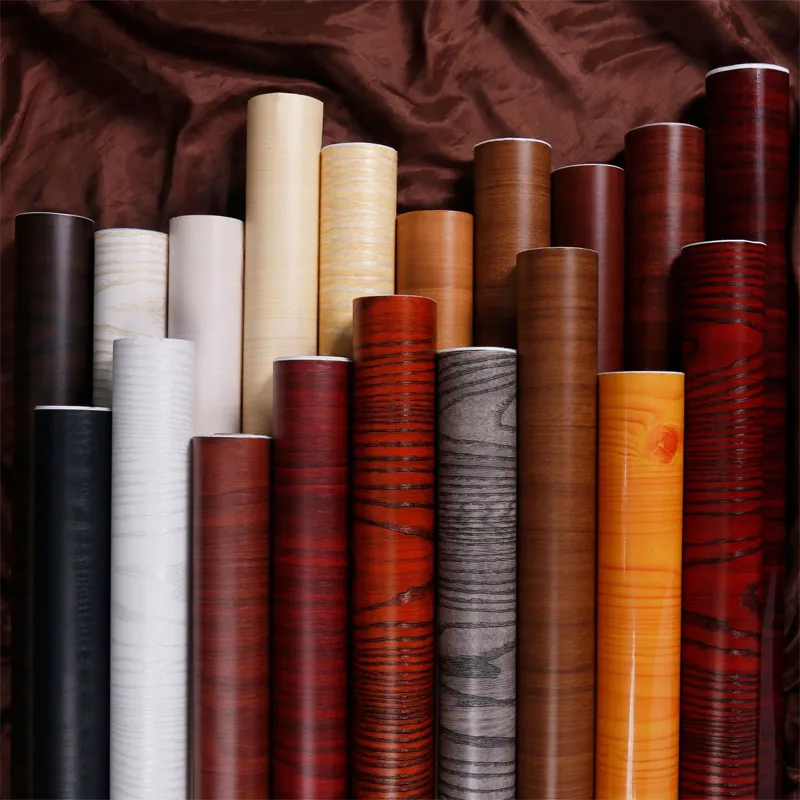
PVC film for membrane wrapping is a calendered or laminated polyvinyl chloride sheet engineered to soften evenly, stretch predictably, and bond strongly to a substrate (commonly MDF) using heat-activated adhesive. The film can be made in many finishes—wood grain, marble, solid colors, metallic effects, soft-touch, matte, glossy, embossed textures, and more.
Key idea: Membrane wrapping film must balance formability (to cover 3D profiles) with surface toughness (to resist daily wear).
Most membrane press films are produced through calendering, which enables tighter thickness control, stable mechanical strength, and consistent surface appearance across large runs—critical for cabinet doors, wall panels, and furniture fronts. For a closer look at this category, you can review Calendered Film.
Under heat, PVC film becomes pliable and can be vacuum-formed around raised panels, routed edges, grooves, and curves. This makes it ideal for one-piece wrapping on cabinet doors where paint or laminate would require multiple steps or edge-banding.
From natural wood tones to stone and textile textures, PVC decorative film supports high-end looks without the cost and variation of natural materials. Specialty options such as Wood Grain Film are widely used to match modern interior styles while maintaining batch consistency for large projects.
With the right formulation and topcoat, PVC film can provide reliable scratch resistance, stain resistance, and moisture resistance—important for kitchens, bathrooms, and high-traffic commercial furniture.
Membrane wrapping streamlines manufacturing: fewer finishing operations, fewer seams, and reduced rework—especially when the film thickness and adhesive are matched to the substrate geometry.
✔ Production advantage checklist:
• One-piece coverage on complex profiles
• Consistent gloss/matte across batches
• Lower edge failure risk than manual edging (when parameters are right)
• Easier cleaning and maintenance for end users
Membrane wrapping is used wherever manufacturers need decorative realism plus industrial throughput. Below are typical applications and what film characteristics matter most.
Best for: shaker-style doors, raised panels, routed details.
Focus on: stretchability, edge wrap stability, and scratch resistance.
Best for: feature walls, retail displays, office fit-outs.
Focus on: color consistency, low gloss variation, and easy cleaning.
Best for: baseboards, trims, and long-run profiles where surface uniformity is critical.
Related product reference: PVC skirting film.
Best for: boutique interiors, hotel furniture, showroom fixtures.
Focus on: emboss depth retention, touch feel, and light reflection control. Explore options like
3D Silk Texture Film.
Thickness selection is one of the biggest drivers of membrane wrapping performance. Too thin, and the film may show substrate imperfections or tear on sharp radii. Too thick, and it may require higher heat, risk texture distortion, or reduce productivity. The “right” choice depends on the surface design, the press capability, and the durability target.
Thickness is not only a number.
It influences heat absorption, stretch ratio, edge wrap, and final feel (matte, gloss, emboss clarity).
| Thickness (approx.) | Best-fit scenarios | Trade-offs to watch |
|---|---|---|
| 0.12–0.18 mm | Flat or shallow-profile parts, cost-sensitive runs, smooth MDF | Lower hiding power; higher risk on sharp corners; can show defects |
| 0.20–0.30 mm | Most cabinet doors, moderate 3D profiles, daily-use furniture | Needs controlled heating to avoid gloss shift/texture wash-out |
| 0.35–0.50 mm | Deep emboss, premium feel, higher impact resistance needs | May require longer heat time; harder to form on tight radii; higher material cost |
① Profile geometry: Tight corners and deep grooves demand better elongation and often a moderate thickness that forms well without tearing.
② Substrate quality: Rough MDF or visible seams benefit from slightly thicker film for hiding power.
③ Required durability: For heavy-use areas, prioritize abrasion resistance; thickness helps, but topcoat chemistry is equally important.
④ Press capability: Heater uniformity, vacuum level, and cycle time determine how thick you can go without defects.
⑤ Visual target: High gloss and deep emboss can be sensitive—choose thickness that preserves the intended optical effect.
Thickness is only half the decision. Surface finish influences both aesthetics and performance in daily life.
Gloss highlights design and color depth but can show fingerprints and micro-scratches more easily. For glossy doors and wardrobe surfaces, consider stable gloss control and robust topcoats. (If you also need complementary décor films for vertical surfaces, see options like Glossy Wardrobe Film.)
Matte provides a modern look and tends to hide smudges better, making it popular for contemporary kitchens and office furniture. Ensure the film is engineered for scuff resistance so the matte look stays consistent.
Emboss helps hide minor wear and provides a premium feel. However, deep emboss requires controlled heating—too much heat can soften the peaks and reduce texture definition.
Soft-touch surfaces elevate perceived quality and comfort. They are often chosen for high-end cabinetry and hospitality furniture, where tactile experience matters as much as visual design.
Many membrane wrapping issues are process-related, but film thickness and formulation strongly influence the “window” for stable production.
| Defect | Likely contributors | Thickness-related note |
|---|---|---|
| Corner thinning / whitening | Over-stretching, tight radii, heat/vacuum imbalance | Too thin films show stress more; consider moderate thickness + better radius design |
| Wrinkles / bridging | Insufficient heating, uneven vacuum, incorrect membrane tension | Thicker films may require longer/stronger heating for full conformity |
| Orange peel / texture loss | Overheating, wrong cooling, adhesive issues | Higher thickness can amplify heat sensitivity if cycle isn’t tuned |
| Edge lifting / poor adhesion | Adhesive under-application, contamination, moisture, insufficient press time | Thickness affects heat transfer; adjust preheat and dwell time to ensure adhesive activation |
For interior decoration and furniture, buyers increasingly require films that meet modern environmental and safety expectations. Look for suppliers who can support compliance documentation and stable QC.
What to ask your supplier for:
• Heavy-metal and phthalate status (or phthalate-free options)
• REACH / RoHS alignment where required
• ISO-based quality management (useful for project consistency)
• Batch traceability and thickness verification methods
A strong RFQ reduces back-and-forth and prevents mismatches between the film and your press conditions. When requesting samples or pricing, prepare a clear spec that covers both performance and aesthetics.
📌 RFQ essentials:
• Application: cabinet door / wall panel / trim / profile wrap
• Thickness target and acceptable tolerance range
• Width, roll length, core size, and packaging preference
• Finish: gloss level, matte, emboss depth, soft-touch, etc.
• Color/pattern reference (sample or code) and required batch consistency
• Functional needs: anti-static, anti-fog, stain resistance, higher scratch resistance
• Press method and approximate forming difficulty (deep grooves, tight corners)
If you want to explore broader categories and available designs in one place before sending specs, browse the supplier’s product directory at
Product.
For technical articles and selection guidance, you can also refer to
Knowledge.
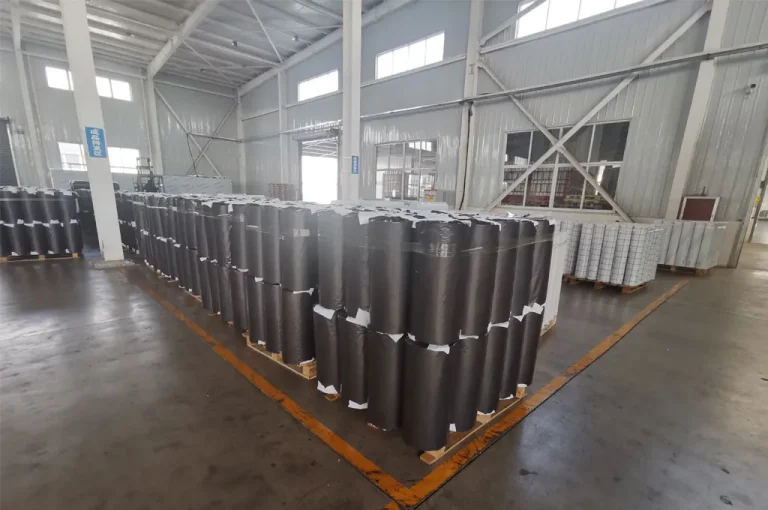
Membrane wrapping is sensitive: small variations in film thickness, surface tension, or print quality can show up as gloss differences, color shifts, or forming inconsistency. Suppliers with integrated capabilities—calendering, printing, slitting, and packaging—can better control these variables and stabilize lead time.
For example, films can be supplied as transparent, matte, embossed, pearlescent, anti-static, self-adhesive, single-layer or multi-layer composites, with customized slitting and export-ready packaging. This helps manufacturers keep repeatable results across different production batches and markets.
1) What thickness of PVC film is most common for membrane wrapping cabinet doors?
Most manufacturers start in the 0.20–0.30 mm range because it balances formability, hiding power, and surface durability for typical door profiles.
2) Is thicker PVC film always better?
Not always. Thicker films can improve feel and impact resistance, but they may require more heat/time and can increase risk of forming issues if the geometry is tight or the press cycle isn’t optimized.
3) What’s the difference between decorative PVC film and laminate for cabinet doors?
PVC membrane film is designed to stretch and wrap 3D shapes in one piece under vacuum. Many laminates are less formable and often require separate edge-banding or different processing.
4) How do I reduce corner thinning and whitening during pressing?
Use a film with suitable elongation, avoid overly sharp radii in routing, keep heating uniform, and tune vacuum timing. If you’re using very thin film, consider moving to a moderate thickness for better stress tolerance.
5) Can PVC membrane wrapping films be customized?
Yes. Many suppliers offer OEM/ODM options for thickness, width, roll size, patterns, colors, surface textures, and functional coatings, plus tailored packaging for shipping and handling.