Address
304 North Cardinal St.
Dorchester Center, MA 02124
Work Hours
Monday to Friday: 7AM - 7PM
Weekend: 10AM - 5PM
Address
304 North Cardinal St.
Dorchester Center, MA 02124
Work Hours
Monday to Friday: 7AM - 7PM
Weekend: 10AM - 5PM



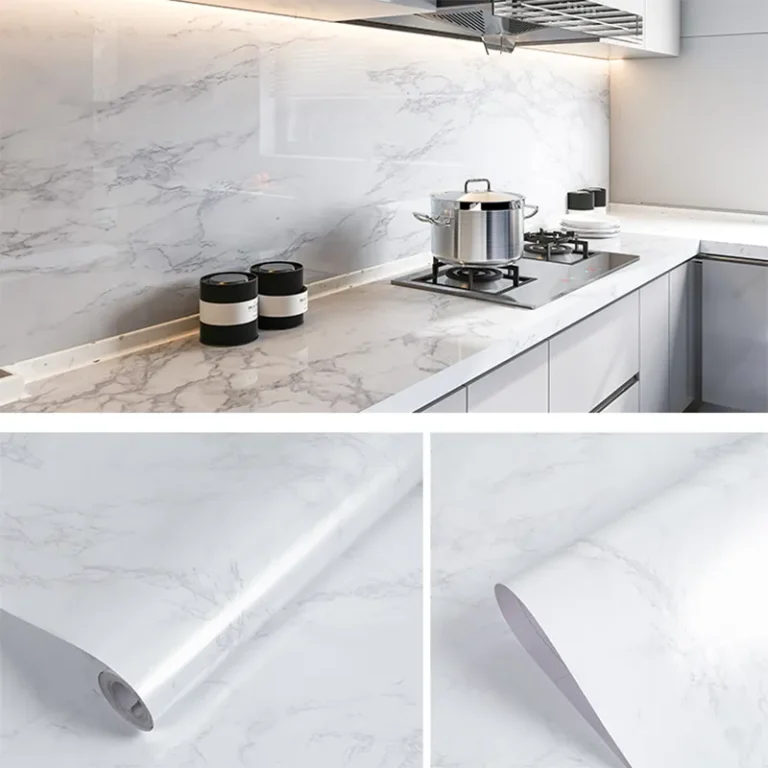
PVC film glossiness is a key quality attribute for decorative, protective, and packaging applications. This guide explains how gloss is measured, common standards, practical ways to improve surface shine, and how manufacturers and buyers can set reliable acceptance criteria for consistent results.
Glossiness describes how much light a surface reflects in a specular direction. For PVC films used on furniture, cabinetry, flooring, and packaging, gloss level affects perceived quality, color depth, scratch visibility, and suitability for specific environments. Consistent gloss control helps brands meet customer expectations and reduces returns.
Gloss is reported in Gloss Units (GU) using a calibrated gloss meter. Common measurement geometries are 20°, 60°, and 85°, chosen based on the film’s expected finish:
20° — High-gloss surfaces (measures bright reflections).
60° — General-purpose measurement, suitable for mid-gloss.
85° — Low-gloss and matte surfaces (sensitive to diffuse reflection).
The following table summarizes typical GU ranges used for PVC film finish classification. Use the angle that fits the expected finish and include the measurement angle in specifications.
| Finish Category | Typical GU (60°) | Recommended Angle |
|---|---|---|
| Matte | 0–10 GU | 85° |
| Low-Sheen / Satin | 10–30 GU | 60° / 85° |
| Semi-Gloss | 30–60 GU | 60° |
| Gloss | 60–80 GU | 20° / 60° |
| High-Gloss | 80+ GU | 20° |
To get accurate and repeatable gloss readings, follow a consistent test method:
Condition samples at test environment (room temperature, stable humidity) for at least 24 hours.
Use the correct measurement angle and report both GU and angle.
Take multiple readings (e.g., 5 spots across the roll width) and report average ± standard deviation.
Clean the surface gently of dust and fingerprints prior to measurement; do not polish unless your spec calls for post-treatment gloss.
Flat mounting of the film on a rigid substrate helps avoid wrinkling or micro-geometry variations. For printed films, measure after the print is fully cured and any surface coatings have been applied.
Variations in gloss often trace back to production or handling factors:
Material formulation — Resin grade, plasticizers, and additives change refractive index and surface energy.
Calendering parameters — Roll temperature, pressure, and gap affect film smoothness.
Surface contamination — Dust, oils, or processing residues reduce specular reflection.
Printing or coating — Ink type, varnish, and curing influence final gloss.
Storage and handling — Abrasion during winding/unwinding can dull the surface.

Manufacturers use several approaches to reach target gloss levels reliably:
Stabilize calendering line temperatures and nip pressures, maintain consistent line speed, and ensure die-roll surfaces are damage-free. Regularly monitor thickness uniformity and surface roughness.
Applying a clear UV-cured or solvent-based glossy topcoat can raise GU significantly and improve scratch resistance. Anti-static or anti-fingerprint coatings can be formulated to preserve specular reflection.
Choose polymer grades and additives that enhance surface smoothness and refractive properties. Slip agents, silica matting agents, and plasticizer levels must be balanced to avoid bloom or haze that reduces gloss.
For procurement and quality control, specify:
Measurement angle (20°, 60°, or 85°).
Target GU and allowable tolerance (e.g., 60°: 45 ± 6 GU).
Number of readings, sample conditioning, and acceptance sampling plan.
| Spec Item | Example |
|---|---|
| Measurement Angle | 60° |
| Target Gloss | 50 GU ± 5 |
| Readings Per Roll | 5 across width |
| Acceptance | Average within tolerance & SD ≤ 3 |
When specifying PVC film for interiors or consumer products:
Request sample panels from the supplier measured at the agreed angle and condition.
Inspect samples under the lighting conditions of intended use — showroom LED, home ambient light, or retail displays can show different gloss perception.
Consider scratch resistance and cleaning protocols; higher gloss shows fingerprints and scratches more readily.
Use mild detergents and soft microfiber cloths. Avoid harsh abrasives or solvents that could etch coatings and reduce gloss. For high-traffic surfaces, periodic recoat with approved clear finishes can restore shine.
Use 20° for high-gloss, 60° for general-purpose, and 85° for matte finishes. If in doubt, specify readings at both 60° and the angle appropriate to the target finish.
At least 5 evenly spaced readings across the roll width provide a reliable average. For strict control, increase sample points or test multiple rolls.
Pulivk provides calendered and coated PVC films with controlled gloss ranges, full in-house production, and flexible OEM options—contact through the company website for samples and specification support: pvcfilmtec.com.