Address
304 North Cardinal St.
Dorchester Center, MA 02124
Work Hours
Monday to Friday: 7AM - 7PM
Weekend: 10AM - 5PM
Address
304 North Cardinal St.
Dorchester Center, MA 02124
Work Hours
Monday to Friday: 7AM - 7PM
Weekend: 10AM - 5PM


PVC film manufacturing is a highly engineered process that transforms polyvinyl chloride resin into versatile, high-performance sheets used in furniture, interior decoration, construction, electronics, advertising, medical packaging, and home products. In this complete guide, you’ll learn how PVC film is produced (from formulation to finishing), what materials and additives matter most, how to choose between common film types, and where each option performs best. You’ll also see how full-process production (calendering, printing, and slitting/packaging) helps ensure consistent quality, stable lead time, and cost efficiency for global supply.
Key takeaway
The best PVC film is not defined by thickness alone—performance depends on formulation (resin + plasticizer + stabilizers), processing (calendering or casting), and surface engineering (embossing, printing, coatings, and adhesive layers).
PVC film manufacturing is the industrial production of thin PVC sheets or rolls that can be transparent, colored, matte, glossy, soft-touch, embossed, pearlescent, anti-static, self-adhesive, and more. In modern factories, the process typically integrates:
If you are sourcing decorative or industrial film at scale, a full-process manufacturer (calendering + printing + slitting/packaging) can reduce handoffs, stabilize batch consistency, and shorten delivery cycles—especially important for furniture factories and building-material distributors running tight production schedules.
While “PVC” is the headline material, the real performance comes from the complete formulation. Below are the main components manufacturers tune to match applications like cabinet wrapping, wall panels, flooring, protective packaging, and clean-room uses.
The resin grade influences melt behavior, clarity, and mechanical strength. Higher-quality resin and controlled particle distribution help improve surface smoothness, optical clarity, and process stability during calendering.
Plasticizers determine whether a film is rigid, semi-rigid, or flexible. For furniture wrapping and soft-touch decorative surfaces, the balance of plasticizer type and dosage impacts:
PVC must be protected from heat history during processing. Stabilizers help prevent discoloration and maintain strength. For long-life decorative films (doors, panels, skirting), stabilization directly affects color consistency and durability over time.
Pigments create solid colors, while pearlescent or metallic effects require controlled dispersion. Fillers can adjust cost and stiffness but must be balanced to avoid brittleness or poor surface finish. Specialty additives enable:
✔ Functional options include anti-static (electronics/clean areas), anti-fog, food-grade coatings, scratch resistance, and matte/gloss control for premium interior surfaces.
For buyers, the most reliable way to confirm formulation quality is to request batch test data (thickness tolerance, tensile strength, adhesion if laminated, and optical metrics for transparent grades) and verify compliance claims (e.g., REACH/RoHS/FDA where applicable).
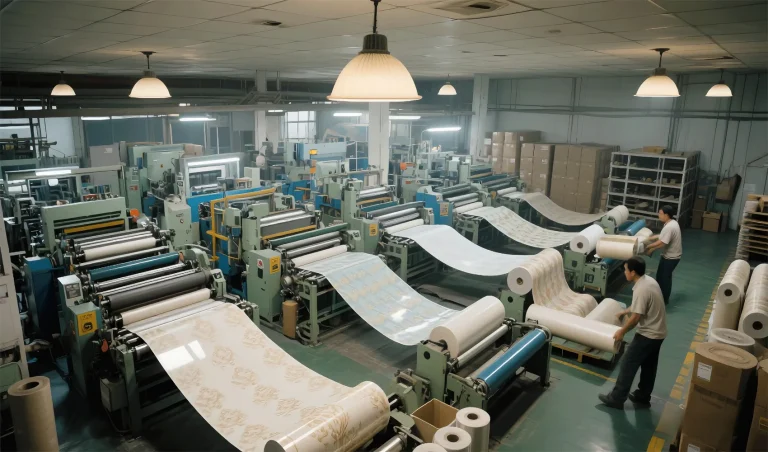
Although variations exist across product lines, the following workflow reflects a typical professional manufacturing route for decorative and industrial PVC films, especially where calendering and printing are integrated in-house.
Manufacturers verify resin, plasticizers, pigments, and additives for appearance, viscosity/flow behavior, and contamination. Accurate recipe control is critical—small deviations can cause color shift, haze, surface defects, or unstable calendering.
Materials are blended to achieve uniform dispersion. Proper mixing prevents specks, streaks, and uneven gloss. For textured or metallic looks, dispersion quality is what separates “acceptable” from “premium” surface aesthetics.
In calendering, the compounded material is processed through a multi-roll calender stack to create a continuous sheet with controlled thickness and finish. Calendering is widely used for decorative and industrial PVC film due to its:
To explore a typical product category built around this method, see Calendered Film.
After forming, the film is cooled under controlled conditions to stabilize dimensions and reduce internal stress. Edge trimming and online thickness control improve roll uniformity and reduce downstream waste for laminators and converters.
Embossing adds tactile and visual realism—wood grain depth, stone texture, silk-like fabric patterns, brushed effects, or 3D relief. This is especially valued in furniture and interior decoration where customers expect “real material” feel.
A representative example is 3D Silk Texture Film, used to achieve a refined, textile-inspired surface without the maintenance of real fabric.
Printing adds patterns such as wood grain, marble, stone, cloth texture, and artistic designs. High-quality decorative film depends on accurate color management and stable ink adhesion. Many manufacturers use eco-friendly, non-toxic inks so films remain suitable for indoor decoration and human-contact scenarios.
Depending on the application, coatings may enhance scratch resistance, stain resistance, anti-static performance, or ease of cleaning. Multi-layer composite films may combine different layers to balance aesthetics, mechanical properties, and bonding requirements for lamination lines.
Finished jumbo rolls are slit into customer-required widths and roll lengths. Professional packaging typically uses dust-proof PE film or kraft paper wrapping, plus specification labels for traceability. For export shipping, moisture and impact protection reduce transit damage and ensure rolls arrive ready for production.
PVC film is a broad category. The fastest way to choose correctly is to match the film type to your substrate (MDF, plywood, metal, glass, plastic), your forming method (flat lamination, vacuum pressing, wrapping), and your environment (kitchen oil exposure, humidity, foot traffic, clean-room control).
★ Quick classification
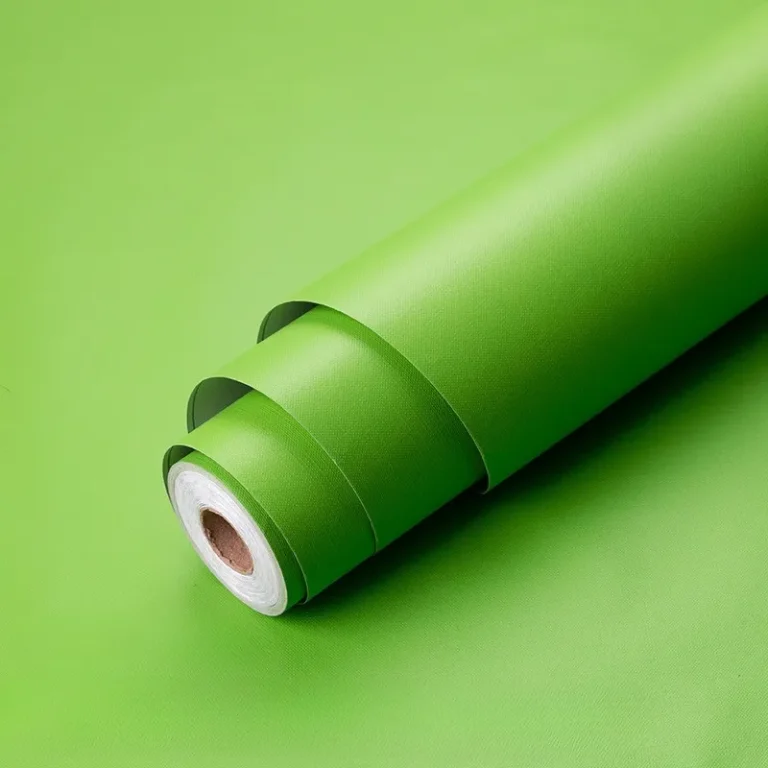
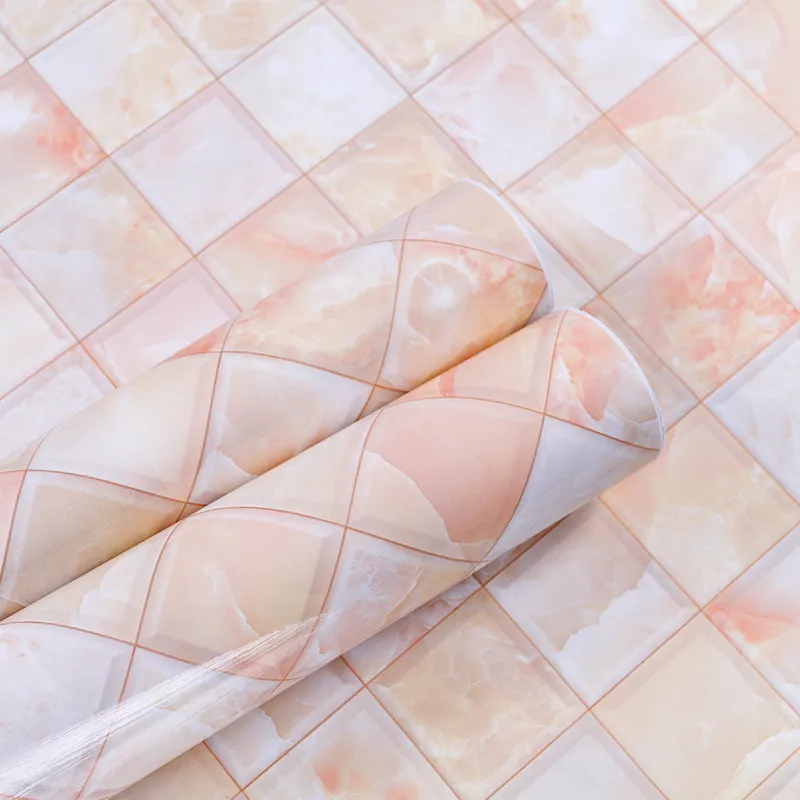
Decorative PVC films are commonly used on cabinet doors, wardrobes, wall panels, and interior trims. They deliver consistent design language across projects while improving wipe-clean maintenance versus porous materials. Popular families include wood grain, marble/stone, metallic, and pure solid colors.
For realistic natural-stone aesthetics in furniture and interior cladding, consider Marble Film.
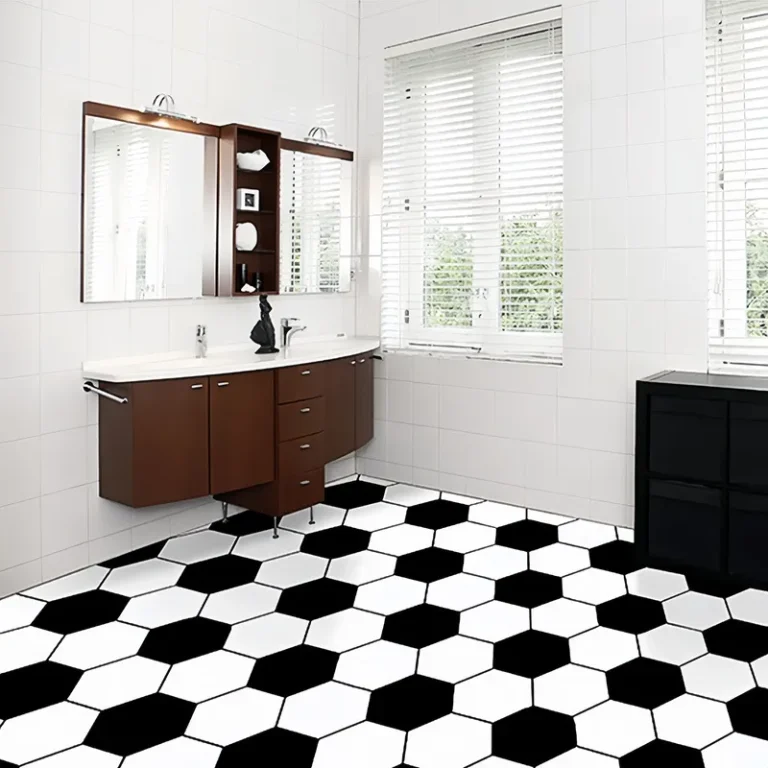
Flooring-oriented films are engineered for abrasion resistance, dimensional stability, and long-term appearance. They are used in residential and commercial flooring systems and also as protective layers in renovation or building sites.
For product reference, visit Floor Film.
Skirting and trim films are selected for scuff resistance and consistent color matching with floors and walls. In many markets, they help installers complete “clean edges” quickly while protecting corners and lower wall areas from daily wear.
See an example category here: PVC Skirting Film.
Transparent and frosted films are common in packaging, surface protection, stationery, and industrial uses where appearance and visibility matter. Key parameters include haze, clarity, gloss, and anti-block performance (roll release). For clean-room or electronics, anti-static performance and cleanliness are critical.
Self-adhesive films streamline installation for signage, exhibitions, temporary décor, and quick renovation projects. Adhesive selection depends on substrate type, required removability, and temperature range. For best results, specify the surface energy and whether the film must be repositionable.
PVC film’s strength lies in combining decorative freedom with surface protection. Below are common industry scenarios and what to prioritize when selecting film.
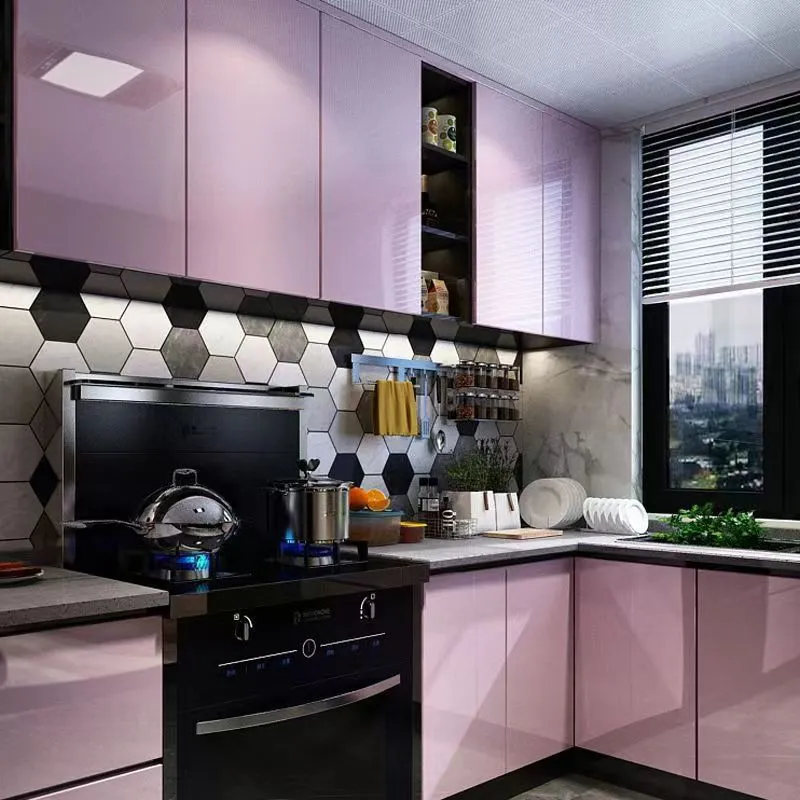
Used for kitchen cabinets, wardrobes, office furniture, and panel systems. Priorities often include color consistency, embossing realism, adhesion compatibility with lamination glue systems, and scratch/stain resistance.
Applied to wall panels, partitions, ceilings, doors, and trims. Here, dimensional stability and long-term appearance are essential. For humid regions or high-traffic commercial spaces, confirm waterproof performance and abrasion resistance.
Anti-static and insulating films are used for device protection and component handling. Choose films with controlled static decay, stable thickness, and verified cleanliness standards when used in sensitive assembly environments.
Decorative and self-adhesive films enable fast visual updates for booths, lightbox surfaces (where applicable), and branded walls. Emphasize print fidelity, color stability, and installation/removal behavior.
Films used in protective and packaging roles should prioritize safety compliance, low odor, and traceability. Request test reports and confirm the manufacturer’s QC checkpoints from raw material to final rolls.
Consistent quality is the difference between smooth lamination and costly rework. Professional factories implement multi-stage checks and batch traceability. Common QC items include:
QC checklist
• Thickness tolerance across the roll (critical for wrapping and flat lamination)
• Surface defects (gel points, specks, pinholes, streaks, orange peel)
• Color difference (ΔE control between batches and within roll)
• Gloss / matte level and emboss depth consistency
• Mechanical performance (tensile strength, elongation, tear resistance)
• Adhesion performance for printed/coated/laminated constructions
• Roll quality (winding tightness, telescoping control, edge integrity)
If your product will be used indoors (furniture, wall décor), it is also reasonable to request documentation for major compliance frameworks (for example ISO systems and material restrictions) and confirm the film uses suitable inks and stabilized formulations for long-term appearance.
OEM/ODM is common for decorative PVC film because design requirements vary by brand, project, and region. To get accurate sampling and pricing, provide a clear specification package. At minimum, include:
Tip: If you need consistent production across multiple destinations (Southeast Asia, Middle East, Europe), confirm that your supplier can lock in standardized color management and batch traceability so future reorders match earlier shipments.
When comparing suppliers, look beyond brochure claims and evaluate production capability, QC discipline, and conversion services. Strong indicators include:
Manufacturers with integrated calendering, printing, and slitting/packaging can control defects at the source and respond faster to design updates. This often leads to more consistent rolls and shorter lead times.
A professional supplier supports small trial orders (depending on product and customization level), provides clear sampling timelines, and communicates what can be realistically matched (color, texture, gloss, repeat length).
Film is sensitive to dust, pressure marks, and moisture during transport. Look for dust-proof wrapping, correct edge protection, and consistent labeling so your warehouse can receive and issue rolls efficiently.
Many applications require low-odor materials and restrictions on heavy metals and certain plasticizers. Ask for the supplier’s compliance statements and third-party test reports if needed for your market.
If you want to explore more product categories or technical articles for sourcing and specification, you can browse the manufacturer’s site sections such as Product and Knowledge.
Understanding typical issues helps buyers ask the right questions and avoid avoidable losses.
Prevented by standardized pigment dispersion, controlled printing parameters, and batch-to-batch color measurement. For long-term programs, confirm that the factory keeps retained samples and tracks color targets.
Usually linked to raw material cleanliness, filtration, mixing uniformity, or calender roll conditions. Strong suppliers detect defects early through online inspection and strict raw material controls.
Often caused by mismatched surface energy, incorrect coating, or incompatible adhesives. Provide your lamination process details (temperature, press type, glue brand) and request adhesion testing on the target substrate.
Controlled through correct cooling, balanced formulation, and stable winding tension. If your line runs hot (e.g., vacuum pressing), confirm heat-aging behavior during sampling.
Calendered film is formed by passing PVC compound through multiple rolls, offering strong thickness control and high output. It is widely used for decorative and industrial films that need stable surface quality.
Yes. OEM/ODM commonly covers thickness, width, roll length, embossing pattern, gloss/matte level, printing design, and functional treatments such as anti-static, anti-fog, or scratch resistance.
Provide film type, thickness, width, roll length, color/pattern reference, required surface finish (gloss/matte/emboss), application method (lamination or wrapping), and expected order quantity.
Through raw material inspection, recipe control, online thickness monitoring, surface inspection, printing color management, and final roll checks (winding, labeling