Address
304 North Cardinal St.
Dorchester Center, MA 02124
Work Hours
Monday to Friday: 7AM - 7PM
Weekend: 10AM - 5PM
Address
304 North Cardinal St.
Dorchester Center, MA 02124
Work Hours
Monday to Friday: 7AM - 7PM
Weekend: 10AM - 5PM



PVC film prices can feel confusing because “a roll” is not a universal standard: thickness, width, length, surface finish, base resin, additives, printing, and packaging all change the real cost. This guide breaks down today’s typical cost-per-roll logic, the key price drivers buyers overlook, and practical steps to secure a fast, accurate quote for decorative, calendered, and functional PVC films—without paying for specs you don’t need.
Two suppliers may quote the same “roll price” while offering completely different film structures and usable yield. To compare fairly, align these variables first:
A roll price is typically built from four blocks: raw material + processing + conversion (printing/slitting/packaging) + logistics. Market swings in PVC resin, plasticizers, stabilizers, and energy can shift costs quickly, while custom finishes and tight tolerances often add more than buyers expect.
For fast internal budgeting, many purchasing teams estimate using cost per square meter (or per kilogram) and then convert to per roll once the final roll size is fixed. If you’re comparing decorative films for cabinetry or doors, you’ll also want to compare the “effective yield” (usable meters after trimming, defects, and color matching).
✔ Buyer Tip:
Ask for both price per roll and the equivalent price per m² (or per kg). This makes quotes comparable even when roll sizes differ.
If you’re sourcing calendered film, confirm whether the quote includes any functional coatings or special additives—those can materially change the final cost.
The biggest driver is the compound formula. Flexible decorative films often use plasticizers; functional films may use anti-static agents, UV packages, or food-grade coatings. Each requirement changes both cost and processing stability.
Look for clarity in the quote: specify whether you need phthalate-free, heavy-metal-free, or specific compliance such as REACH/RoHS/FDA. These options can affect material selection and price.
A film that is 0.20 mm vs. 0.18 mm doesn’t look dramatically different, but it changes weight per square meter and resin consumption. Tight thickness tolerance and stable flatness also demand better process control and more QC.
Finishes can be a major price lever. Embossing and 3D textures require specialized rollers, process tuning, and sometimes additional layers for depth and durability.
For premium interior design effects, textured solutions like
3D silk texture film
typically carry a higher conversion cost than plain matte/gloss films because of pattern depth consistency requirements.
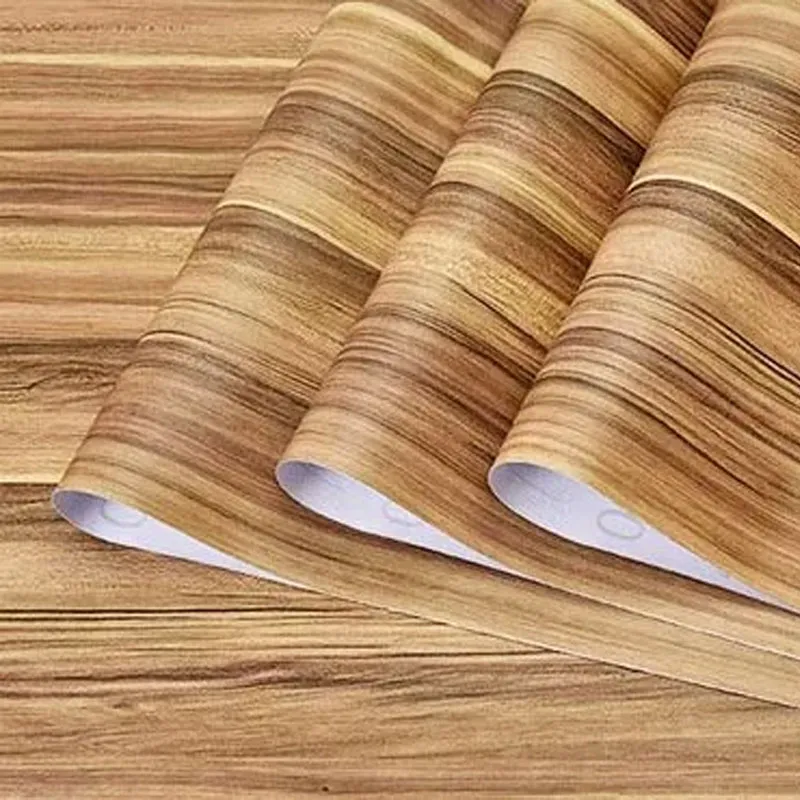
Printed decorative films (wood grain, marble, stone, fabric textures) may require cylinder setup, ink adjustments, and multiple sample iterations to match a reference board. If you need strict color matching across batches, expect added QC and potentially higher unit pricing—especially for smaller quantities.
Example: if you source wood grain film for cabinet doors, it’s wise to confirm the acceptable ΔE tolerance and whether the supplier can lock the color with traceable batch control.
Self-adhesive PVC film usually costs more than non-adhesive decorative film because it includes adhesive coating, release liner, and additional conversion steps. The adhesive type (removable vs. permanent, heat resistance, humidity performance) also matters.
Wider widths increase throughput efficiency but also raise risk of edge defects, telescoping, and handling costs. Roll length impacts winding stability and shipping. Core diameter and carton/pallet packaging affect logistics safety—especially for export shipments.
📌 Packaging note:
Many professional suppliers wrap each roll with dust-proof PE film or kraft paper and apply a spec label to reduce transit damage and mix-ups.
If your project has strict warehouse handling rules, ask for customized labeling (SKU, barcode, batch ID) and outer packaging stacking limits.
PVC film production has setup time: compounding adjustments, embossing roller changes, printing alignment, slitting settings, and QC checks. Larger volumes spread these fixed costs better. For trial orders, you can still control cost by choosing an existing pattern, standard thickness, and standard roll format.
If your film is used for indoor décor, medical environments, electronics, or close human contact, you may need third-party reports and traceability. Testing adds cost, but it also reduces downstream risk (returns, customer complaints, failed inspections).
Buyers often prioritize surface realism, scratch resistance, and stable color across batches. Embossing depth, gloss level, and print quality can be worth more than simply buying the cheapest roll.
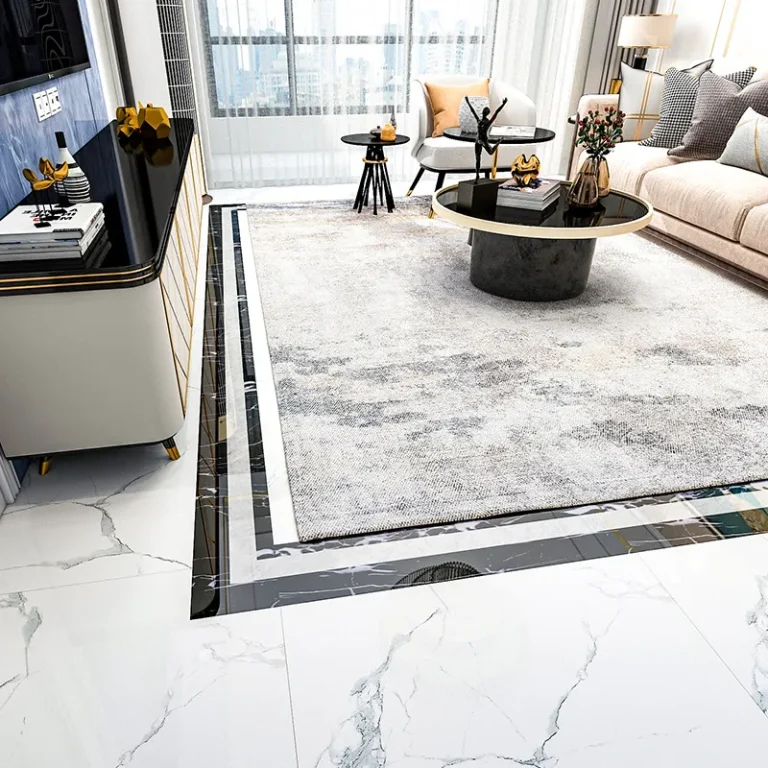
Flooring-related films typically require stronger wear performance, dimensional stability, and consistent thickness. If you’re comparing options for renovation or commercial projects, see product formats like
floor film
and confirm the abrasion, slip, and temperature performance your environment needs.
For skirting, wall, and trim materials, buyers usually care about easy cleaning, color continuity, and installation efficiency. If you need dedicated finishing solutions, reference categories such as
PVC skirting film
for more precise spec matching.
The fastest way to reduce cost is to avoid over-specifying. For example, if your panel will be edge-banded and never directly touched, you may not need premium anti-scratch or soft-touch layers. On the other hand, for high-traffic furniture surfaces, paying for abrasion resistance is often cheaper than handling warranty claims later.
🧾 Send this checklist to suppliers:
Samples help verify embossing feel, gloss level, print alignment, and adhesion behavior before you commit. If consistency matters (retail fixtures, cabinet lines, hotel projects), request batch traceability and QC records for thickness, adhesion, and optical appearance.
The lowest unit price can be offset by higher waste, color drift, unstable adhesion, packaging damage, or longer lead times. Consider:
Suppliers with integrated processes—calendering, printing, and slitting/packaging—can often reduce overall cost because they control quality and waste at every step. This also simplifies accountability: if a roll telescopes in transit or a batch has gloss inconsistency, you avoid the “it’s the other vendor’s fault” loop.
If you need a better price without reducing performance, focus on controllable variables:
✅ Quick rule:
If two offers differ a lot, ask each supplier to restate the quote using the same format: USD per m², thickness, width, roll length, finish, packaging, and Incoterms.
Provide film type, thickness (and tolerance), finish, width, roll length (or roll weight), pattern/color, quantity, compliance requirements, packaging needs, and shipping destination/Incoterms.
The main drivers are PVC resin and additive costs, energy, exchange rates, and changing demand for specific finishes (embossed, soft-touch, printed patterns). Lead time and order size also influence unit pricing.
Price per square meter (or per kilogram) is usually better for comparison; price per roll is only meaningful when roll width, length, and thickness are identical.
Typically yes, because it includes adhesive coating and a release liner, plus extra conversion steps. The adhesive performance (removable/permanent, heat/humidity resistance) also affects price.
Use standard roll formats, avoid over-tight tolerances, select proven existing patterns, consolidate SKUs into fewer production runs, and confirm packaging/shipping terms that minimize total landed cost.