Address
304 North Cardinal St.
Dorchester Center, MA 02124
Work Hours
Monday to Friday: 7AM - 7PM
Weekend: 10AM - 5PM
Address
304 North Cardinal St.
Dorchester Center, MA 02124
Work Hours
Monday to Friday: 7AM - 7PM
Weekend: 10AM - 5PM


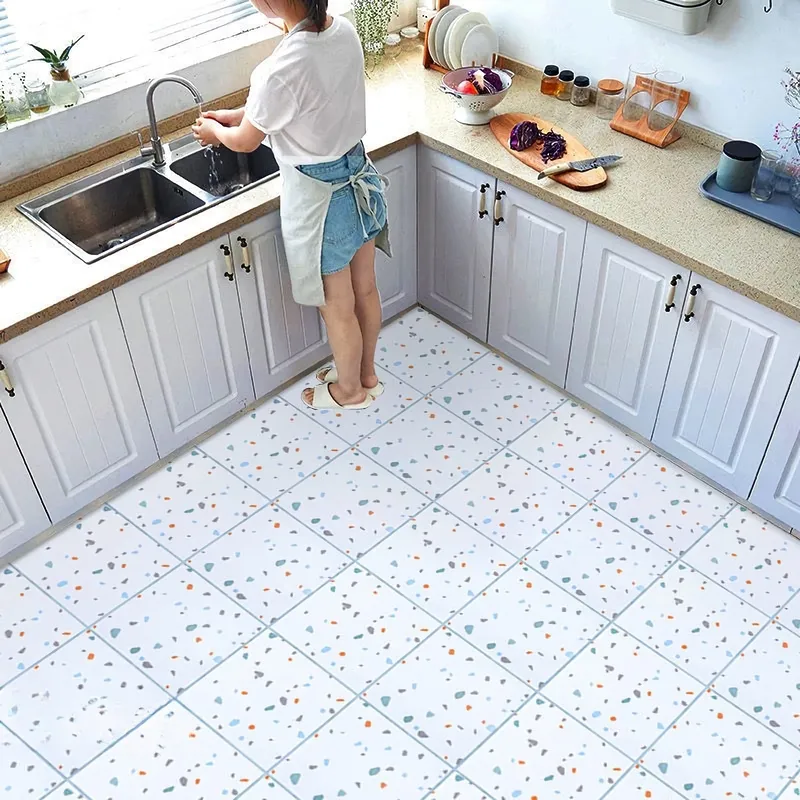
Buying PVC film is not just “picking a pattern and placing an order.” The right film depends on how it will be processed (lamination, wrapping, vacuum pressing), where it will be used (kitchen, bathroom, retail display, medical packaging), and what performance you expect (scratch resistance, anti-static, waterproof, low odor, stable color). This guide walks you through how to choose the right type, thickness, and supplier—with practical checklists you can apply immediately.
✔ Quick outcome you should aim for:
a PVC film that matches your process window, stays consistent roll-to-roll, passes your internal tests, and arrives with predictable lead time and export-grade packaging.
PVC films are used to improve appearance, protect surfaces, and add functional properties. Before comparing suppliers or thickness, define the “job” the film must do:
Priorities: color consistency, abrasion resistance, stain resistance, good adhesion on MDF/plywood, stable shrinkage for wrapping.
Common looks: wood grain, matte, glossy, fabric texture, soft-touch.
Priorities: UV stability (when exposed), water resistance, easy cleaning, dimensional stability, long-term color.
Examples: wall panels, skirting, partitions, ceiling trims.
Priorities: anti-static options, insulation needs, clean appearance, scratch control, controlled gloss, consistent thickness.
Priorities: low odor, compliance (REACH/RoHS/FDA when required), stable quality, clean handling, traceability, protective packaging.
Tip (⚑):
Write down your application + process + environment in one line, e.g.,
“MDF kitchen cabinet door, membrane press + PUR glue, high humidity, matte anti-fingerprint.”
That single sentence makes supplier selection faster and prevents costly trial-and-error.
Most buyers meet three main families of PVC film: calendered base films, decorative films, and functional films (anti-static, self-adhesive, protective, etc.). The “right type” depends on whether you need a stable base, a ready-to-apply décor surface, or a film with special performance.
Calendered film is produced by rolling the PVC compound through calender rollers to achieve consistent thickness and surface quality. It is widely used as a base layer for printing, embossing, lamination, and downstream converting.
If your key requirement is thickness control and process stability, calendered film is often the best starting point.
Explore product details here:
Calendered Film.
Decorative films are designed for visible surfaces—cabinets, doors, wall panels, skirting, furniture profiles—where color, pattern alignment, and surface feel are key. Common options include wood grain, stone/marble, metallic, glossy, matte, fabric texture, and 3D embossed looks.
For example, if your project is targeting a warm, natural interior style, a ready-to-run pattern film like
Wood Grain Film
can reduce design time and simplify sampling.
Functional films are selected when the environment is demanding or when installation must be simplified. Consider functional features when you need:
anti-static performance for electronics,
waterproof + easy cleaning for wet areas,
or self-adhesive for faster application.
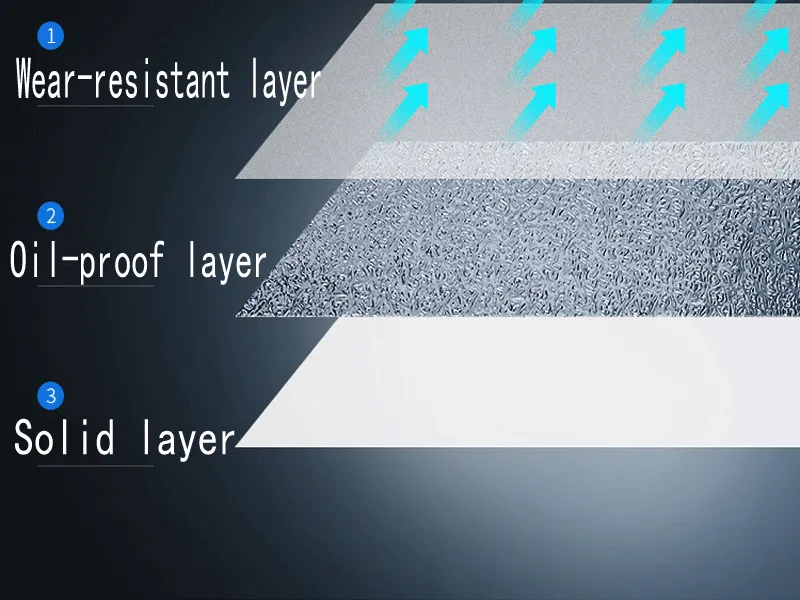
If your target is kitchen surfaces that face daily splashes and cooking residues, options like
Kitchen Anti-oil Film
help reduce cleaning time and extend surface appearance.
Ask these before requesting a quote:
Thickness affects cost, handling, durability, and how forgiving the film is during processing. The best thickness is not “the thickest you can buy,” but the thickness that passes performance needs with the lowest risk in your production line.
| Typical Range | Common Use | Why It Works |
|---|---|---|
| 0.05–0.12 mm | Protective layers, light décor, some self-adhesive overlays | Cost-efficient, easy to cut; less tolerant to deep textures |
| 0.12–0.25 mm | Furniture wrapping, cabinet surfaces, wall panels | Balanced handling, better concealment, stable lamination performance |
| 0.25–0.50 mm+ | Floor-related applications, high-wear surfaces, heavy-duty protection | Higher durability; may need adjusted heating/pressure in processing |
⚠ Common purchasing mistake:
choosing thickness based on a competitor’s spec without considering your own line settings.
Instead, ask suppliers to recommend a thickness based on your substrate, adhesive, and forming method—and request a small trial run before scaling.
Finish is where buyers often win or lose the “premium feel.” Gloss level, tactile texture, and pattern depth determine how the product looks under indoor lighting and how it resists fingerprints and daily wear.
Glossy films can make small spaces look brighter and “new,” but they show scratches and fingerprints more easily. Matte and super-matte finishes feel modern and hide smudges better, which is especially useful in kitchens, retail counters, and high-touch furniture.
Soft-touch PVC films deliver a velvet-like feel and are popular for premium cabinetry and interior décor. However, they should be evaluated for stain resistance, scratch recovery, and chemical resistance to common cleaners.
Embossed and 3D textured films can create fabric-like, silk-like, or carved patterns that elevate product identity. If you’re building a distinctive furniture line or interior panel collection, consider a texture film such as
3D Silk Texture Film.
Two buyers can order “wood grain PVC film” and receive products that behave very differently in production. To avoid ambiguity, include functional requirements in your RFQ (request for quotation).
Specify your lamination method (hot melt, PUR, solvent-based), target bonding strength, and whether you need primer or special coating.
If needed, require compliance with REACH, RoHS, ISO, or FDA (for relevant contact or packaging scenarios).
Define target gloss, haze (for transparent film), texture depth, and anti-fingerprint expectation.
Include abrasion, scratch, stain, and heat resistance requirements based on real end-use behavior.
A reliable supplier protects your brand by maintaining consistent color, thickness, and performance—especially across re-orders. When comparing manufacturers, use a scorecard that covers production capability, quality control, customization, and delivery stability.
Suppliers with integrated lines can control critical variables from raw material to finished rolls. This often means better consistency, shorter lead times, and fewer “it’s the other factory’s problem” delays. For buyers who need dependable re-orders and stable mass production, integrated capability is a major risk reducer.
If you need custom colors, printing, embossing, widths, roll lengths, or private-label packaging, confirm the supplier can support OEM/ODM without quality drift. The most practical sign of strong customization is not only “yes we can,” but a clear process:
sample confirmation → pilot run → sealed sample retention → mass production control.
Export-ready packaging reduces edge damage, contamination, and deformation in transit. Ask how each roll is wrapped (dust-proof PE film or kraft paper), whether labels include full specs, and how pallets are protected against moisture. If you ship to multiple regions, confirm the supplier is comfortable with sea freight timelines and documentation.
If you want to review broader product categories or learn more purchasing knowledge, you can use:
Product
and
Knowledge.
Many PVC film disputes come from unclear approvals: the buyer thinks the sample is “close enough,” the supplier thinks the buyer accepted a tolerance, and mass production becomes a surprise. Use a structured approval process:
If you want predictable pricing, understand what drives it. PVC film price is influenced by resin and additive cost, but also by design and processing complexity.
Typical cost drivers include:
Practical negotiation point (✓):
If you’re cost-sensitive, ask for two options:
a “standard durability” film and an “enhanced durability” film, with clear test differences.
That comparison often makes the best-value choice obvious.
Many purchasing delays happen because key details are missing. To speed up quoting and sampling, include:
Type, thickness, width, roll length, core size, winding direction, finish (gloss/matte), emboss code if applicable.
Adhesion method, scratch/abrasion requirement, stain resistance, heat resistance, anti-static/anti-fog if needed.
REACH/RoHS/FDA needs, ISO requirements, COA, test reports, MSDS when required.
Individual roll wrap, labels, pallet method, moisture protection, preferred incoterms, destination port.
If you want a fast starting point, use these scenario-based suggestions. Treat them as a baseline, then confirm with trials.
Scenario A (Cabinet doors, high-touch, modern look):
choose a matte or soft-touch decorative film; request anti-fingerprint option; confirm stain resistance with kitchen oils and cleaners.
<p style