Address
304 North Cardinal St.
Dorchester Center, MA 02124
Work Hours
Monday to Friday: 7AM - 7PM
Weekend: 10AM - 5PM
Address
304 North Cardinal St.
Dorchester Center, MA 02124
Work Hours
Monday to Friday: 7AM - 7PM
Weekend: 10AM - 5PM


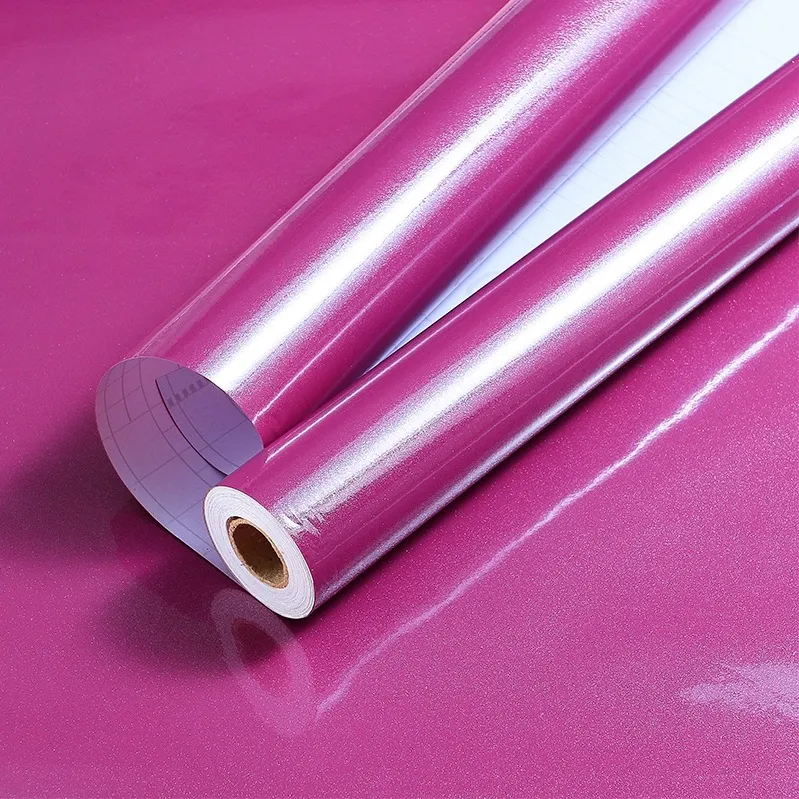
Understanding why PVC film products are returned helps brands cut costs, improve customer satisfaction, and reduce waste. This guide explains the most common return reasons, the underlying quality and handling issues, and practical steps you can take across production, packaging, sales, and after-sales to reduce PVC film returns.
• Incorrect product selection: Wrong thickness, color, gloss, or adhesive type ordered vs. delivered.
• Surface defects: Scratches, pinholes, bubbles, inconsistent gloss, or print misalignment noticed on arrival or after trimming.
• Adhesion failures: Peel-off, poor bonding to substrates, or incompatibility with primers/paints.
• Dimensional & tolerance issues: Roll OD, width, core size, or cut lengths outside expected tolerances.
• Packaging & transit damage: Edge crushing, moisture stains, dust contamination or deformation during shipping.
• Installation/user error: Improper application, temperature/humidity sensitivity ignored, or surface contamination at installation site.
| Return Reason | % of Returns (example) |
|---|---|
| Incorrect product / order mismatch | 22% |
| Surface defects / visual quality | 28% |
| Adhesion issues | 18% |
| Packaging / transit damage | 17% |
| Installation/user error | 15% |
Material formulation inconsistencies — Variations in plasticizers, stabilizers, or pigments can change flexibility, gloss, or long-term performance.
Process control lapses — Calendering temperature, cooling rate, or printing alignment drifting can create surface defects and dimensional variance.
Inadequate inspection — Missing final visual checks, or inconsistent sampling frequency, lets defective rolls ship to customers.
Adhesion mismatch — Using adhesives without validating against customer substrates, primers, or ambient conditions can lead to peel failures.
• Insufficient edge protection or loose winding increases risk of edge crush and creasing.
• Poor wrapping allows dust or moisture to settle, causing stains or adhesion problems later.
• Unexpected transit handling (stacking, forklift damage) exacerbates weak packaging choices.
• Use clear SKU labels with thickness, gloss level, adhesive type, width, and roll length. Provide a simple spec sheet with every shipment.
• Offer swatch samples for large or color-critical jobs — reduce mis-selection returns by letting buyers confirm look & feel before bulk orders.
• Implement inline checks at critical steps: calendering temperature, web tension, printing registration, and unwind/rewind tension.
• Increase final visual inspection frequency and record batch photos for traceability.
• Run adhesion tests with common substrates and varnishes used by customers; document instructions for surface prep, primer, and cure times.
• Provide simple on-site test protocols customers can run before full application to catch compatibility issues early.

• Reinforce roll ends with capped cores and protective edge boards; wrap with dust-proof PE and label clearly.
• Offer palletization options and moisture-resistant outer coverings for long-distance or humid routes.
• Provide concise installation guides and troubleshooting tips (temperature range, surface prep, recommended tools) with each shipment.
• Use short how-to videos and quick-checklists for installers — many returns stem from avoidable installation errors.
• Create a clear returns policy that differentiates between manufacturing defects and installation/user issues; include required evidence (photos, roll labels).
• Offer fast replacement or partial credit for verified defects to preserve relationships and reduce chargebacks.
• Confirm SKU, width, thickness, adhesive type, gloss and print proof against order.
• Perform visual inspection and record lot images.
• Run adhesion and peel tests when adhesive films are involved.
• Check roll winding, core fit, and edge protection; wrap and label rolls.
• Attach installation guide and contact info for technical support.
Manufacturers, distributors, and installers across furniture, interior décor, kitchen and bathroom fit-outs, and packaging will see fewer returns and faster issue resolution when these practices are adopted. OEM customers ordering custom prints or private-label runs will particularly benefit from added pre-shipment proofing.
Pulivk (Henan Pulivk New Materials Co., Ltd.) maintains full in-house production from calendering to printing and split-packaging to ensure stable quality, shorter lead times, and controlled costs at the source. Visit https://pvcfilmtec.com/ for more information.
Reducing PVC film returns is achieved by combining tighter process controls, better packaging, clear customer communication, and practical installation support. Implement small targeted changes in inspection, documentation, and shipping today to see measurable drops in return rates and improved customer satisfaction.