Address
304 North Cardinal St.
Dorchester Center, MA 02124
Work Hours
Monday to Friday: 7AM - 7PM
Weekend: 10AM - 5PM
Address
304 North Cardinal St.
Dorchester Center, MA 02124
Work Hours
Monday to Friday: 7AM - 7PM
Weekend: 10AM - 5PM


 ByPulivk
Selecting the correct PVC film thickness is one of the most critical decisions in any project. Whether you are laminating furniture, protecting a floor, or creating waterproof barriers, the gauge of the film directly impacts durability, flexibility, and application success. A film that is too thin may tear during installation, while one that is too thick might not conform to complex profiles or could unnecessarily inflate your material costs.
Understanding the relationship between the mil or micron measurement and the intended use ensures you achieve the optimal balance of performance and budget. Industrial standards, such as those referenced in Plastic Film Thickness Testing, provide a benchmark for consistency, but the real-world application remains the ultimate guide.

PVC film gauge is typically measured in mils (thousandths of an inch) or microns (thousandths of a millimeter). To visualize this, 1 mil equals 25.4 microns. Common PVC film thickness ranges can start as low as 0.03 mm for lightweight packaging and extend up to 0.50 mm for heavy-duty industrial sheeting. Choosing between these extremes requires analyzing the mechanical stress the film will endure.
Below is a quick reference guide for common calendered and decorative films. These values align with general industry practices and the performance metrics found in ISO Film Thickness Standard documentation.
| Thickness (Microns) | Thickness (Mils) | Rigidity Level | Suitable Applications |
|---|---|---|---|
| 30 – 50 | 1.2 – 2.0 | Very Flexible | Light packaging, temporary protection |
| 80 – 120 | 3.1 – 4.7 | Medium Flexibility | Furniture wrap, graphic arts |
| 150 – 200 | 5.9 – 7.9 | Semi-Rigid | Wall panels, furniture lamination |
| 300 – 500 | 11.8 – 19.7 | Rigid / Heavy-Duty | Floor tiles, industrial curtains |
The PVC film thickness you choose must align with the functional demands of the surface. For instance, a film used for a wardrobe door experiences different stress than one applied to a bathroom floor. Below we break down the ideal thickness ranges by industry segment.

For membrane press and vacuum lamination on MDF doors, a thickness between 0.12 mm and 0.20 mm is standard. This provides enough body to resist heat during pressing while retaining sufficient elongation to wrap around intricate profiles. Products like our Glossy Wardrobe Film are engineered within this range to eliminate edge pull-back and surface cracking. The Plastic Film Tear Resistance is a critical property here, and thinner films often fail the standard tear propagation tests required for wrapped doors.

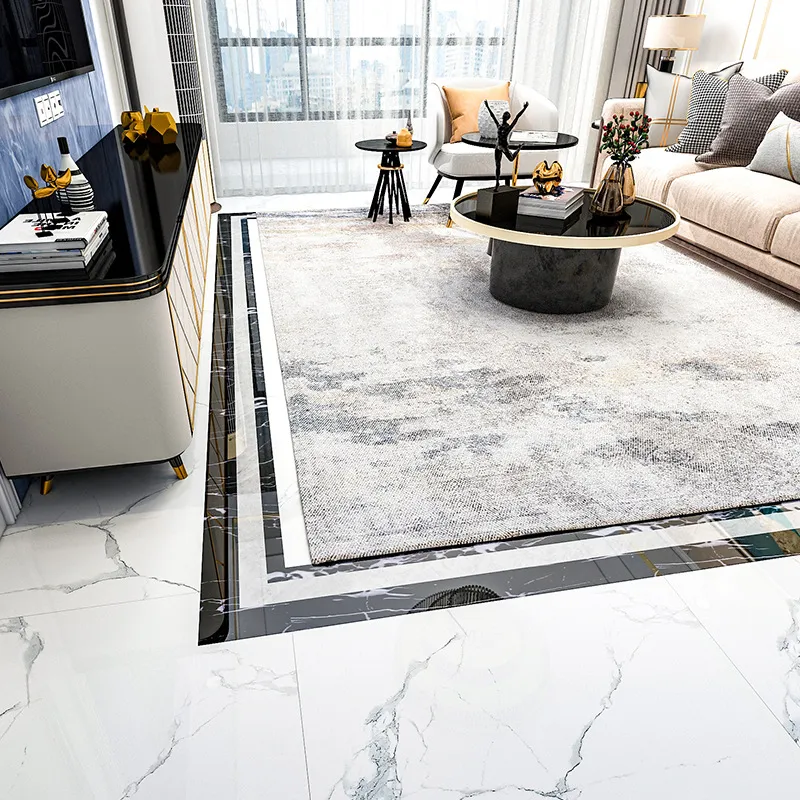
Floor applications tolerate zero compromise on thickness. A PVC film thickness of 0.30 mm to 0.50 mm is mandatory to withstand foot traffic, furniture weight, and frequent cleaning. Thinner films will quickly show compression marks and wear. Our Floor Film is calibrated to a heavy-duty gauge, ensuring it meets the rigorous demands of PVC Flooring Standard requirements. The added thickness also provides a realistic embossing depth for wood and stone textures, enhancing slip resistance in wet zones like bathrooms.
Interior wall films do not need the extreme toughness of flooring but require sufficient body to hide substrate joints. A gauge of 0.08 mm to 0.15 mm works well for vertical surfaces. This allows for easy cutting and repositioning during installation. However, for kitchen areas prone to grease, a slightly thicker film with a dense surface—like our marble effect series—provides better cleanability. The smooth non-porous surface prevents oil penetration, maintaining hygiene with a simple wipe-down.

In electronics and cleanroom environments, even a micron deviation can cause failure. Antistatic and protective films usually sit in the 0.05 mm to 0.10 mm range to maintain clarity while dissipating static. For outdoor construction barriers or temporary window protection, thicknesses of 0.15 mm to 0.20 mm offer the necessary tensile strength without adding excessive weight. Conformity to Plastic Film Classification helps users identify the molecular structure that complements the physical gauge.
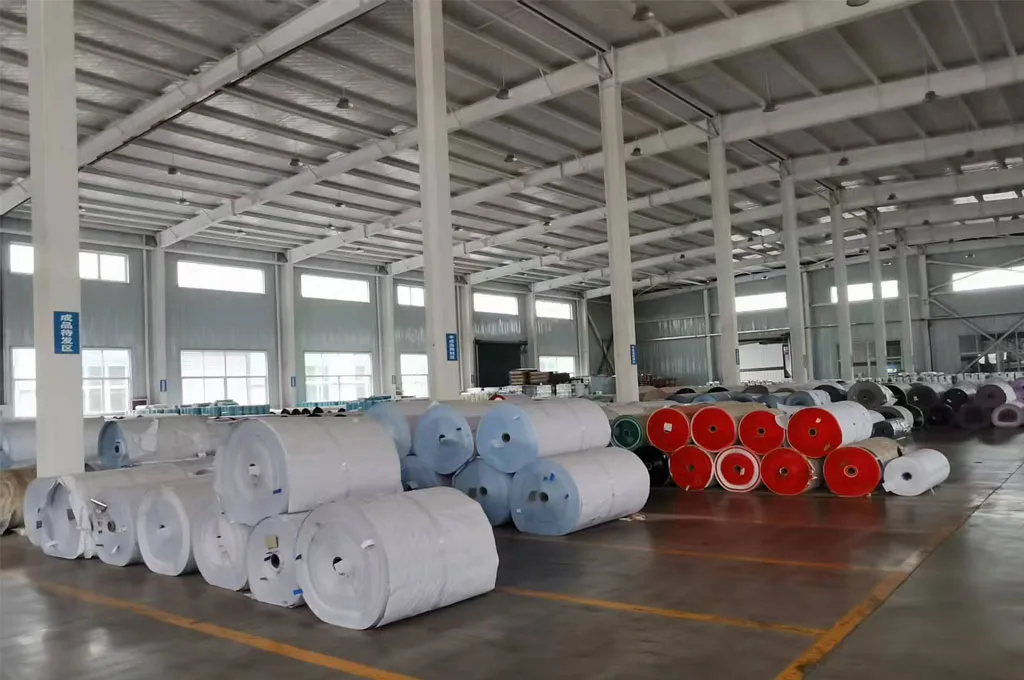
It is not just the nominal thickness that matters, but the uniformity of that thickness across the roll. Variations in the PVC film thickness can cause processing issues like uneven printing, shrinking, or delamination. Advanced calendering lines, like those operated by Henan Pulivk New Materials Co., Ltd., utilize computerized scanning systems to ensure a tolerance of ±5% across the full width of the web. This precision is vital for high-speed lamination lines where a sudden increase in gauge can jam the machinery.
While thicker films offer higher security regarding durability, they also increase cost per square meter. A common mistake is selecting a 0.25 mm film for a low-traffic vertical cabinet interior where a 0.12 mm film would suffice. This over-specification could inflate material costs by 30-40%. To optimize your budget, use the following decision tree:
Testing the physical properties, including Plastic Film Impact Resistance, will finalize whether a mid-range thickness can handle the load without failing prematurely. By aligning the specific PVC film thickness precisely with the mechanical requirements of your project, you ensure a flawless finish that stands the test of time without excessive expenditure.