Address
304 North Cardinal St.
Dorchester Center, MA 02124
Work Hours
Monday to Friday: 7AM - 7PM
Weekend: 10AM - 5PM
Address
304 North Cardinal St.
Dorchester Center, MA 02124
Work Hours
Monday to Friday: 7AM - 7PM
Weekend: 10AM - 5PM



Buying PVC film wholesale is not just about getting a lower unit price—it’s about securing stable quality, consistent roll-to-roll performance, and flexible sizes that match real production and packaging workflows. Whether you need PVC film for packaging, surface protection, furniture lamination, advertising, or clean industrial use, bulk purchasing can reduce waste, shorten replenishment cycles, and simplify your supply chain—especially when the manufacturer controls calendering, printing, and slitting in-house.
Key takeaway:
The best wholesale PVC film program balances price, spec options, lead time, and QC traceability—not one factor alone.
“PVC film wholesale” typically refers to purchasing film in production quantities—often by pallet, container, or recurring monthly volumes—where pricing is optimized for industrial use. In practice, wholesale programs also include custom roll widths, thickness control, surface finishing, printing, and export packaging. For packaging and surface protection, the goal is to ensure the film behaves predictably on your equipment: unwind tension, flatness, adhesion level (if self-adhesive), and surface slip are just as important as thickness.
✔ Common wholesale PVC film categories:
Wholesale pricing is influenced by raw material costs, manufacturing method, and how much customization is required. If you’re comparing quotes, evaluate what is included (printing, slitting, packaging, QC reports) because “cheaper per kg” can become more expensive once you account for scrap rate, inconsistent thickness, or delivery delays.
Thickness affects durability, stiffness, and protection level. Thicker film typically improves puncture resistance and handling stability, while thinner film can improve yield and reduce material cost. For packaging and surface protection, selecting the “right” thickness is often about damage risk and application method (manual wrap vs automated laminating).
Gloss, matte, embossing, anti-static, or anti-fog coatings add processing steps and inspection requirements. If your application is electronics packaging, anti-static performance can be non-negotiable. If it’s furniture lamination, scratch resistance and texture consistency can outweigh everything else.
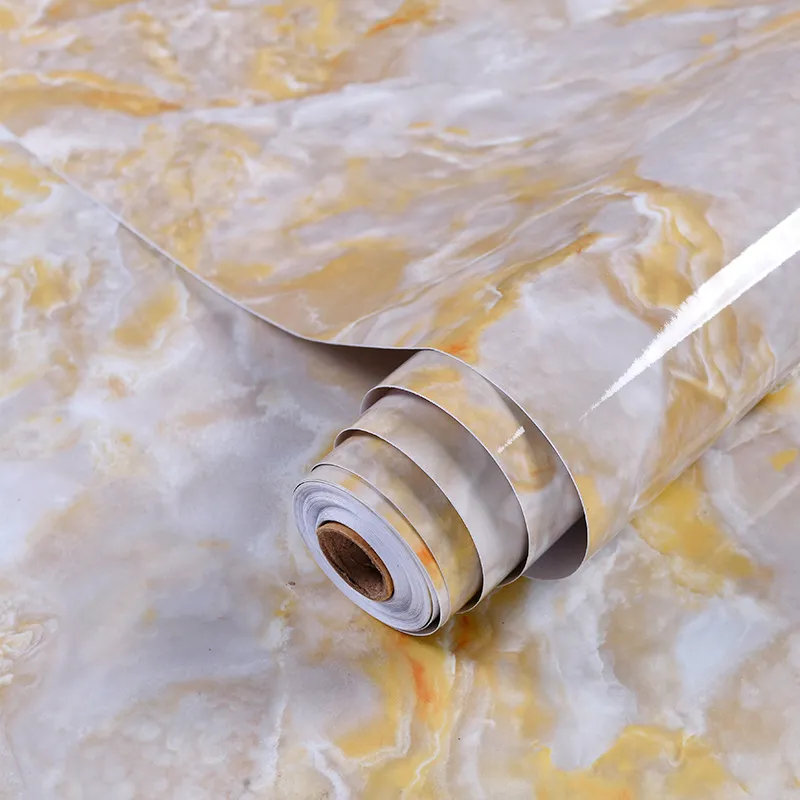
Printing (branding, warning text, pattern designs) increases setup complexity and can impact MOQ. Decorative patterns such as wood grain or marble require stable repeat control and consistent ink behavior to avoid visible shade differences between batches.
Procurement tip:
Ask suppliers to quote by specification (thickness/width/roll length/finish) and confirm whether the price includes slitting, inner/outer packaging, and export labeling.
“Standard sizes” rarely stay standard once a film enters real production. The most cost-effective wholesale program is usually the one that minimizes changeovers on your line and reduces leftover edge trim. That’s why slitting and packaging are core parts of bulk supply—not afterthoughts.
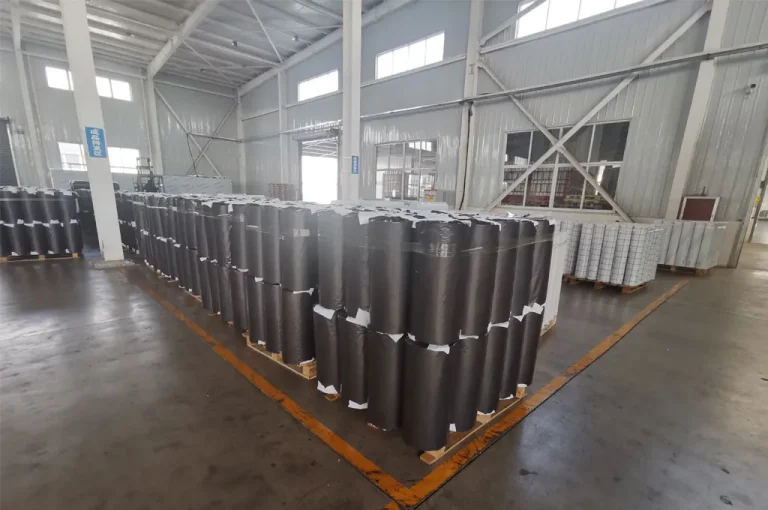
A manufacturer with in-house slitting and packaging can tailor roll configurations to your operations. For example, each roll can be individually wrapped with dust-proof PE film or kraft paper and labeled by spec, helping your warehouse team reduce picking errors and speed up line changeovers.
Selecting a PVC film for packaging or surface protection usually depends on what you’re protecting (substrate), how long it needs protection (temporary vs long-term), and how it will be removed (clean peel vs permanent bonding). Below are practical pairings that buyers often use to narrow down specs quickly.
Ideal when visibility matters (inspection, retail packaging, identification). Focus on optical clarity, haze control, and surface smoothness. For surface protection, confirm the film won’t trap air easily and doesn’t imprint textures on sensitive surfaces.
Embossing can improve scratch masking and handling. It’s often used for furniture, wall panels, and protective layers where finger marks and minor scuffs should be less visible.
Best for quick application on panels, appliances, signage boards, or temporary protection during transport and installation. Key specs include adhesive type, peel strength, residue behavior, and temperature range.
Recommended product references (for spec benchmarking):
Wholesale buyers often require film that fits a specific product system—like cabinet doors, wall panels, appliance housings, or industrial packaging lines. OEM/ODM customization makes this possible without sacrificing production stability, as long as parameters are locked and verified through sampling.
For buyers serving multiple downstream customers, a smart approach is to standardize a few “platform specs” (core sizes, common widths, base thicknesses) while customizing only the surface (finish/printing/pattern). This reduces inventory complexity while keeping your catalog flexible.
PVC film performance depends heavily on process consistency. When the supplier controls calendering, printing, and slitting/packaging internally, you typically see better thickness stability, more reliable lead times, and faster response for changes or urgent replenishment.
In wholesale procurement, quality issues rarely show up as a single defect—they show up as small deviations that cause downtime: wrinkles during lamination, static attraction, poor unwind, inconsistent gloss, or adhesive residue. A robust QC plan should cover both lab measurements and line performance feedback.
If compliance is required in your market, confirm availability of ISO system management and material compliance documentation (commonly including REACH, RoHS, and applicable food-contact requirements). For sensitive applications (medical/clean environments), ask about ink safety, odor control, and contamination-preventive packaging.
PVC film is durable, but it can still be damaged by moisture, compression, edge impact, and contamination. For wholesale shipments, export-ready packaging is a key part of product quality—especially for long-distance sea freight or multi-stop distribution.
重点提示:
Bulk buyers should treat packaging standards as part of the specification. A perfect film can arrive unusable if edges are crushed or rolls absorb moisture.
Wholesale PVC film programs are common in industries that need repeatable appearance, protective performance, and scalable logistics. Below are typical high-volume scenarios where bulk ordering and consistent specs deliver measurable ROI.
Decorative films (wood grain, cloth grain, high gloss, matte, soft-touch) are used on cabinet doors, table tops, panels, and interior trims. Consistency across batches is vital for color continuity in multi-room projects and repeated SKUs.
Wall films, stone patterns, partitions, ceilings, and skirting applications depend on stable finish and scratch resistance. For contractors, predictable lead time and packaging that prevents job-site damage can be as important as film aesthetics.
Anti-static and protective films help prevent dust attraction and surface scratches during assembly and shipping. Buyers often prioritize uniform thickness, clean peel behavior, and consistent unwind to avoid line stops.
Films used for lightboxes, exhibition backdrops, and signage need print compatibility and stable visual quality. For project-based work, OEM printing support can reduce local production steps and shorten delivery cycles.
Protective films and clean packaging films can require stricter material safety, controlled contamination risk, and consistent documentation. Confirm ink safety and whether third-party tests can be provided when needed.
Wholesale quoting becomes slow when information is missing. If you provide clear technical parameters, suppliers can match the right production route and reduce back-and-forth. This also helps avoid receiving a quote that looks good but excludes critical specs.
When evaluating samples, test them in real conditions: your lamination temperature, your substrate material, your warehouse humidity, and your actual operators. A short, practical trial often reveals more than any datasheet.
Pulivk Film focuses on PVC film R&D and manufacturing, supplying a broad range of calendered and decorative PVC films for furniture, building materials, electronics, advertising, medical, and home applications. With integrated calendering, printing, and slitting/packaging lines, wholesale buyers benefit from stable quality control, shorter lead times, and lower total cost through process consolidation.
If your priority is long-term supply stability, ask for a “repeatability plan”: batch traceability, retained samples, agreed gloss/texture benchmarks, and a clear method for handling shade control on decorative films. These details turn a one-time order into a scalable wholesale partnership.
1) What is PVC film used for in packaging and surface protection?
It’s widely used to protect surfaces from scratches, dust, and handling damage during manufacturing and transport, and to provide clear or decorative packaging. Depending on the spec, it can also add anti-static, anti-fog, or easy-clean performance.
2) Can wholesale PVC film be customized by size and finish?
Yes. Bulk orders commonly support custom thickness, width, roll length, core size, surface finish (gloss/matte/embossed/soft-touch), printing, and export packaging.
3) What affects MOQ for PVC film wholesale orders?
MOQ depends on film type, thickness, custom color/pattern, printing setup, and whether special coatings are required. Many suppliers can support trial orders first, then scale to mass production.
4) How do I ensure consistent quality across repeat bulk shipments?
Confirm thickness tolerance, gloss/texture benchmarks, batch traceability, QC inspection items, and sample approval before mass production. For decorative films, require shade control standards between batches.
5) What is a typical lead time for wholesale PVC film?
Lead time varies by order size and customization level. Standard items can be faster, while custom printing/pattern matching may require additional sampling and production scheduling.