Address
304 North Cardinal St.
Dorchester Center, MA 02124
Work Hours
Monday to Friday: 7AM - 7PM
Weekend: 10AM - 5PM
Address
304 North Cardinal St.
Dorchester Center, MA 02124
Work Hours
Monday to Friday: 7AM - 7PM
Weekend: 10AM - 5PM


Rigid PVC film is a widely used material in pharmaceutical packaging thanks to its excellent clarity, forming stability, and cost-effective performance. Whether you are packaging tablets, capsules, medical devices, or diagnostic components, selecting the right rigid PVC film is not only a technical decision—it is a compliance and risk-management decision that directly affects patient safety, shelf life, and production efficiency.
This guide explains how rigid PVC film works in pharma packaging, where it performs best, how to evaluate key technical properties, and how to align procurement with common regulatory expectations (such as ISO systems and material safety requirements). You will also find practical tips for supplier qualification, quality control, and OEM customization for high-volume or specialized applications.
Rigid PVC film (polyvinyl chloride) is a thermoplastic sheet material typically produced via calendering. In pharmaceutical packaging, it is most commonly used as the forming web in blister packs, where cavities are thermoformed to hold doses. It can also be used as a protective layer in certain medical or cleanroom packaging structures, depending on product design and compatibility requirements.
Key idea:
Rigid PVC film is valued for stable forming and high transparency, enabling easy visual inspection of tablets/capsules and reliable line performance.
Typical structure:
PVC (forming web) + aluminum lidding foil (seal layer). For higher barrier needs, PVC may be combined/laminated with other materials.
Rigid PVC film forms consistent blister cavities with predictable wall thickness distribution when process parameters are controlled. This improves:
Clear PVC supports in-line and off-line inspection for correct dose placement, appearance defects, particulate concerns, and label verification on secondary packs. For brands, clarity also improves shelf presentation while maintaining sturdy cavity protection.
Rigid PVC provides good stiffness and puncture resistance relative to many alternative polymers at comparable thickness, helping blister packs keep shape during transport and consumer handling.
Rigid PVC blister film is widely produced at industrial scale. This availability supports stable lead times and competitive pricing for high-volume pharmaceutical SKUs.
The most common application is blister packaging for tablets and capsules. Rigid PVC serves as the base web that is thermoformed into cavities and then sealed with lidding foil.
Operational fit:
High-speed blister lines benefit from PVC’s forming stability and consistent roll quality, especially when thickness and shrink behavior are controlled batch-to-batch.
While rigid PVC works well for many products, barrier performance—especially water vapor transmission and oxygen permeability—may be insufficient for highly moisture-sensitive APIs. In these cases, buyers often consider higher barrier structures (for example, laminations or alternative base webs). The decision should be driven by stability data, target shelf life, and packaging system validation.
⚠ Practical rule:
If your product fails stability due to moisture pickup, do not rely on thickness alone as a fix. Evaluate barrier upgrades and validate the full pack system.
What to request from suppliers:
WVTR/OTR data, batch COA, and supporting compliance documentation for the exact grade and thickness you plan to use.
Thickness selection affects forming behavior, cavity rigidity, push-through performance, and line efficiency. Beyond nominal thickness, your procurement specs should clearly define tolerance and roll-to-roll consistency, since variation can cause sealing issues, uneven forming, or excessive scrap.
Many pharma brands prefer high clarity and low haze for product visibility and inspection. If you use printed lidding or secondary packaging with strict brand colors, request defined color metrics and confirm that film appearance remains stable across batches.
Ask for forming-window guidance based on your equipment (forming temperature range, dwell time suggestions, and behavior at high-speed). For new products, run pilot trials to confirm cavity depth, corner definition, and web handling stability.
Pharma packaging lines are sensitive to dust, gel particles, and surface defects. Define acceptable criteria for:
Even when PVC is the forming layer, the seal integrity depends on lidding foil and sealing parameters. Confirm that your chosen PVC film grade performs reliably with the lidding structure and that peel/push-through targets can be met without damaging the product.
Pharmaceutical packaging compliance typically involves a combination of quality management systems, chemical safety restrictions, and documentation traceability. Specific requirements vary by market and product type, but procurement teams commonly evaluate the following:
Many buyers specify PVC films that are free of heavy metals and phthalates, supported by supplier declarations and testing. This is especially important when packaging may have closer human contact, or when downstream brand and market regulations demand stricter chemical restrictions.
A compliant film is not only about the polymer; it is about controlled manufacturing. Supplier qualification commonly reviews:
Most rigid PVC packaging films are produced by calendering, a process that delivers stable thickness control and surface quality. If you are sourcing pharma-grade rigid PVC film, it is helpful to understand the supplier’s process capability—especially their ability to maintain consistent properties over long production runs.
To see a typical industrial product category used across multiple industries, you can review Calendered Film. While pharmaceutical packaging requires stricter documentation and quality expectations, the same fundamentals—thickness uniformity, surface finish, and winding quality—still apply.
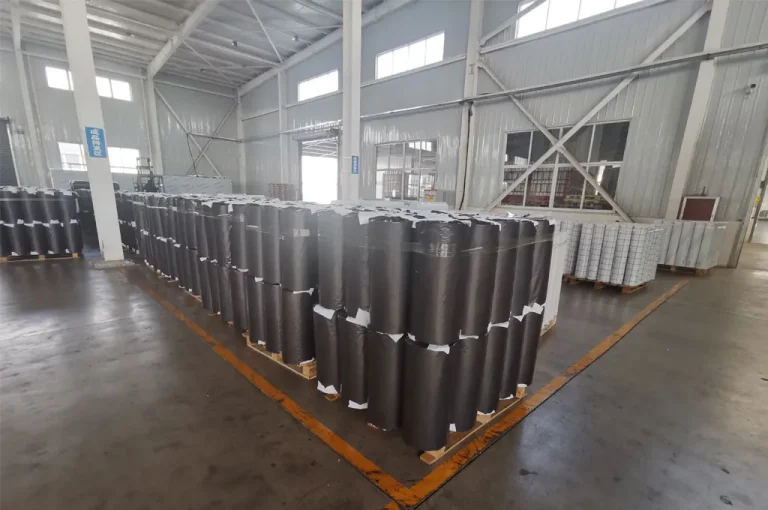
For pharma packaging, supplier reliability is not optional. You need consistent lots, stable lead times, and fast response to deviations. A manufacturer with end-to-end capability (calendering, printing when applicable, slitting, and packaging) can reduce risk by keeping critical steps under direct control.
Even a compliant film can fail in production if it is damaged in transit or stored incorrectly. For pharmaceutical operations, specify protective wrapping and labeling that supports traceability. Many buyers request dust-protection packaging (such as PE wrap or kraft paper) with clear roll labels including lot number, width, thickness, and length.
Blister lines vary by forming station design, heating profile, and speed. OEM customization helps ensure the film you buy behaves consistently on your equipment. Common customization points include:
If you need to evaluate a supplier’s broader converting and product capability beyond pharma use cases, browsing their product ecosystem can be helpful. For example, categories like Product listings can reveal whether a manufacturer runs multiple finishing lines and has experience producing consistent film surfaces at scale.
Your internal QC plan may vary, but many pharma packaging buyers implement a blend of incoming inspection and periodic verification. Typical checks include:
Store rigid PVC film in a clean, dry area away from direct sunlight and extreme temperatures. Keep rolls sealed until use to reduce dust risk. When moving rolls to the production floor, allow time to equilibrate to ambient conditions to minimize condensation and static-related handling issues.
⚠ Note for line startups:
If you see sealing variability or web tracking issues right after roll change, verify storage conditions, edge damage, and roll winding tightness before changing core process settings.
Traceability habit:
Record lot numbers at each packaging run to support deviation investigations and recalls if needed.
Determine moisture/oxygen sensitivity, distribution conditions, and shelf-life needs. Align packaging material choice with stability data rather than assumptions.
Specify thickness and tolerance, clarity/haze targets, acceptable defect levels, roll dimensions, core size, and labeling requirements.
Review quality system alignment, test reports, and batch traceability. If possible, request a virtual tour or audit package. You can also review general supplier information via About Us to understand production scope and quality approach.
Validate forming stability, sealing, reject rate, and any inspection system requirements. Document approved parameters for each film grade and thickness.
Agree on COA contents, change control expectations, and complaint handling timelines. For ongoing support, a clear communication channel matters; use a dedicated supplier contact point such as Contact for sampling, quotation, and technical alignment.
It can be, when sourced from a qualified manufacturer with appropriate quality systems and documentation (e.g., batch COA, traceability, and relevant compliance statements). Always confirm the exact grade matches your market and internal requirements.
The main limitation is barrier performance for highly moisture-sensitive products. If stability data shows moisture-related failures, consider higher-barrier structures and validate the complete packaging system.
Thickness tolerance, forming stability, optical clarity/haze, surface cleanliness, winding quality, and consistent batch-to-batch performance are typically the most critical for high-speed pharmaceutical blister lines.
Keep rolls sealed, clean, dry, and away from direct sunlight and extreme temperatures. Allow rolls to acclimate to production-floor conditions to reduce condensation and handling issues.
Yes. Many manufacturers support OEM/ODM customization such as width, roll length, thickness targets, and packaging/label formats to improve line efficiency and consistency.