Address
304 North Cardinal St.
Dorchester Center, MA 02124
Work Hours
Monday to Friday: 7AM - 7PM
Weekend: 10AM - 5PM
Address
304 North Cardinal St.
Dorchester Center, MA 02124
Work Hours
Monday to Friday: 7AM - 7PM
Weekend: 10AM - 5PM


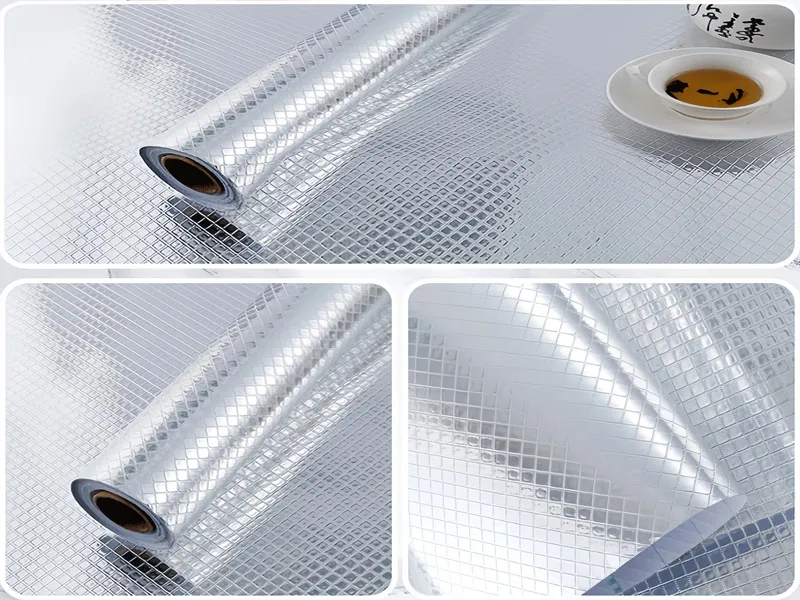
Stainless steel looks premium, but in real production, transportation, installation, and daily use, it is surprisingly easy to damage. Fingerprints, micro-scratches, dust abrasion, and moisture-driven corrosion can quickly reduce the surface quality of brushed, mirror, or patterned sheets. Stainless Steel PVC Film is a durable protective wrap designed to shield stainless steel from scratch, dust, and corrosion risks—without changing the base material’s performance.
✔ Quick takeaway: A well-matched PVC protective film helps maintain factory-grade stainless steel appearance from coil to finished product—reducing rework, claims, and cleaning time.
⚑ Best used when: sheets must survive cutting, bending, drilling, laser processing, panel assembly, packaging friction, and job-site handling.
Stainless Steel PVC Film is a flexible PVC-based protective layer laminated onto stainless steel surfaces to prevent mechanical and environmental damage. It is commonly supplied in rolls and applied on production lines or during fabrication. Depending on the application, films may be transparent (to keep the original finish visible) or colored (to identify grades, directions, or usage stages).
In industrial practice, the film acts as a “sacrificial skin”: it takes the abrasion and contamination that would otherwise reach the steel. After processing and installation, the film is peeled away to reveal a clean, consistent surface.
“Stainless” does not mean “scratch-proof” or “maintenance-free.” Stainless steel resists corrosion through a passive oxide layer, but that layer can be compromised by aggressive environments, trapped chlorides, or surface contamination—especially when handling and storage are not ideal.
During cutting, bending, forming, and assembly, stainless panels are frequently moved across work tables and stacked. PVC protective film provides a buffer layer that absorbs light abrasion, reducing visible lines that would be difficult (or impossible) to polish out—especially on brushed finishes where scratch direction matters.
Dust is not just cosmetic: particles can act like sandpaper when panels slide. A protective film keeps dust off the actual steel finish and makes post-processing cleaning significantly easier. When it’s time to deliver a product with a consistent appearance, peeling the film can be faster and more reliable than repeated wiping.
Protective film helps reduce contact with moisture and contaminants (salt mist, chemicals, workshop residues). While PVC film is not a substitute for correct packaging and dry storage, it can materially reduce surface staining, water marks, and contamination-driven corrosion risks in many real-world logistics scenarios.
Tip: If your stainless steel is heading into marine/chemical environments, pair film protection with proper export packaging (moisture barriers, desiccants, and controlled stacking) for the best outcome.
Stainless steel PVC film is used across fabrication and finishing processes where appearance and surface integrity matter. Typical use cases include:
Elevators, wall cladding, columns, ceiling trims, door skins, and decorative profiles—where final surfaces must remain spotless until handover.
Countertops, cabinets, backsplashes, and equipment panels that pass through multiple assembly steps and are vulnerable to tool scratches and residue.
Brushed stainless faceplates and housings where micro-scratches are highly visible under lighting.
Service centers, coil processors, and sheet distributors using film to prevent damage from handling, slitting, and warehouse movement.
The “best” film depends on surface finish, downstream processing, and how long the film will stay on the metal. Selecting incorrectly can cause peeling difficulty, adhesive residue, or insufficient protection.
Thicker films generally provide better cushioning and puncture resistance, while thinner films can be easier to conform to shaped parts. For high-contact handling (stacking, transport, repeated movement), prioritize abrasion resistance and stable adhesion.
Adhesion must be strong enough to stay flat during processing but not so aggressive that it leaves glue on the metal. Residue risk increases if panels are exposed to heat, UV, or long storage. A controlled adhesive system and correct application pressure are essential.
Protective film performance is only as stable as its manufacturing. Variations in calendering, coating, printing, slitting, and packaging can lead to inconsistent thickness, uneven adhesion, or edge defects that cause lifting.
Pulivk Film supports full-process production—calendering, printing, and slitting/packing—helping maintain stable quality while improving lead time control and cost efficiency. If you are comparing protective solutions, it helps to verify whether the supplier can manage the entire chain rather than outsourcing critical steps.
If your stainless projects also involve decorative and functional surfaces, you may also evaluate:
Calendered Film,
Wood Grain Film,
Marble Film,
Floor Film,
and the Knowledge library for application guidance.
For specification confirmation or trial requests, use the Contact page to share your finish type, thickness, width, and target process steps.
Even the best protective film can fail if applied incorrectly. These practices are widely used to keep film stable and removal clean.
Long exposure to heat, sunlight, and storage pressure can increase peel difficulty and residue risk. Plan removal as close as practical to final installation/inspection. If long-term protection is unavoidable, specify a film designed for extended dwell time and validate through real-condition trials.
Stainless projects vary widely: some require easy peel for quick throughput; others need stronger hold through heavy fabrication and long shipping routes. OEM/ODM customization can align the film to your actual workflow, including width, roll length, thickness, color, printing, and functional treatments (such as anti-static).
What to share for accurate selection:
stainless grade/finish, sheet thickness, target processes (bend/laser/stamp), expected protection duration, storage temperature range, and the peel requirement (fast peel vs. controlled peel).
For buyers serving regulated markets or indoor applications, it’s important to confirm that film materials meet common compliance expectations. Pulivk Film notes the use of eco-friendly, non-toxic inks and offers films aligned with quality and safety standards (including ISO management systems and common chemical compliance frameworks). When needed, request relevant test reports for your target market and usage conditions.
It can if the adhesive is mismatched or the film is exposed to heat/UV for too long. Choosing the correct adhesion level and removing within the recommended timeframe greatly reduces residue risk.
Many applications allow it, but results depend on film thickness, adhesive system, and process settings. Always run a peel and surface check after the exact process you use.
Transparent film is ideal when you need ongoing visual inspection of the finish; colored film can help identify grades, batches, or “do not remove” stages on the shop floor.
Provide finish type, sheet/coil dimensions, preferred thickness, required adhesion, downstream processes, expected storage time, and order quantity.
No. Film is a surface shield; best results come from combining film with moisture-control packaging, careful stacking, and correct storage conditions.