Address
304 North Cardinal St.
Dorchester Center, MA 02124
Work Hours
Monday to Friday: 7AM - 7PM
Weekend: 10AM - 5PM
Address
304 North Cardinal St.
Dorchester Center, MA 02124
Work Hours
Monday to Friday: 7AM - 7PM
Weekend: 10AM - 5PM


Choosing a dependable PVC decorative film manufacturer is one of the fastest ways to stabilize product quality, reduce rework, and protect your brand reputation in furniture and interior surface wrapping. Whether you supply cabinet doors, wall panels, skirting, or commercial fit-outs, the “right” supplier is not only about price per meter—it’s about consistency, compliance, lead time reliability, and the ability to match textures and colors across batches.

This guide breaks down how to evaluate top PVC decorative film manufacturers and build a supplier shortlist you can trust for furniture wraps and interior finishing projects.
In decorative film sourcing, “top manufacturer” typically means a company that can repeatedly deliver stable film performance across multiple production lots, while offering technical support for lamination, wrapping, and application environments. Instead of chasing the lowest quote, evaluate suppliers by measurable production capability and control.
Key idea: A “top” manufacturer is the one that helps you lower total cost (returns, delays, mismatch, re-lamination), not just material cost.
✔ Consistent calendering/printing control ✔ Multi-step QC ✔ Export-ready packaging ✔ Fast sampling and color matching
Many buyers compare suppliers too early—before confirming which film family and surface performance they actually need. PVC decorative film can differ significantly by structure, finish, and application method (vacuum pressing, profile wrapping, flat lamination, self-adhesive renovation, etc.).
For large-volume decorative applications, calendered film is widely used due to thickness stability and production efficiency. If a supplier claims to be a “manufacturer,” confirm whether they have true calendering capacity or they are trading/outsourcing.
Reference: Calendered Film
Reliable suppliers usually show reliability in ways that can be checked quickly: production scope, documentation, sample discipline, packaging standards, and communication rhythm. Below are high-signal items to validate before you place a deposit.
Decorative film is often judged visually, but failures usually come from physics and chemistry: shrinkage, plasticizer migration, poor adhesion, surface defects, or mismatch across rolls. Your supplier evaluation should include key performance questions tied to your exact application method.
If you wrap edges, curves, and tight radii, request guidance on recommended forming temperature range, shrinkage behavior, and whether the emboss/print is stable under forming conditions. A strong supplier will talk in process terms (temperature, dwell time, tension) rather than only “looks good.”
Confirm thickness tolerance, gloss level tolerance, and surface defect policy. In real production, even minor issues like gel points, pinholes, or gloss inconsistency can turn into large reject rates after lamination—especially under showroom lighting.
Tip: Ask for a “defect reference sheet” or acceptance criteria (AQL or internal standard). A reliable manufacturer will align with you on what counts as acceptable before mass production.
Factory visits are ideal, but many buyers must qualify suppliers remotely. You can still validate capacity by requesting evidence that’s hard to fake and easy to cross-check.
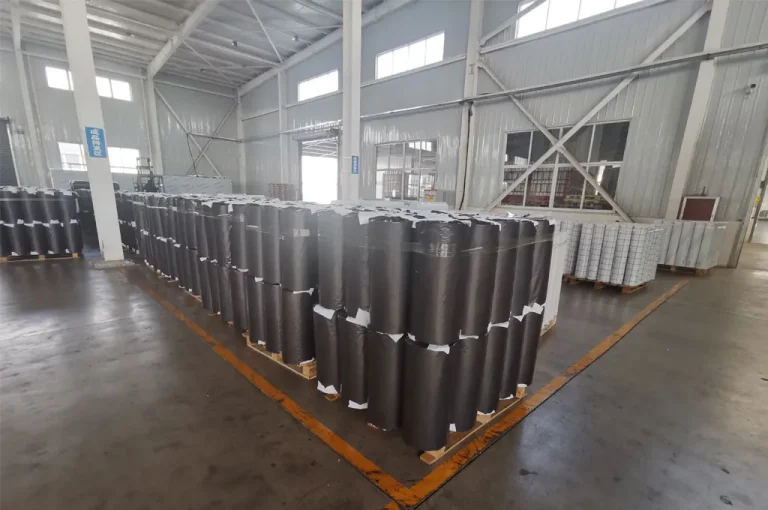
A serious manufacturer should be comfortable offering a live video walk-through: raw material storage, calender line, printing line, slitting/packing area, and QC lab. During the call, ask them to show roll labels and batch records to confirm traceability.
Customization is where good suppliers stand out—and where misunderstandings become expensive. If you want OEM/ODM decorative films, the “spec sheet” should be detailed enough to prevent ambiguity across production, packing, and shipping.
Manufacturers like Pulivk Film position their advantage around full-process control (calendering, printing, slitting, and packing), strict QC from raw materials to finished rolls, flexible customization, and export experience across Southeast Asia, the Middle East, Europe, and other regions. When your supplier controls the full chain, they can usually respond faster to color corrections, packaging changes, and urgent delivery adjustments.
In furniture and interior projects, late film delivery causes a chain reaction: idle lamination lines, missed installation windows, and rush freight. A reliable manufacturer should be able to explain how they plan production and manage inventory for common SKUs or base materials.
Schedule safeguard: For the first order, split risk—start with a small pilot batch, confirm lamination/wrapping performance, then scale to the main shipment with locked specs and a signed approval sample.
Decorative films often end up in enclosed spaces—kitchens, bedrooms, offices, hospitals—where odor, VOC concerns, and restricted substances become purchasing criteria. If you sell into regulated markets or serve brand-name customers, you’ll want suppliers that can support compliance claims with documentation.
Ask whether the films are free of heavy metals and phthalates, and whether the supplier can provide documentation aligned with ISO 9001, ISO 14001, REACH, RoHS, and FDA where applicable. For healthcare or cleanroom-related packaging applications, clarify whether anti-bacterial or clean packaging options are available.
Two quotes can look similar while total cost differs dramatically. A slightly higher-priced film may reduce panel rejects, prevent color mismatch claims, and eliminate emergency reshipments. When comparing suppliers, quantify the cost of failure.
If you want additional resources on film selection, specifications, and application scenarios, you can also review the manufacturer’s knowledge base:
https://pvcfilmtec.com/knowledge/
It’s used to upgrade surfaces like cabinet doors, wardrobes, wall panels, and trims with wood, stone, fabric, or solid-color finishes—improving aesthetics while adding durability and easier maintenance.
Ask whether they run calendering/printing/slitting/packing in-house, request a live video tour, and verify roll labels plus batch traceability records. Consistent sampling and clear QC documents are strong signals.
Test the film on your real lamination or wrapping process for appearance, forming behavior, shrinkage, scratch resistance, stain resistance, and consistency against your approved reference sample.
Yes. Reliable manufacturers typically support OEM/ODM for thickness, width, roll size, finish (matte/gloss/emboss), functional coatings, color matching, and export packaging/labeling.
Common requests include ISO quality/environment systems and material compliance files such as REACH and RoHS; for certain use cases, FDA-related statements or third-party test reports may be needed.