Address
304 North Cardinal St.
Dorchester Center, MA 02124
Work Hours
Monday to Friday: 7AM - 7PM
Weekend: 10AM - 5PM
Address
304 North Cardinal St.
Dorchester Center, MA 02124
Work Hours
Monday to Friday: 7AM - 7PM
Weekend: 10AM - 5PM


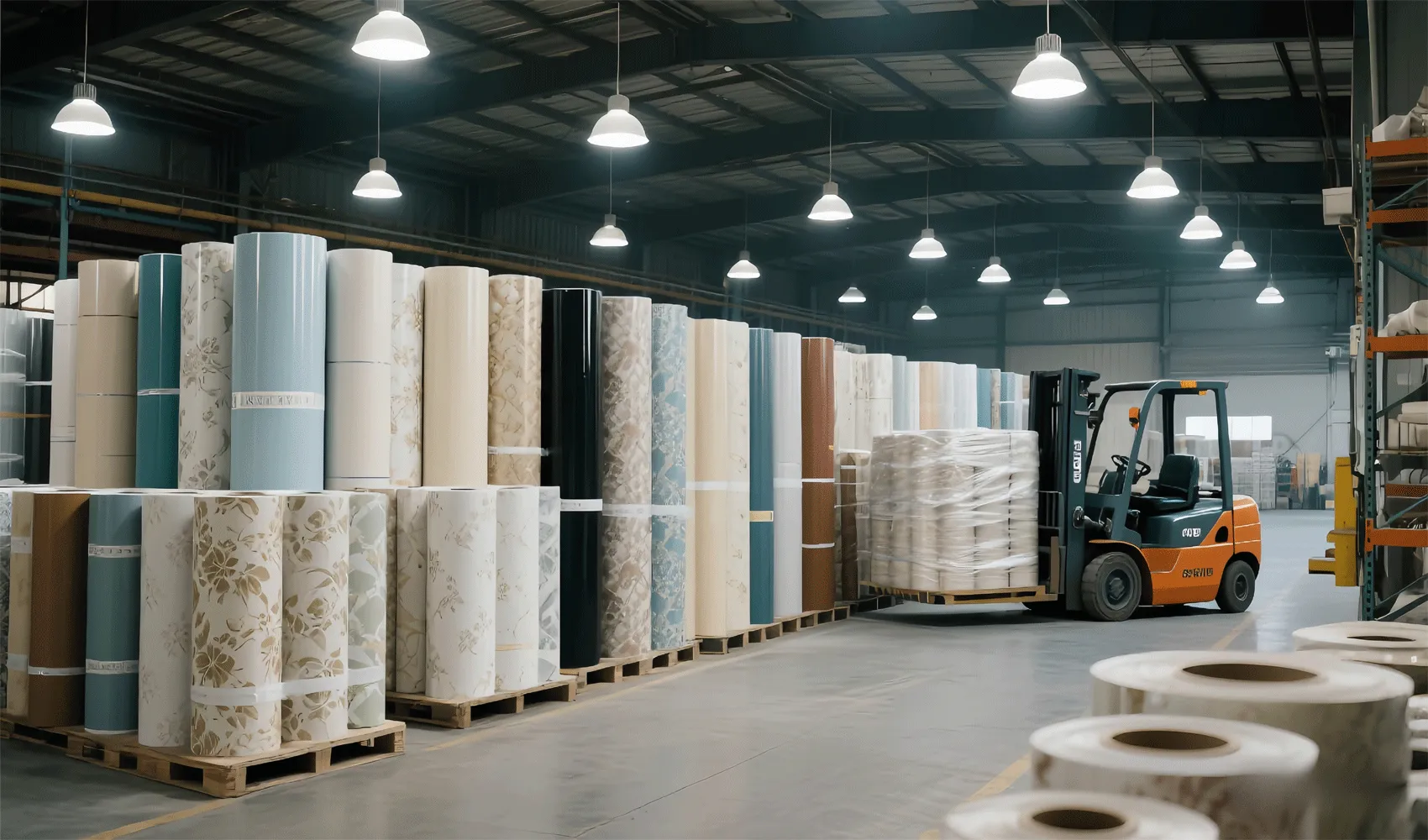
PVC film can sometimes develop an unwanted “orange peel” texture on its surface — a dimpled, uneven finish that reduces gloss and can affect printing, lamination, or final appearance. Understanding the root causes, quick fixes, and long-term controls helps manufacturers and finishers avoid rejects and maintain a consistent, high-quality surface.
The orange peel effect is a surface irregularity where the film shows tiny bumps or dimples similar to citrus skin. It commonly appears after calendering, extrusion, coating, or printing and is most visible on glossy and metallic films. This defect impacts visual appeal and can compromise secondary processes like adhesion, varnishing, or metallization.
The orange peel texture usually results from one or more process, formulation, or environmental issues. Below is a compact table that links common causes to how they create surface texture:
| Cause | How it produces orange peel |
|---|---|
| Uneven temperature / cooling | Rapid or uneven cooling traps surface undulations; inconsistent roll temps create micro-reliefs. |
| Improper calendering pressure or roller defects | Nip pressure too low/high or roller scratches/contamination transfer texture to film. |
| Formulation issues | Incompatible plasticizers, fillers or high pigment loading increase surface roughness and migration. |
| Surface tension and treatment errors | Inadequate corona or plasma treatment, or contamination, causes poor wetting of coatings/inks and texture retention. |
| Dust, contamination, or humidity | Particulate or moisture during production creates micro-bumps and adhesion defects on the surface. |
Adjusting a few parameters often restores smoothness. Use the table below as a guideline; optimal values depend on film type and equipment.
| Parameter | Recommended range / action |
|---|---|
| Calender roll temp | Stabilize within ±2–3°C; avoid rapid drop between rolls. |
| Cooling roll temp | Controlled cooling to avoid thermal shock; slightly warmer finish rolls for glossy film. |
| Nip pressure / speed | Balance nip pressure with line speed; reduce speed if texture appears. |
| Additive concentrations | Control plasticizer, slip, and anti-block levels; avoid overloading fillers/pigments. |
Stop and inspect—look for roller contamination, dust on tenter frames, or visible damage to cooling rolls. If orange peel appears suddenly:
– Reduce line speed and gradually bring temperatures to steady state.
– Clean calender and cooling rolls; remove any dried coating or adhesive residue.
– Check corona/plasma treatment; retreat the surface if wetting is poor.
– Optimize formulation: match plasticizer types, control pigment and filler particle sizes, and include appropriate slip/anti-block agents to reduce surface irregularity.
– Prevent contamination: use HEPA filters in air handling, maintain clean roll surfaces, and implement dust-control procedures on the production floor.
– Maintain equipment: schedule roller inspection and regrinding, calibrate nip settings, and ensure uniform heating elements.
– Incoming raw material particle size and plasticizer specs verified.
– Temperature logs for calender and cooling rolls monitored and recorded.
– Routine surface energy tests after corona treatment.
– Visual and gloss inspections with standardized acceptance criteria.
1. Visual check for contamination or surface damage. 2. Review production log for recent parameter changes (temp, speed, pressure). 3. Run a short trial with slower speed and adjusted roll temperatures. 4. If defect persists, test a slightly different formulation batch (lower pigment/filler load or alternate plasticizer). 5. Implement corrective maintenance on rollers and air filtration.
If repeated adjustments fail, involve raw material and equipment suppliers. Issues like incompatible additives, substandard resins, or hidden particulate contamination often require root-cause analysis and supplier collaboration.
Consistent product quality combines stable formulations, disciplined equipment maintenance, and controlled environmental conditions. Document standard operating parameters, run regular surface energy and gloss checks, and use trial batches to validate new materials before full-scale production.
Henan Pulivk New Materials Co., Ltd. (Pulivk) operates full in-house calendering, printing, and split-packaging lines, enabling better control over manufacturing variables that prevent surface defects like orange peel.
If you face persistent orange peel issues, start with the parameter tables above and follow the troubleshooting flow—small, controlled changes typically restore a smooth, high-gloss finish without costly rework.