Address
304 North Cardinal St.
Dorchester Center, MA 02124
Work Hours
Monday to Friday: 7AM - 7PM
Weekend: 10AM - 5PM
Address
304 North Cardinal St.
Dorchester Center, MA 02124
Work Hours
Monday to Friday: 7AM - 7PM
Weekend: 10AM - 5PM


PVC film remains a ubiquitous material across packaging, interior decoration, protective coverings, and industrial applications. As sustainability, regulation, and new materials evolve, many buyers and specifiers are asking: will PVC film be replaced in the future? This article breaks down market trends, credible alternatives, performance trade-offs, and practical outlooks for manufacturers, importers, and designers.
PVC film holds a strong position because of its versatility: good dimensional stability, excellent printability, strong weather and chemical resistance, and a wide range of surface finishes (glossy, matte, woodgrain, marble effects). Industries such as furniture refurbishment, automotive wraps, flooring protection, and industrial packaging still prefer PVC for cost-to-performance balance.
Low raw material cost, mature manufacturing equipment (calendering, printing, split-packaging), and well-understood quality controls make PVC attractive for large-volume production runs. For retrofit-friendly surface films and heavy-duty protective packaging, PVC remains hard to beat.
Policy and consumer demand for recyclability and lower-emission materials create pressure. In some regions tighter controls on additives and waste management increase the lifecycle cost of PVC. However, advances in PVC recycling and additive-free formulations blunt some of that pressure.
No single substitute perfectly matches PVC across every application. Choice depends on the end-use priorities: cost, durability, print quality, fire performance, or environmental profile. Below are leading contenders and where they make sense.
Strengths: excellent clarity, chemical resistance, and good mechanical properties. Widely used in high-end packaging and protective overlays. Weaknesses: higher raw material cost and lower flexibility for some decorative wraps compared to PVC.
Strengths: lighter weight, good moisture resistance, and easier to recycle in certain streams. Often used in packaging and labels. Weaknesses: less heat resistance and fewer decorative finish options than PVC.
Strengths: favorable end-of-life messaging (compostability in industrial facilities) and lower fossil-carbon content. Weaknesses: higher cost, limited heat and moisture resistance, and often shorter service life—making them less suitable for long-term decorative or exterior uses.
Strengths: excellent recyclability/biodegradability in some systems and good printability. Weaknesses: limited durability for wet environments and lower abrasion resistance than PVC.
Strengths: tailored properties (flame retardancy, high abrasion resistance, waterproofing) for technical applications. Weaknesses: cost and sometimes limited decorative finishes for consumer-facing products.
| Property | PVC | PET / PP / Bio-films |
|---|---|---|
| Cost (raw material) | Low-to-medium | Medium-to-high |
| Durability / Weather resistance | High | Medium |
| Print / Surface finish options | Excellent | Good to excellent (varies) |
| Recyclability / End-of-life | Challenging (improving with collection & recycling) | Often easier (PET/PP) or bio-based (conditional) |
PVC’s texture options (woodgrain, marble, silk, glossy) and cost-effectiveness keep it dominant in furniture and wardrobe films. Substitution will be incremental as bio- or PE-based decorative films improve surface treatments and printing. For many budget-focused projects, PVC will continue to lead.

Here, recyclability and circularity matter most. PET and PP are strong challengers in higher-value packaging; coated paper solutions and mono-material systems are gaining ground where collection infrastructure supports them. PVC will hold in niches that require chemical resistance, clarity, or specific mechanical properties.
Full replacement of PVC across all applications is unlikely in the short-to-medium term. A more realistic scenario is a segmented market shift:
If you source or produce PVC films, consider these steps to stay competitive:
Demand will remain strong in construction renovation, furniture refurbishment, and protective films, while packaging segments will see faster substitution. Growth will be uneven across regions: areas with strong recycling infrastructure and strict regulations (some EU countries, parts of North America) will adopt alternatives quickly; regions focused on cost and availability (growing markets in Southeast Asia and other developing regions) will continue to use PVC widely.
Flexible production lines, source-level control of raw materials, and the ability to offer custom OEM solutions will be critical advantages. Companies that can provide both traditional PVC films and validated alternative products will capture the widest customer base.
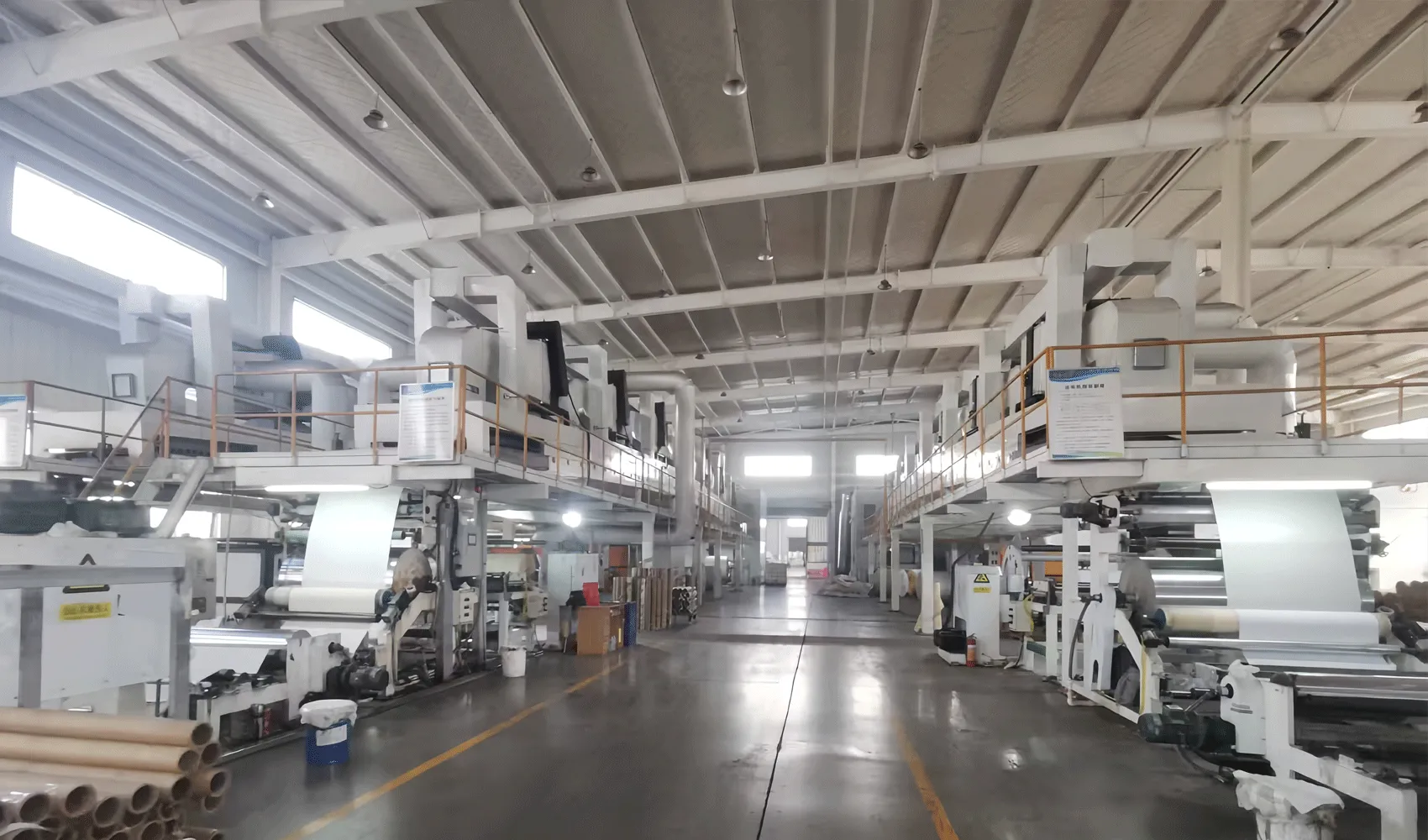
Pulivk: Henan Pulivk New Materials Co., Ltd. operates full in-house production with calendering, printing, and split-packaging lines, offering OEM customization, strict QC, and global export experience. https://pvcfilmtec.com/
PVC film is unlikely to be universally replaced in the near future. Instead, expect a diversified market where PVC continues in cost-sensitive and high-durability niches while PET, PP, bio-based films, and recyclable mono-material systems gain share where sustainability and regulation are decisive. The smartest strategy for suppliers and buyers is to stay agile: optimize PVC processes while developing validated alternatives for targeted applications.