Address
304 North Cardinal St.
Dorchester Center, MA 02124
Work Hours
Monday to Friday: 7AM - 7PM
Weekend: 10AM - 5PM
Address
304 North Cardinal St.
Dorchester Center, MA 02124
Work Hours
Monday to Friday: 7AM - 7PM
Weekend: 10AM - 5PM


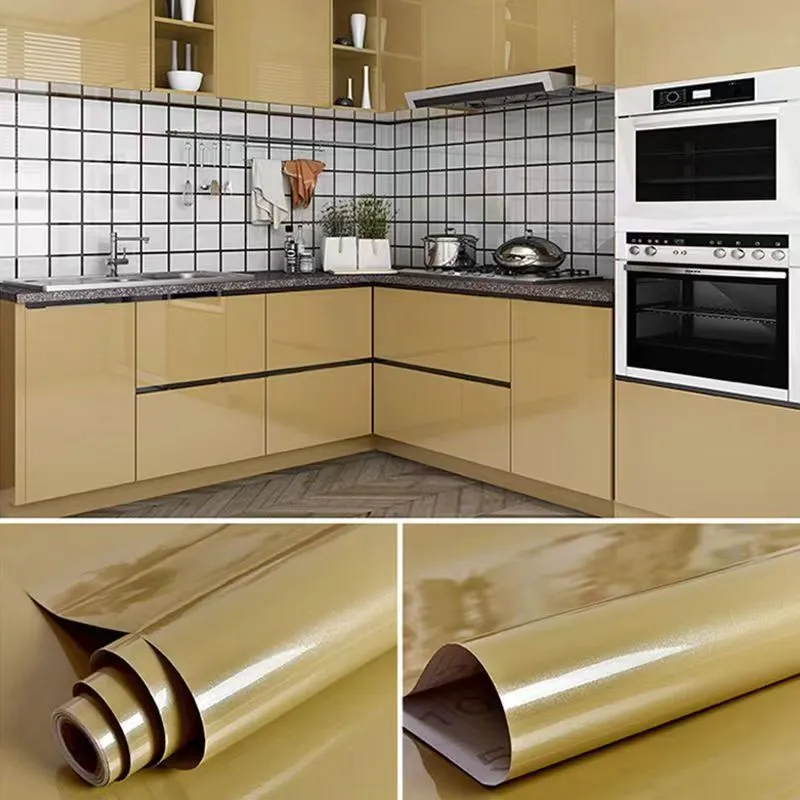
Choosing the right PVC film and PVC resin grade can make or break a project — whether you’re manufacturing decorative laminates, protective floor films, food-contact packaging, or flexible adhesive labels. This guide explains the common film types, resin grades, practical uses, and a simple decision flow to help you select the most suitable combination for performance, cost, and compliance.
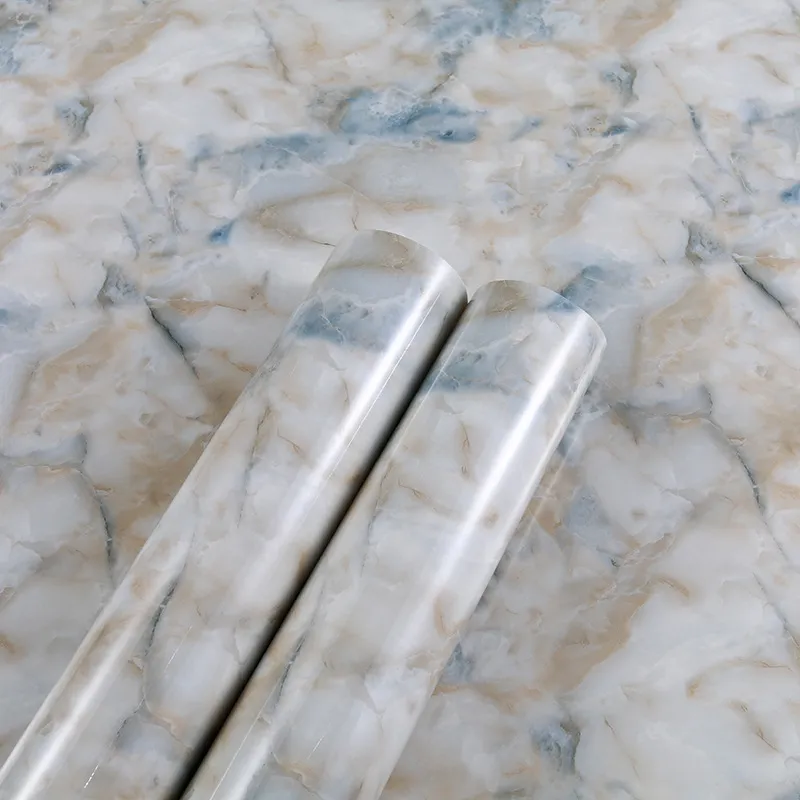
Calendered PVC Film: produced by calendering for consistent thickness and surface finish. Ideal for furniture laminates, wardrobe film, and decorative applications where appearance matters.
Extruded PVC Film: offers higher mechanical strength; commonly used for packaging, protective films, and industrial overlays.
Plasticized (Soft) PVC Film: flexible, impact-absorbing films used for wallpapers, anti-oil kitchen films, floor stickers, and self-adhesive applications.
Unplasticized (Rigid, uPVC) Film: stiff films with higher dimensional stability suitable for structural overlays, protective covers, and certain packaging where rigidity is required.
Functional Films: antistatic, anti-slip, pearlescent, embossed, 3D silk texture, and metalized finishes expand design and performance options for specific markets.
Suspension PVC (S-PVC): the most common industrial resin. Available in a wide range of K-values (molecular weights) to tune melt behavior, strength, and processability for calendering and extrusion.
Emulsion PVC (E-PVC): generally used for specialty applications like coatings, adhesives and some flexible film systems where fine particle size is advantageous.
Bulk Polymerized PVC (B-PVC): less common but used for niche processing requirements.
Plasticized vs Rigid Resin: The same resin can be formulated with plasticizers (phthalates or non-phthalate alternatives) to produce soft film; without plasticizers it yields rigid film.
The K-value indicates the average molecular weight: low K (~50–56) for easier processing and flow, mid K (~58–63) for balanced strength and processability, high K (~65–70) for higher mechanical performance and heat resistance. Match K-value to your forming method (calendering vs extrusion) and final property targets.
| Resin / Grade | Typical K-value | Recommended Film Types | Key Properties |
|---|---|---|---|
| S-PVC (Low K) | ~50–56 | Thin extruded films, packaging, heat-seal layers | Good flow, easy processing, lower toughness |
| S-PVC (Mid K) | ~58–63 | Calendered decorative films, floor and wall films | Balanced strength, surface quality, printability |
| S-PVC (High K) | ~65–70 | Durable overlays, high-performance films, weather-resistant products | Higher toughness, heat resistance, dimensional stability |
| E-PVC | Varies | Coated films, specialty laminates, adhesives | Fine particle dispersion; adaptable to coatings |
1. Define the end-use: Are aesthetics or barrier performance most important? Flooring films need abrasion resistance; kitchen anti-oil films need oil resistance and easy cleaning; packaging films need sealability and food-contact compliance.
2. Select processing method: Calendering favors mid-to-high K S-PVC for finish quality, while extrusion may use lower K for thin films and better melt flow.
3. Decide on softness/rigidity: Add plasticizer for soft films (wallpaper, floor stickers). For structural overlays and some adhesive tapes choose rigid formulations.
4. Check surface & print requirements: Glossy vs matte, embossing vs plain — choose resins and additives that achieve the desired surface energy and adhesion for inks or lacquers.
5. Regulatory & environmental constraints: For food contact or medical uses require compliant resins and approved plasticizers. Consider non-phthalate plasticizers to meet global market demands.
• Transparency & gloss — choose calendered film, mid-K resin.
• Flexibility & foldability — soft PVC with suitable plasticizer.
• Abrasion & scratch resistance — higher K-value and topcoat treatments.
• Heat / Weather resistance — high K resin and UV stabilizers for outdoor use.
Decorative Furniture Wraps: Calendered film + mid-K S-PVC for surface uniformity and printability.
Kitchen Anti-Oil Films & Floor Stickers: Plasticized film + additives for oil resistance and easy cleaning.
Protective Packaging Films: Extruded low-K S-PVC for good sealability and consistent thickness.
Industrial Overlays & Weatherproof Covers: High-K S-PVC with UV stabilizers and optional topcoat for abrasion resistance.
Higher K-value and specialty additives increase material costs but often reduce failure rates and returns. For volume projects, optimizing resin selection at the source can deliver significant savings while preserving required performance — a strategy supported by manufacturers that control in-house processing and quality checkpoints.
Pulivk provides integrated PVC film manufacturing capabilities, including calendering, printing, and split-packaging, enabling tailored resin-film solutions with stable quality and flexible OEM options.
Match film function (appearance, flexibility, barrier, durability) to resin family (S-PVC vs E-PVC), choose K-value according to processing, and confirm plasticizer and additives meet regulatory and performance needs. When in doubt, request lab samples, trial calender runs, and a small production run to validate the final specification.