Address
304 North Cardinal St.
Dorchester Center, MA 02124
Work Hours
Monday to Friday: 7AM - 7PM
Weekend: 10AM - 5PM
Address
304 North Cardinal St.
Dorchester Center, MA 02124
Work Hours
Monday to Friday: 7AM - 7PM
Weekend: 10AM - 5PM


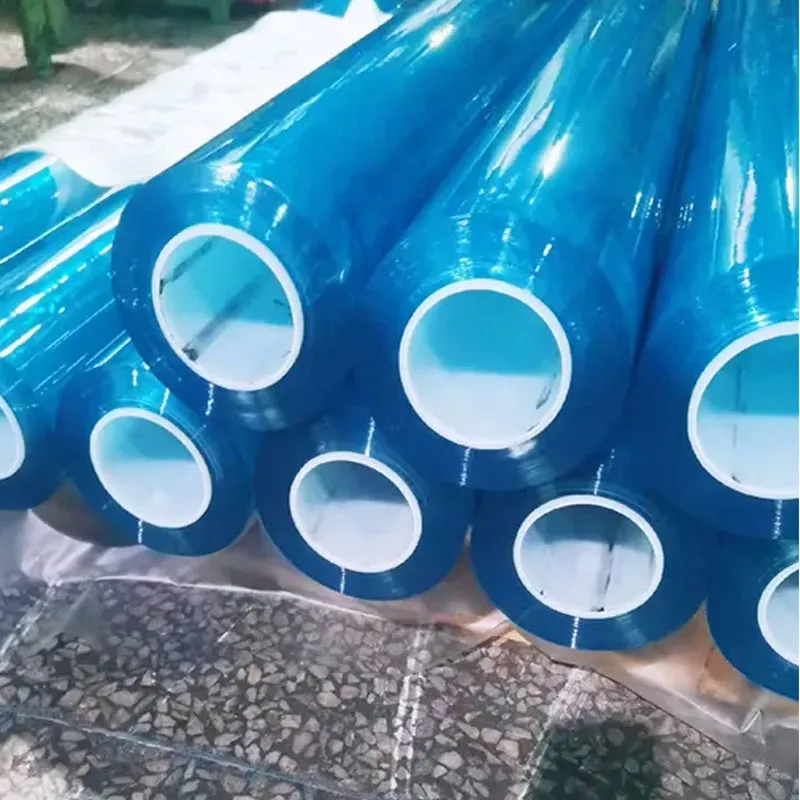
Whether you’re packaging hot foods, designing heat-sealable pouches, or specifying films for industrial use, understanding CPP (cast polypropylene) thermal behavior is essential. This guide explains how heat resistant CPP film is, real-world temperature limits, testing methods, and practical tips to choose the right film for heat-exposed applications.
CPP stands for cast polypropylene — a clear, flexible, and heat-sealable polymer film widely used for food packaging, lamination, and protective overlays. Compared with PE, CPP offers higher clarity, better heat-seal performance, and improved stiffness at elevated temperatures. Because it is processed by casting, CPP films can be formulated with a range of mechanical and thermal characteristics.
| Property | Typical Value / Range |
|---|---|
| Melting point | ~160–170°C |
| Glass transition | Approx. 0–10°C |
| Continuous service (typical) | ~70–90°C (depends on thickness & formulation) |
| Short-term exposure | Up to 120–150°C for brief periods (risk of softening/deformation) |
| Heat-seal range | 120–170°C depending on coating and equipment |
In practice, CPP film performance depends on gauge (thickness), additives, coatings (e.g., sealant or anti-fog), and whether it’s laminated to layers such as PET or aluminium foil. Use these guidelines when planning for heat exposure:
– Hot-fill (up to ~95°C): CPP is suitable for many hot-fill applications when properly formulated and cooled correctly to avoid distortion.
– Pasteurization/retort: Short pasteurization cycles are usually acceptable; however, true retort (severe sterilization above 121°C for long periods) often requires barrier or high-temperature layers (PET/Alu).
– Microwave use: Thin CPP films can tolerate microwave reheating for food contact but must be validated for your specific microwave power and time to avoid melting in localized hotspots.
CPP is commonly used as a sealant layer. Typical sealing ranges are between 120°C and 170°C depending on contact time, pressure and whether the surface includes coatings. For consistent seals, manufacturers tune temperature, dwell time, and pressure to film thickness and chemistry.
If your process involves prolonged exposure above 100°C (e.g., industrial autoclaving) or dry oven conditions at elevated temperatures, consider lamination with PET, using thicker gauges, or switching to specialized high-temperature films. Short-term spikes may be tolerated, but repeated or sustained high heat accelerates creep, warping, and loss of mechanical strength.
To ensure suitability, run application-specific tests:
Oven ageing: expose samples to target temperatures for the intended duration and inspect for deformation.
Hot-water immersion: for hot-fill, submerge sealed packages in water at filling temperature to check dimensional stability.
Heat-seal window: determine the minimum and optimum sealing temperature/dwell for your film stack.
TGA / DSC analysis (laboratory): determine thermal degradation and precise melting behavior.
Options to raise operational temperature or stability include:
Lamination with PET or aluminium foil: significantly increases heat and barrier resistance for retort or high-temperature sterilization.
Use thicker CPP gauges to reduce distortion under heat.
Add heat stabilizers or choose CPP grades formulated for higher softening points.
Consider BOPP or PET films for higher temperature resistance where transparency and rigidity are required.
– For hot-fill beverages or foods (≤95°C): standard CPP with appropriate gauge is usually fine.
– For pasteurization cycles: test CPP formulations; consider PET-laminated structures if cycles approach sterilization temperatures.
– For retort/extended sterilization (>120°C): use multi-layer structures with high-temp barrier layers (PET/Alu).
Q: Can CPP be used in a conventional oven? A: Not recommended for prolonged dry heat; thin CPP may soften or deform. Validate with actual oven cycles if short reheating is needed.
Q: Is CPP microwave-safe? A: Many CPP films are suitable for microwave reheating, but testing is essential to ensure no soft spots or contact with heating elements.
Q: Will CPP melt in boiling water? A: CPP can withstand boiling (~100°C) for short exposure, but prolonged immersion or high-pressure conditions can lead to dimensional changes.
Pulivk (Henan Pulivk New Materials Co., Ltd.) offers a wide range of CPP and calendered films and can advise on film grades, lamination options, and OEM customization to meet heat-resistance requirements. Visit https://pvcfilmtec.com/ for product info and technical support.