Address
304 North Cardinal St.
Dorchester Center, MA 02124
Work Hours
Monday to Friday: 7AM - 7PM
Weekend: 10AM - 5PM
Address
304 North Cardinal St.
Dorchester Center, MA 02124
Work Hours
Monday to Friday: 7AM - 7PM
Weekend: 10AM - 5PM


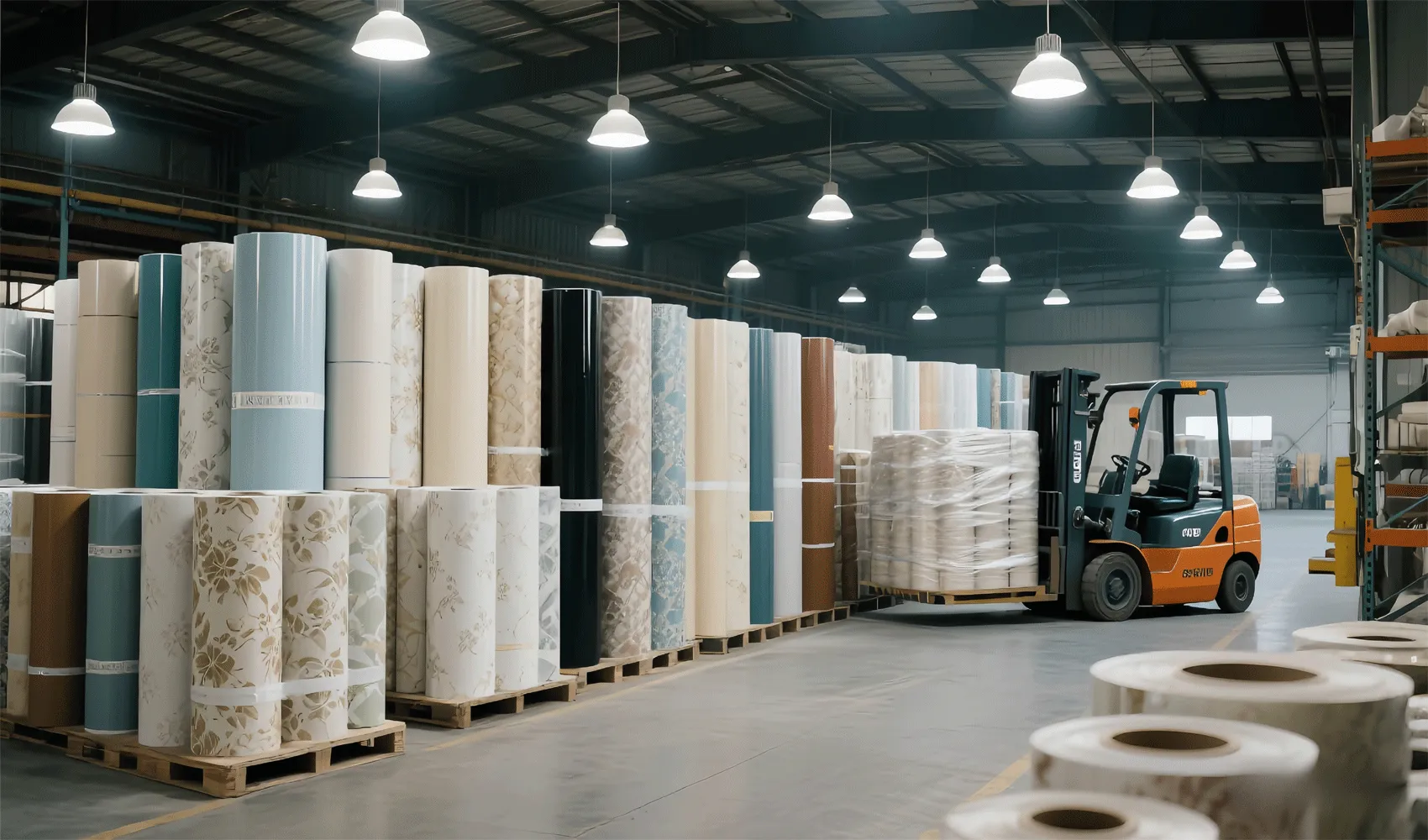
Wave patterns, ripples, or “crows’ feet” in PVC film reduce visual appeal and can interfere with lamination, printing, or installation. This guide explains the most common causes, how to diagnose each one, and clear solutions you can apply in production, storage, or on-site installation to get smooth, stable film results.
Waves can appear as parallel ripples, random buckling, or broader undulations across the roll or applied surface. Even small waves can cause poor adhesion, visible defects in glossy finishes, and increased rejection rates for finished products.
Thermal relaxation: uneven cooling after calendering or hot processing creates differential shrinkage, leaving the film with stresses that relax into waves.
Tension imbalance: inconsistent web tension in winding, printing, or laminating lines produces alternating high/low-stress bands that show up as waves.
Moisture & humidity: absorption or uneven moisture in backing materials or the film itself can cause local expansion and buckling.
Substrate mismatch: applying film to a substrate with different thermal or dimensional stability (MDF, chipboard, low-grade plastics) will create movement and waves over time.
Adhesive or lamination issues: dry spots, uneven adhesive coat weight, or trapped air pockets often cause localized rippling.
Storage & handling: long-term storage under high temperature, stacked rolls with uneven pressure, or shipping shocks can set in distortions that appear as waves when unwound.
| Symptom | Likely Cause | Immediate Fix |
|---|---|---|
| Parallel ripples across full width | Tension imbalance or roller misalignment | Check and balance web tension; align rollers; rewind under controlled tension. |
| Local buckling near glued seams | Uneven adhesive/air trapped | Re-apply adhesive uniformly; use nip rollers to remove air; pre-heat substrate if needed. |
| Waves after shipping/unwinding | Storage pressure or thermal deformation | Recondition rolls at room temp; relax under controlled tension before use. |
Stabilize cooling after calendering: use uniform cooling rolls, control chill roll temperatures, and allow sufficient dwell time before winding. Implement continuous tension control with high-quality load cells or dancer systems. Regularly calibrate roller alignment and check for worn bearings that introduce skew.
Ensure even adhesive coat weight and use compatible adhesives for the PVC film and substrate. Use controlled nip pressure and temperature during lamination. For sensitive patterns (gloss or woodgrain), pre-heat substrate slightly to equalize thermal expansion.

Store rolls flat or upright on end with supports to avoid point pressure. Maintain stable humidity and temperature in storage (avoid extremes). When installing, condition film at site temperature for 24 hours if possible, and always apply under even tension and with an appropriate roller or squeegee technique to remove trapped air.
Monitor and log calendering temperatures, chill roll setpoints, web tension profiles, and ambient humidity. Inline sensors and periodic sample relaxation tests (cut a sample and measure dimensional change after controlled heating) help catch trends before they create visible waves. Keep production documentation for each batch so any deviation can be traced quickly.
1. Unwind a short sample and let it relax for 1–2 hours — do waves disappear? If yes, reconditioning is the fix. 2. Run film at lower speed and check tension stability. 3. Inspect adhesive application and laminate nip for uniformity. 4. Check storage conditions and roll packaging for pressure points.
If waves persist despite on-site corrections, request supplier process data: calendering temperature profile, winding tension settings, and roll relaxation tests. A manufacturer with full in-house control of materials and processing can usually provide tailored troubleshooting — for example, Pulivk (https://pvcfilmtec.com/) documents production parameters to help buyers diagnose problems quickly.
Most wave issues are process- or environment-driven and can be fixed with tension control, thermal stabilization, or improved lamination practice. Prioritize preventive QC and conditioning steps to reduce waste and keep finished surfaces flawless.