Address
304 North Cardinal St.
Dorchester Center, MA 02124
Work Hours
Monday to Friday: 7AM - 7PM
Weekend: 10AM - 5PM
Address
304 North Cardinal St.
Dorchester Center, MA 02124
Work Hours
Monday to Friday: 7AM - 7PM
Weekend: 10AM - 5PM


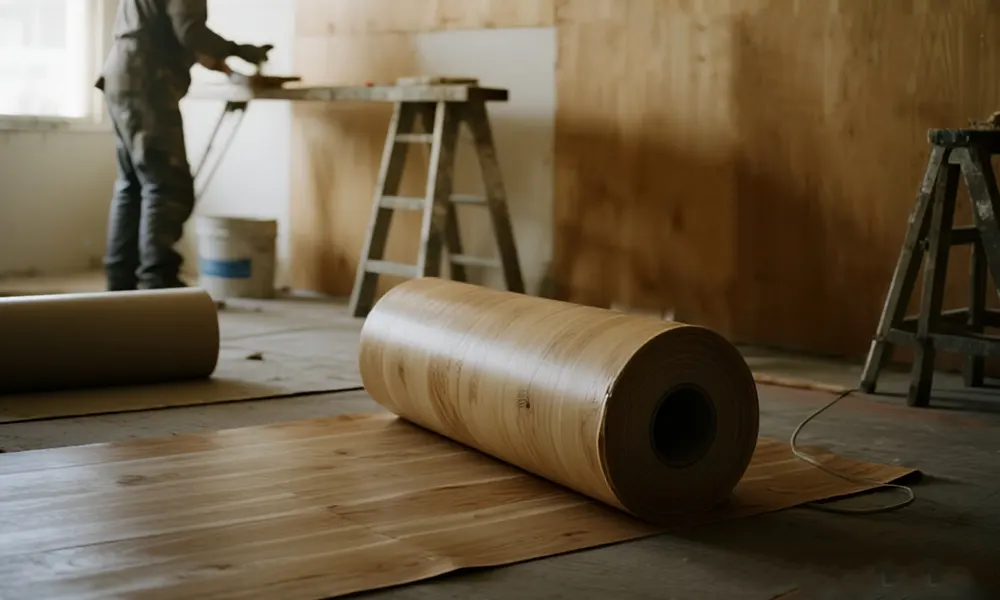
PVC film manufacturing blends polymer science, precision processing, and disciplined quality control to produce films that decorate, protect, insulate, and perform in demanding environments. From furniture surfaces and wall panels to electronics protection and cleanroom packaging, modern PVC films must balance appearance, durability, safety compliance, and stable supply. This guide explains the end-to-end manufacturing workflow, core materials, quality control checkpoints, and the key applications where PVC films create measurable value.
What you’ll learn:
how PVC film is made (calendering, printing, slitting/packing), what goes into the formulation, how quality consistency is verified roll-by-roll, and how to choose the right film for furniture, building, electronics, advertising, medical, and home use.
PVC film is a thin sheet based on polyvinyl chloride resin, engineered with additives to achieve specific flexibility, surface feel, gloss level, printability, and resistance to heat, chemicals, or abrasion. In real projects, the “same looking” film can perform very differently depending on:
plasticizer choice,
stabilization system,
calendering temperature/pressure history,
and surface treatment/coating.
For example, decorative films for cabinet doors need stable color and low surface defects; flooring films demand higher wear resistance and dimensional stability; electronics films may require anti-static performance; medical and cleanroom packaging needs odor control and cleanliness. Manufacturing controls connect these requirements to consistent, scalable production.
Most flexible and decorative PVC films start with PVC resin selected for target viscosity, fusion behavior, and mechanical performance. Resin selection influences:
melt strength,
clarity,
surface smoothness,
and process stability
during calendering.
Plasticizers make PVC flexible and influence softness, rebound, and migration resistance. For interior decoration and human-contact scenarios, manufacturers increasingly use systems designed for low odor and compliance requirements. A well-controlled formulation targets:
stable hardness,
low volatility,
and reduced fogging.
During high-temperature processing, PVC can degrade, causing discoloration and property loss. Stabilizers protect the resin and help preserve:
whiteness,
transparency,
and long-term aging resistance.
For export markets, many buyers request compliance with restricted substance regulations, so stabilizer systems are selected accordingly.
Fillers and pigments tune opacity, cost, stiffness, and color. Effect systems enable matte, pearlescent, metallic, or special tactile finishes. Decorative categories such as wood grain, marble, stone grain, brushed metal, and 3D embossed textures require tight pigment dispersion and stable printing/embossing conditions to avoid banding, color drift, or pattern mismatch.
Depending on the application, PVC films may include:
anti-static,
anti-fog,
scratch resistance,
chemical resistance,
or food-grade/skin-contact appropriate coatings.
These can be incorporated in the compound, applied as surface coatings, or created via laminated structures.
Key takeaway:
The “recipe” (resin + additives) determines not only feel and appearance, but also stability in processing, consistency between batches, and compliance for global markets (e.g., REACH/RoHS/FDA-related requirements when applicable).
Production begins by weighing and mixing raw materials according to a controlled formula. Good mixing is critical to avoid specks, gels, or color inconsistency. Manufacturers typically focus on:
accurate dosing,
dispersion quality,
and stable compound temperature
to ensure predictable fusion behavior in downstream calendering.
Calendering forms a uniform sheet by passing the compounded PVC through heated rollers under controlled pressure and speed. It is widely used for high-quality decorative and industrial films because it offers:
excellent thickness control,
smooth surface finish,
and stable mechanical properties.
If you want a product reference for this category, see:
Calendered Film.
Critical calendering controls
✔ Roller temperature profile (prevents degradation and color shift)
✔ Line speed and tension (prevents shrinkage issues and waviness)
✔ Gap control and thickness feedback (reduces gauge variation)
✔ Surface cleanliness (reduces pinholes and inclusions)
After leaving the calender stack, the film is cooled under controlled tension to lock in dimensions. Depending on the product, manufacturers may apply:
matte/gloss control,
embossing (for leather, silk, cloth, stone, or 3D effects),
or functional coatings
to create the final touch and performance.
For textured decorative references, you may review:
3D Silk Texture Film.
For wood grain, marble, brushed metal, solid color, or artistic textures, the film can be printed using environmentally considerate inks designed for indoor use and human contact scenarios. Printing quality depends on:
color management,
registration control,
ink adhesion,
and drying/curing stability.
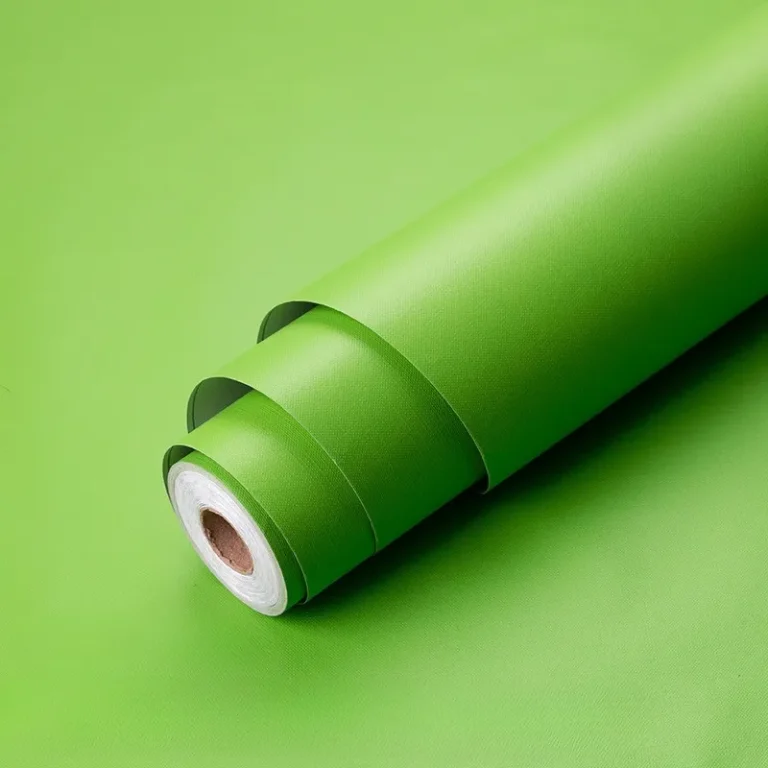
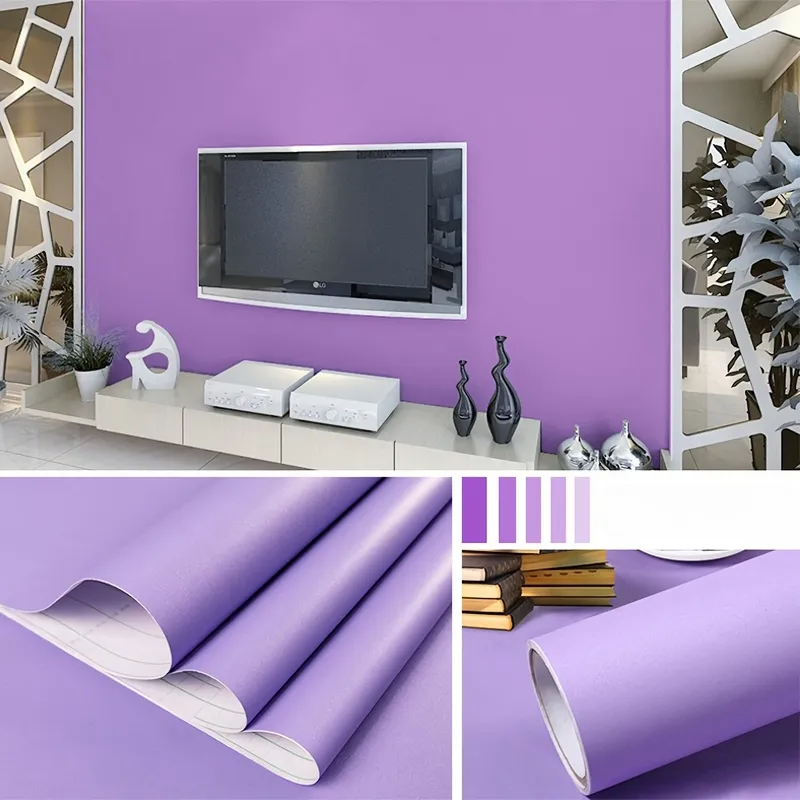
For minimalist interior trends, solid-color options are often used on walls and panels; see:
Solid Color Wallpaper.
Some films are built as multi-layer composites (e.g., a printed layer protected by a transparent wear layer, or a PVC layer bonded to fabric backing). This improves:
scratch resistance,
dimensional stability,
adhesion to substrates,
and end-use durability.
Finished jumbo rolls are slit to customer widths and rewound to target roll lengths. Professional slitting prevents edge damage, telescoping, and tension marks. To ensure safe shipping and clean delivery, rolls are typically wrapped individually using
dust-proof PE film or kraft paper,
then labeled with specifications for traceability.
Quality control is not a single test—it is a chain of checkpoints designed to keep every roll consistent across long production runs. Strong QC systems typically combine:
incoming inspection,
in-process monitoring,
and final verification
with batch traceability.
Raw materials are checked for key parameters such as resin quality, additive identity, pigment consistency, and documentation for restricted substances. For export-focused supply chains, documentation and compliance readiness help reduce delays and rejections.
In-process QC checklist
• Thickness / gauge mapping and tolerance tracking
• Surface defect monitoring (gels, fish-eyes, pinholes, contamination)
• Color and gloss checks (delta E control for decorative films)
• Printing registration and adhesion validation
• Tension, curl, and dimensional stability tracking
Final testing commonly covers mechanical performance (tensile/tear), visual standards, winding quality, and functional metrics such as:
adhesion (for self-adhesive or laminated films),
abrasion resistance (flooring/wear layers),
optical clarity/haze (transparent films),
and surface resistivity (anti-static films).
Reliable manufacturers label each roll with specification data and batch identifiers, supporting fast root-cause analysis if an issue appears in lamination, vacuum pressing, or on-site installation. This is especially important for large furniture lines, construction projects, and repeated export orders where repeatability matters more than a one-time sample match.
Decorative PVC films include wood grain, marble/stone grain, cloth grain, glossy/matte solids, brushed textures, and artistic patterns. They are widely used on:
kitchen cabinets,
wardrobes,
interior doors,
wall panels,
and office furniture surfaces.
For a popular premium look, see:
Marble Film.
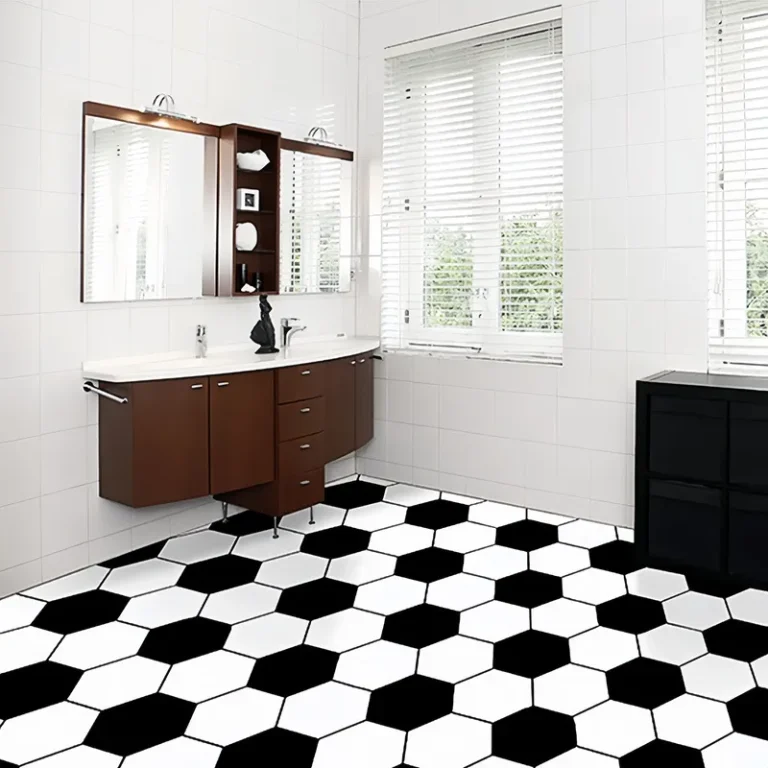
Flooring and floor-protection films are engineered for foot traffic, scratch resistance, and stable dimensions. Typical priorities include:
abrasion resistance,
anti-slip surface options,
and resistance to household chemicals.
A product reference is available here:
Floor Film.
Transparent and frosted films serve both decorative and industrial roles: surface protection during processing, privacy partitions, packaging, and overlays. In these films, the manufacturing focus often shifts to:
optical control (haze/clarity),
low defect rate,
and stable thickness.
Electronics and appliance manufacturing frequently uses anti-static or insulating films. Here, QC emphasizes surface resistivity ranges, adhesion behavior (if laminated), and consistency across long roll lengths to prevent intermittent failures in automated lines.
For medical and cleanroom packaging or protective barrier uses, priorities typically include:
low odor,
clean processing,
material safety documentation,
and repeatable performance.
Manufacturers often provide third-party test reports and follow structured inspection routines to reduce contamination risk.
Buyer’s confirmation list
① Thickness, width, roll length, and tolerance targets
② Surface finish: glossy / matte / soft-touch / embossed
③ Application method: vacuum press, lamination, self-adhesive, wrapping
④ Required functions: anti-static, anti-fog, scratch resistance, chemical resistance
⑤ Compliance needs: REACH/RoHS/ISO systems, food-contact scenarios when applicable
⑥ Packaging: PE dust-proof wrap or kraft wrap, labeling, pallet protection for export
When films will be used on visible surfaces (furniture fronts, wall panels, exhibition backdrops), confirm a clear visual acceptance standard: allowable specks, acceptable gloss range, and color tolerance. For large projects, request a pre-production approval sample and define how batch-to-batch variation will be handled.
A full-process manufacturer that integrates
calendering,
printing,
and slitting/packaging
can typically improve delivery reliability and reduce coordination risk. It also enables tighter process feedback—for example, printing issues can be traced back to film surface energy and corrected at the film-forming stage instead of being patched later.
OEM/ODM services often include customization of:
thickness,
width,
roll length,
color/pattern,
functional coatings,
and export packaging.
The most efficient collaborations start with clear end-use details (substrate type, lamination method, temperature exposure, cleaning chemicals) so the formulation and surface system can be tuned to actual service conditions.
Responsible PVC film manufacturing increasingly emphasizes safer inks, reduced odor, and compliance documentation suited for global trade. Many buyers ask whether materials are free of heavy metals and restricted plasticizers, and whether management systems like ISO 9001/ISO 14001 are in place. Beyond certificates, practical indicators of maturity include:
documented QC plans,
batch traceability,
consistent packaging standards,
and support for third-party verification.
Note for importers:
Align compliance and labeling expectations early (target market regulations, restricted substances, testing methods). Doing this before pattern approval helps avoid rework after mass production starts.
Causes often include unstable temperature profiles, roller gap drift, or tension fluctuation. Prevention relies on calibrated feedback control, stable compound quality, and disciplined equipment maintenance.
Decorative films can show visible differences between batches if pigment dispersion or ink management is inconsistent. Prevention includes standard color targets, controlled ink viscosity/drying, and lot-based tracking with repeatable machine settings.
Adhesion problems can come from inadequate surface energy, contamination, incompatible adhesives, or curing issues. Mature manufacturers validate adhesion through peel tests and maintain clean handling during slitting and packing.
For indoor decoration and human-contact applications, the formulation and ink system matter. Plants reduce risk by using suitable low-odor raw materials, improving ventilation and process control, and applying consistent aging/conditioning checks before shipment when needed.
Industry → Recommended PVC film focus
• Furniture manufacturing: wood grain/cloth grain, cabinet door films, tabletop films (appearance + adhesion stability)
• Building & decoration: wall films, stone grain, partitions, ceiling surfaces (aging + easy cleaning)
• Electronics & appliances: anti-static/protective/insulation films (functional performance + consistent resistivity)
• Advertising & exhibition: backdrops/lightbox surfaces/graphic wraps (print quality + flatness)
• Medical & cleanroom: protective and clean packaging films (cleanliness + documentation)
• Household: tablecloth film, waterproof shower curtain film, window films, floor protection (durability + safety)
PVC film is commonly used for furniture surface decoration (cabinet doors, wardrobes), building interiors (wall panels), flooring layers, electronics protection (including anti-static options), advertising/exhibition surfaces, and protective packaging.
Calendered film is formed by heated rollers, delivering strong thickness control and smooth surfaces—well-suited for decorative and industrial rolls that require stable appearance and mechanical properties.
Yes. OEM/ODM customization commonly includes thickness and width, roll length, colors/patterns, embossing (texture), gloss/matte/soft-touch finishes, and functional coatings like anti-static or anti-fog.
Consistency comes from controlled formulations, in-process monitoring (thickness, defects, color/gloss), final testing (mechanical/adhesion/optics), and batch traceability with labeled roll specifications.