Address
304 North Cardinal St.
Dorchester Center, MA 02124
Work Hours
Monday to Friday: 7AM - 7PM
Weekend: 10AM - 5PM
Address
304 North Cardinal St.
Dorchester Center, MA 02124
Work Hours
Monday to Friday: 7AM - 7PM
Weekend: 10AM - 5PM


Laser PVC film has become a popular finishing choice for furniture, interior decoration, retail displays, and premium packaging because it delivers a high-impact, light-reflective surface without the cost and weight of metal laminates. But when buyers search for “Laser PVC Film price”, they quickly discover that pricing varies widely across thickness, surface effect, adhesive options, compliance needs, and order volume. This guide breaks down the real cost drivers, how bulk discounts typically work, and the most reliable ways to buy laser PVC film online—without overpaying or risking inconsistent quality.
Key takeaway:
Laser PVC film pricing is not just “per meter.” It is usually calculated by a combination of
material formulation,
thickness,
surface process (laser effect),
functional coatings,
and order scale.
Asking the right questions upfront is the fastest way to get an accurate quote.
“Laser” in laser PVC film typically refers to a holographic or high-reflective decorative effect created through surface texturing, embossing, printing, or composite processes. Depending on how the effect is produced, the film can be positioned as a standard decorative layer or as a premium specialty film with tighter tolerances.
When you request pricing, suppliers may categorize it under decorative PVC films (often calendered), or as an upgraded texture/visual series similar to other decorative lines like
Calendered Film
or textured collections such as
3D Silk Texture Film.
Even if the base polymer is similar, the surface and finishing steps can change the final cost significantly.
Film thickness (often expressed in microns or millimeters) is one of the most direct price drivers because it affects raw material consumption and mechanical performance. Wider rolls also raise cost due to higher material usage and tighter process control to keep thickness uniform across the width. Roll length influences packaging, handling, and freight efficiency; longer rolls may reduce per-meter packaging cost but can increase risk of transport damage if not protected properly.
✔ Buyer tip:
If your lamination or wrapping equipment has a maximum workable width, avoid “overspecifying” width. Paying for extra width you will trim away can quietly inflate total cost.
Many decorative PVC films are produced through calendering, which delivers stable thickness and good surface quality at scale. Composite structures (multi-layer or cloth-backed films) may be quoted higher due to added layers, bonding steps, and stricter QA requirements. If your project needs better dimensional stability, improved tear strength, or a specific lamination behavior, expect the structure choice to influence price as much as the laser finish itself.
Laser/holographic effects can range from simple reflective textures to intricate patterns with depth and angle-dependent color changes. More complex effects typically require higher-precision patterning, more controlled processing, and sometimes higher material rejection rates—each pushing costs up. If you need strict batch-to-batch color consistency under different lighting (showrooms, retail, exhibitions), clarify viewing requirements during quotation.
The same laser pattern can be offered in multiple finishes. Glossy finishes can highlight reflectivity, while matte finishes can make the effect more subtle and premium. Functional layers like anti-scratch or soft-touch add material and processing cost, but may reduce lifecycle cost by lowering returns, rework, and complaints—especially for cabinet doors, wall panels, and high-contact furniture parts.
Self-adhesive laser PVC film is usually priced higher because it includes pressure-sensitive adhesive plus release liner, and demands more precise coating and slitting. For applications like quick renovation, signage, or DIY wall surfaces, the extra cost can be worth it. For industrial lamination lines, non-adhesive film can be more economical if you already use hot-melt, PUR, or solvent-based bonding systems.
If the film is used for indoor spaces (homes, offices, hospitality) or near human contact, buyers often request compliance and safer formulations. Meeting standards such as ISO management systems and material regulations (e.g., REACH/RoHS/FDA where applicable) may influence price, testing workload, and documentation. Low-odor inks and stable formulations can cost more—but they also help you pass project inspections and reduce installation complaints.
⚠ Don’t skip this:
If you are supplying to furniture, building decoration, healthcare, or export markets, ask for
test reports,
batch traceability,
and material declarations.
These “paper costs” are part of the real price—especially for high-volume or audited projects.
Custom slitting (multiple widths), special core sizes, and premium export packaging add cost but can protect your shipment and simplify warehouse handling. Better packaging often reduces edge damage and surface scratching—two common sources of loss in decorative films. If your supplier individually wraps rolls with protective layers and applies clear spec labels, you gain faster receiving and fewer disputes.
Laser PVC film price per meter almost always decreases as order volume increases, because setup costs (pattern alignment, printing calibration, coating parameters, QA sampling, and slitting changeovers) are spread across more output. If you have repeat demand, negotiating a forecast-based arrangement can secure better pricing and more stable lead times.
Bulk discounts are not only about “more meters.” Many manufacturers price based on production efficiency, raw material procurement, and how standardized your specification is. To obtain meaningful discounts, align your purchase structure with what reduces factory changeovers and risk.
If you’re purchasing for interior systems, it can help to source coordinated materials from one supplier so the overall look is consistent across different components. For example, pairing decorative wall finishes with edge and base solutions like
PVC skirting film
can simplify matching and reduce hidden procurement costs.
Online sourcing is efficient, but only if you verify specs, quality systems, and after-sales capability. The best supplier is not always the one with the lowest headline price; it’s the one who can deliver consistent rolls, reliable lead times, and export-ready packaging.
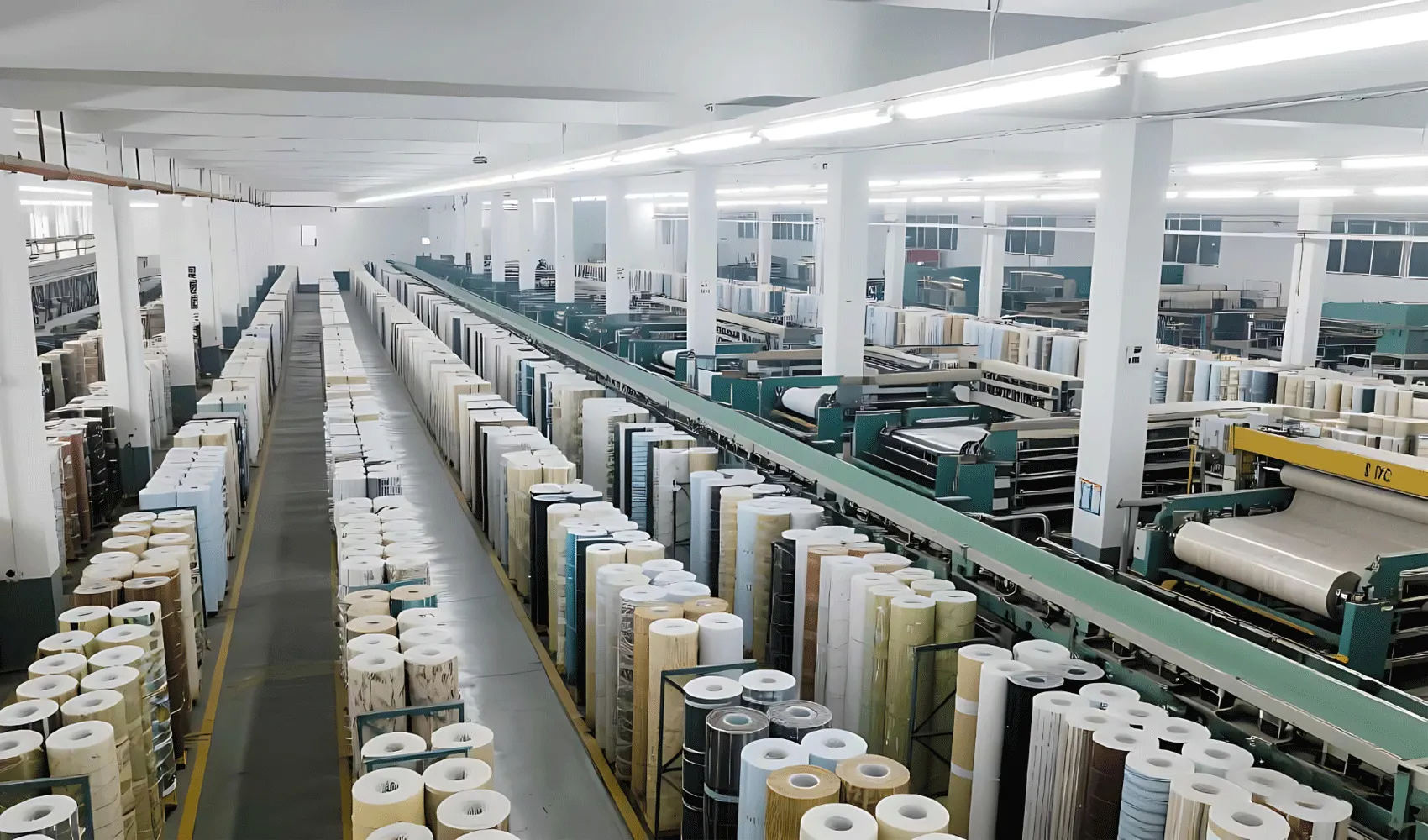
Manufacturers with in-house calendering, printing, and slitting/packaging typically offer more stable quality and better cost control because fewer steps are outsourced. This matters for laser effects, where surface consistency and defect control are critical. A full-process supplier can also provide flexible OEM/ODM customization—thickness, width, patterns, functional coatings, and packaging—while maintaining traceability from raw material to finished rolls.
If you want to evaluate product ranges and capabilities quickly, browse a supplier’s product and knowledge sections to compare series and typical applications. For example, you can review collections via
Product
and application guidance via
Knowledge,
then request a quote with clear specs through
Contact.
B2B platforms can be helpful for price discovery and quick comparisons, but listings sometimes mix trading companies and factories, and specifications may be generalized. If you buy through marketplaces, insist on pre-shipment QC photos/videos, confirm exact thickness tolerance, and request a small sample roll to test lamination, adhesive performance (if applicable), and scratch resistance.
If you need very small quantities, rapid local delivery, or custom cut sheets, a converter/distributor may be practical—even if per-unit price is higher. This route is common for prototyping, showroom builds, and short-run promotional work where time is more important than lowest factory pricing.
🔎 Online purchase checklist:
Confirm thickness/width/roll length,
surface finish,
application method (lamination/self-adhesive),
compliance documents,
packing standard,
and lead time before payment.
Many “price misunderstandings” come from incomplete RFQs. The fastest way to get an accurate laser PVC film price is to provide a complete specification and usage context, so the supplier can select the right formulation and process.
If you are comparing offers from multiple suppliers, ask each one to quote using the same basis (e.g., price per square meter or per meter at a defined width) and confirm whether the quote includes packaging, testing documentation, and any special treatments. This makes “apples-to-apples” comparison possible.
The cheapest laser PVC film can be expensive if it causes returns, installation failures, or visual inconsistency under showroom lighting. Selection should match the performance requirements of the end-use environment.
Prioritize scratch resistance, color stability, and consistent roll quality. If the laser effect is a hero feature (high-visibility panels), consider requesting tighter QC and a confirmed master sample. For complementary surfaces, you might use coordinated decorative lines such as
Wood Grain Film
or stone/metal series to create a unified collection without overusing the laser finish.
For wall panels, partitions, and decorative trims, low odor and safe inks matter, especially in homes, schools, clinics, and hospitality spaces. Self-adhesive options can simplify installation, but ensure the adhesive is suitable for your substrate and local climate (humidity and temperature changes can affect adhesion).
Here, visual impact is key. You may accept lower abrasion performance if the use cycle is short, but you should demand good flatness and stable reflectivity under spotlights. Ordering in batches for a campaign can unlock bulk pricing without committing to long-term inventory.
Two quotes with the same unit price can produce different landed costs. Freight, packaging, and import handling can be a major portion of total spend—especially for urgent shipments or small orders.
For repeat purchases, consider consolidating SKUs in one shipment to reduce per-roll handling. Even if a small batch looks inexpensive online, frequent air shipments can make the total cost much higher than a planned sea shipment with better packaging and fewer deliveries.
A supplier with complete production capability—from calendering and printing to slitting and packaging—can often offer more competitive and stable pricing for decorative PVC films, including laser-effect series. Full-process control reduces outsourcing markups, improves schedule reliability, and strengthens QC consistency across batches. It also makes OEM/ODM customization more efficient, because adjustments can be made directly on the production line rather than negotiated across multiple subcontractors.
For buyers, this typically translates to fewer quality disputes, clearer accountability, and better bulk discount potential once specifications are standardized and forecasting becomes possible.
Differences usually come from thickness tolerance, surface process complexity, functional coatings (anti-scratch/soft-touch), adhesive + liner choices, compliance documentation, and packaging standards—not just “margin.”
Provide thickness, width, roll length, finish, whether it’s self-adhesive, your application method, required standards, quantity, and delivery destination. A reference photo/sample of the laser effect improves accuracy.
Use a forecast-based agreement (quarterly or monthly releases), standardize specs across multiple projects, and bundle related decorative films into one shipment to increase total volume efficiently.
Check surface uniformity under different lighting, scratch resistance (if needed), thickness consistency, edge quality after slitting, adhesion behavior (for self-adhesive), and documented QC/traceability.
A manufacturer with in-house calendering/printing/slitting often provides better consistency and accountability, while trading companies can be useful for small mixed sourcing. In both cases, request samples, confirm specs in writing, and clarify packaging and claim policies.